
Introduction
Leopard Gecko Care Guide
This comprehensive guide is compiled from recommendations and experiences shared by members of the reptile community, including seasoned breeders and keepers. It was carefully compiled and prepared by Zac Parpart of Parpart's Pristine Pythons using years of hands-on experience and widely accepted husbandry practices. It is intended as a detailed reference for both new and experienced owners. Practices may vary slightly between keepers, but this guide reflects widely accepted care standards.
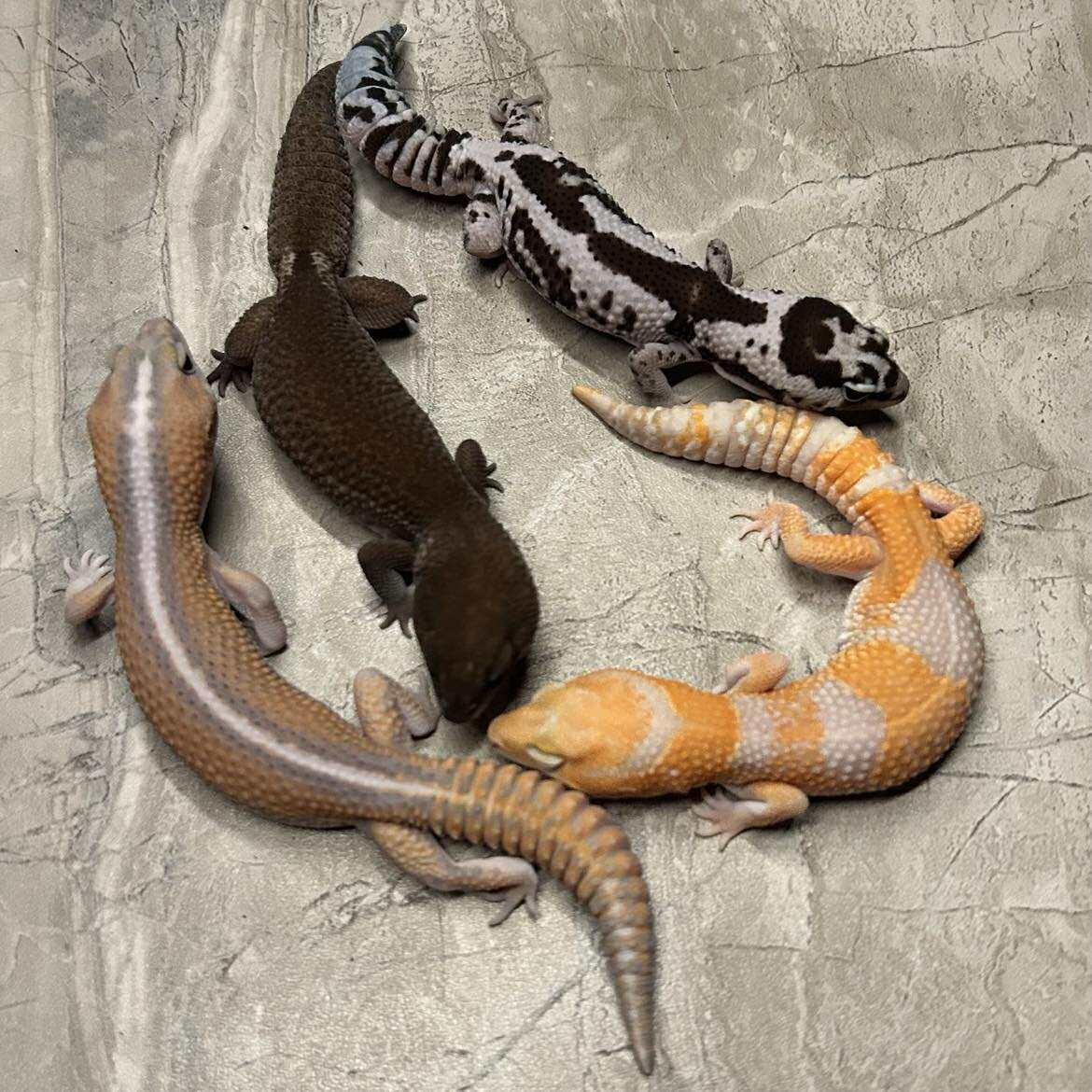
Leopard geckos are widely kept because they are hardy, manageable, and adapt well to captivity when their basic needs are met consistently. Success with this species comes from stable temperatures, secure housing, a functional humid hide, safe substrate, proper feeding, and consistent supplementation.
This guide is written primarily for pet Leopard gecko care and long-term animal welfare. Breeding setups and colony management may differ, but the standards outlined here reflect practical, widely accepted husbandry for individual pet animals.
Species Basics
Scientific Name: Eublepharis macularius
Common Names: Leopard gecko
Native Range: Middle East through parts of India
Natural Habitat: Rocky grasslands, scrubland, and semi-arid regions
Lifestyle: Terrestrial, crepuscular to nocturnal
Average Adult Size:
- Males: 7–10 inches
- Females: 7–8 inches
- Giant lines may grow larger
Lifespan:
- Commonly 6–10 years
- Many well-kept Leopard geckos live 15–20+ years
Experience Level: Excellent beginner reptile that remains rewarding for experienced keepers
Before You Bring One Home
Do your homework first
Before buying a Leopard gecko, understand:
- Heating and temperature gradients
- Feeding and supplementation
- Humid hide function
- Safe substrate choices
- Basic health signs
Set up the enclosure first
Before your gecko arrives, confirm:
- Warm Side: stable and verified
- Cool side temperature confirmed
- Humid hide installed and functioning
- Heating connected to thermostat
- Thermometers and hygrometer installed
The enclosure should be working before the animal arrives.
Choosing and Buying
A healthy Leopard gecko should show:
- Clear, open eyes
- Straight limbs
- Clean vent
- Alert behavior
- Full, rounded tail
Ask the seller:
- What insects is it eating?
- How often is it fed?
- What supplements are used?
- Has it had shedding or health issues?
If you own other reptiles:
Quarantine new animals for 30–60 days.
Bringing Your New Animal Home
Acclimation
When your gecko arrives:
- Place directly into enclosure
- Leave undisturbed for several days
- Avoid handling for the first week
- Offer food after settling
Stress is the most common cause of temporary feeding refusal.
Enclosures
Leopard geckos can be kept successfully in several enclosure styles. The correct choice depends on your home temperature, available space, and maintenance preferences.
Important rule: no routine cohabitation for pet owners
Pet Leopard geckos should be housed individually.
Breeders may occasionally pair or group animals under controlled conditions, but this is not recommended for typical pet ownership due to:
- Stress
- Feeding competition
- Injury risk
- Difficulty monitoring health
Individual housing is the safest standard for pet Leopard gecko care.
Glass Tank / Terrarium
Pros
- Easy to find
- Good visibility
- Works well with overhead heat
Cons
- Loses heat quickly
- Screen tops reduce temperature stability
PVC Enclosure
Pros
- Excellent heat retention
- Stable temperatures
- Durable
Cons
- Higher upfront cost
Tub Setup
Pros
- Affordable
- Easy to clean
- Holds belly heat well
Cons
- Limited visibility
- Depends heavily on room temperature
A tub setup generally works best when room temperature stays around 75°F or warmer.
Rack System
Most commonly used by breeders or keepers with multiple animals.
Pros
- Space efficient
- Easy maintenance
Cons
- Not display-friendly
- Dependent on room temperature
Closed racks hold heat better than open racks but still require temperature verification.
Bioactive / Planted Vivarium
Pros
- Naturalistic appearance
- Enrichment potential
Cons
- More complex maintenance
- Requires careful planning
Bioactive is optional, not required.
Enclosure Size Guide
Hatchlings
5–10 gallon equivalent
Juveniles
10–15 gallon equivalent
Adults
Minimum:
20 gallon
Preferred:
30–40 gallon footprint
Tub sizes
Babies:
Shoebox size
Adults:
28 quart or larger
Temperature and Heating
Proper temperature is the most important factor in Leopard gecko care.
Warm Side: 87–90°F
Maximum: 94°F
Cool Side: Mid to upper 70s°F
Practical heating rule
If your house is 75°F or warmer — belly heat often works. If your house is 75°F or cooler — overhead heat is usually needed.
Belly heat warms surfaces, not air.
Room temperature determines enclosure performance.
Use digital thermometers to verify both warm and cool sides.
Heating Equipment and Safety
Common heat sources:
- Under-tank heat mat
- Heat tape
- Halogen bulb
- Ceramic heat emitter
Thermostat requirement
All belly heat must be controlled by a thermostat.
Never run heating equipment without one.
Unsafe heating equipment
Do not use heat rocks.
They frequently cause burns.
Lighting
Lighting does not need to be complicated.
Many Leopard gecko setups operate successfully without UVB. Some keepers choose to provide low-output UVB for a more natural light cycle.
If using UVB:
Use low-output lighting designed for shade-dwelling reptiles.
A commonly recommended example is:
Arcadia ShadeDweller–type UVB lighting.
Practical lighting rules
- Provide shaded areas
- Follow manufacturer distance guidelines
- Maintain normal day/night cycle
Supplement connection
If you use UVB:
Use plain calcium.
If you do not use UVB:
Use calcium with D3.
Lighting and supplementation must match.
Humidity
Humidity: 20–40%
Do not raise humidity across the entire enclosure.
Humidity belongs inside the humid hide.
Moist Hide Requirement
Every Leopard gecko enclosure must include:
A humid hide.
This prevents shedding problems and supports hydration.
How to Make a Moist Hide
- Use enclosed hide or container
- Ensure smooth entrance
- Add moisture-retaining material
- Keep damp, not wet
- Replace when dirty
Recommended materials
Best options:
- Sphagnum moss
- Coco fiber
- Damp paper towel
Moss is widely preferred because it:
- Holds moisture well
- Resists mold
- Reduces impaction risk
Substrate
Safe substrate options:
- Paper towel
- Newspaper
- Shelf liner
- Tile
- Flat stone
Warning: NO SAND
Sand increases impaction risk.
Paper towel is ideal for:
- New arrivals
- Sick animals
- Quarantine
- Babies
Water
Provide fresh water at all times.
Requirements:
- Shallow dish
- Clean daily
- Stable placement
Check tail fullness regularly as an indicator of hydration and condition.
Enclosure Setup Essentials
Every enclosure should include:
- Warm hide
- Cool hide
- Humid hide
- Water dish
- Safe substrate
- Thermostat
- Thermometer
- Hygrometer
Secure hides reduce stress and improve feeding response.
Feeding
Leopard geckos are insectivores.
Staple feeders
- Mealworms
- Crickets
- Dubia roaches
Additional feeders
- Superworms
- Hornworms
- Black soldier fly larvae
- Waxworms (treat)
Feeding schedule
Juveniles:
Daily
Adults:
Every 2–3 days
Adjust feeding based on body condition.
Feeding tips
- Use appropriately sized insects
- Remove uneaten feeders
- Rotate feeder types
- Monitor appetite
Supplementation
Feeder insects require supplementation.
Basic supplements:
- Calcium
- Multivitamin
General rule
No UVB:
Use calcium with D3
Using UVB:
Use plain calcium
Maintain consistent routine.
Body Condition and Weight Management
Healthy condition
- Full tail
- Smooth body
- Normal movement
Underweight signs
- Thin tail
- Visible bones
- Low energy
Overweight signs
- Very thick tail
- Fat deposits near legs
- Reduced activity
Maintain moderate body condition.
Shedding
Shedding is normal.
Most Leopard geckos shed without assistance when humidity and husbandry are correct.
Stuck Shed
Common causes:
- Dry humid hide
- Low humidity access
- Poor hydration
How to Handle Stuck Shed
- Review enclosure setup
- Refresh humid hide
- Soak in shallow warm water if needed
- Water should not cover the head
- Use damp cotton swab gently
Do not force removal.
Handling
Leopard geckos generally tolerate handling well.
Avoid handling:
- During shedding
- After feeding
- During initial acclimation
Handle calmly and briefly.
Tail Warning
Never grab the tail.
Leopard geckos may drop their tail when stressed.
Common Health Concerns
Metabolic Bone Disease
Caused by:
- Poor calcium intake
- Incorrect supplementation
Impaction
Often caused by:
- Unsafe substrate
- Low temperatures
Dehydration
Signs include:
- Wrinkled skin
- Thin tail
- Low activity
When to See a Reptile Vet
Seek veterinary care for:
- Weight loss
- Persistent refusal to eat
- Injury
- Swelling
- Severe lethargy
- Repeated shedding problems
- Abnormal stool
Choose a veterinarian experienced with reptiles.
Cleaning and Maintenance
Routine cleaning prevents most problems.
Spot Cleaning
Remove waste as needed.
Full Cleaning
Every:
1–4 weeks
Frequency depends on substrate and enclosure conditions.
Examples:
Paper towel:
Weekly
Solid substrates:
Less frequent but still routine
Cleaning Process
- Remove gecko
- Remove substrate
- Wash enclosure
- Disinfect surfaces
- Rinse thoroughly
- Dry completely
- Replace substrate
Common Mistakes and Warnings to Know
Most problems trace back to these:
- No thermostat
- Incorrect temperatures
- Using sand
- No humid hide
- Overfeeding
- Poor supplementation
- Housing geckos together
- Running belly heat in cold rooms
Stable temperatures prevent most health problems.
Quick Troubleshooting Guide
Gecko won't eat
Check:
- Temperature
- Stress
- Shedding
Stuck shed
Check:
- Humid hide
- Moisture level
Lethargy
Check:
- Temperature
- Hydration
- Feeding
Supply Checklist
Basic setup includes:
- Enclosure
- Thermostat
- Heating source
- Thermometer
- Hygrometer
- Hides (3)
- Water dish
- Substrate
- Feeding insects
- Supplements
Recommended Resources
Purchase supplies from:
- Reptile specialty stores
- Trusted online retailers
- Reputable breeders
Prioritize:
- Thermostat
- Thermometer
- Safe heating equipment
Frequently Asked Questions (FAQ)
Do Leopard geckos need UVB?
Optional. Many setups operate without it. If used, choose low-output lighting and adjust supplementation accordingly.
What temperature should they be kept at?
Warm side:
87–90°F
Cool side:
Mid to upper 70s°F
Can Leopard geckos live together?
Pet geckos should be housed individually.
How often should they eat?
Juveniles:
Daily
Adults:
Every 2–3 days
Can they live on belly heat only?
Yes, if room temperature stays around 75°F or warmer.
About the Author
This leopard gecko care guide was written and compiled by Zac Parpart, owner of Parpart's Pristine Pythons and Reptile Ads.
The information in this guide is based on real-world experience keeping and breeding leopard geckos, along with knowledge gathered from the wider reptile community over many years. While experienced keepers and breeders have contributed valuable insight and shared best practices, this guide represents the author's personal understanding of proper leopard gecko husbandry and was independently written and prepared for use as an educational resource for pet owners.
Care practices may vary slightly between individual keepers, breeders, and regions. This guide reflects commonly accepted standards intended for responsible pet ownership and long-term animal welfare.
Final Thoughts
Leopard geckos do best when life is predictable. They do not need fancy equipment or complicated routines — they need steady temperatures, a working humid hide, clean water, and regular feeding. Most problems show up when something basic gets overlooked or changed too often. Pay attention to the small things, fix issues early, and keep the setup simple. If the environment stays stable, these animals are tough, reliable, and usually very easy to keep for many years.
Consistency is the key to long-term success.
Written and compiled by:
Zac Parpart Parpart's Pristine Pythons
References and Revision History
Zac Parpart of Parpart's Pristine Pythons
April 14, 2026
Was this guide helpful?
Rate this guide
Questions & Answers
0 questions from the community
Comments
0 comments