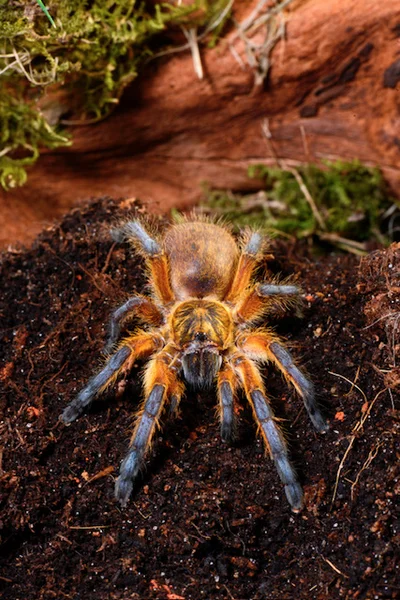
Explore Old World tarantulas for sale from breeders and keepers, including ornamentals, baboon species, cobalt blues and Socotra blues. Compare slings and adults, then chat with sellers before you buy.
Showing 1 to 6 of 6 animals
Showing 1 to 6 of 6 animals

Watch Now!!!
Old World tarantulas are the species from Africa, Asia and the Middle East, and they include some of the most colorful and fast-moving spiders in the hobby. Without the urticating hairs of their American cousins, they rely on speed, threat displays and their bite. For keepers who enjoy observing a spider in a naturalistic enclosure, they offer remarkable variety.
Both groups belong to the family Theraphosidae, and the split is a keeper's convenience based on where the spiders come from. The practical difference lies in behavior. New World species usually carry urticating hairs they can kick off as a first warning. Old World species have none, so they tend to bolt for cover or stand their ground with a raised threat posture.
Their venom is also widely regarded as stronger than that of most New World species. That is why experienced keepers treat Old World spiders as hands-off display animals, use long tongs for maintenance and plan every rehousing carefully. The New World Tarantulas category is next door if you want to compare the two groups.
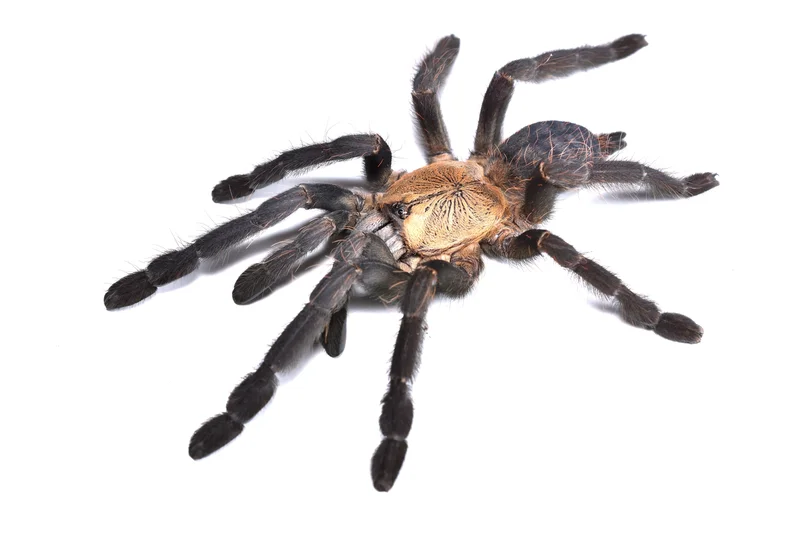
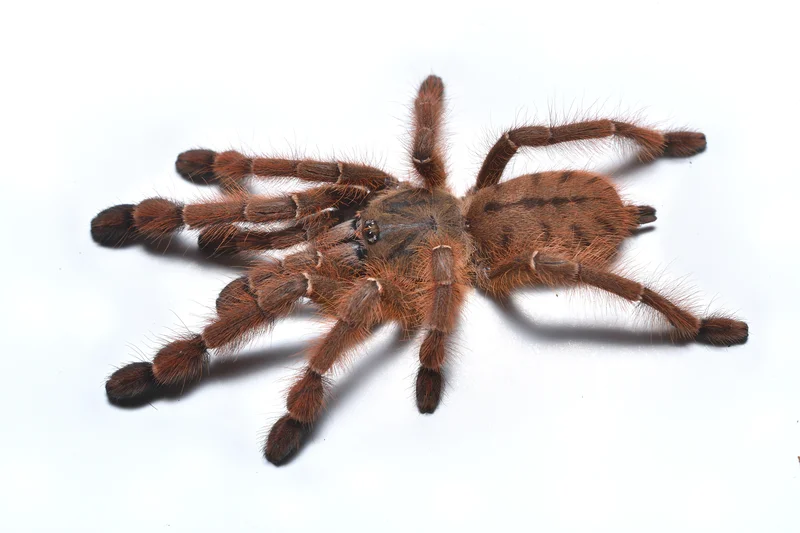
The Poecilotheria ornamentals from India and Sri Lanka are arboreal spiders with intricate gray, black and yellow patterning. The orange baboon (Pterinochilus murinus) from Africa is famous for its bright color and quick reactions. Asian species such as the cobalt blue (Cyriopagopus lividus) spend much of their time in deep burrows and show a vivid blue sheen.
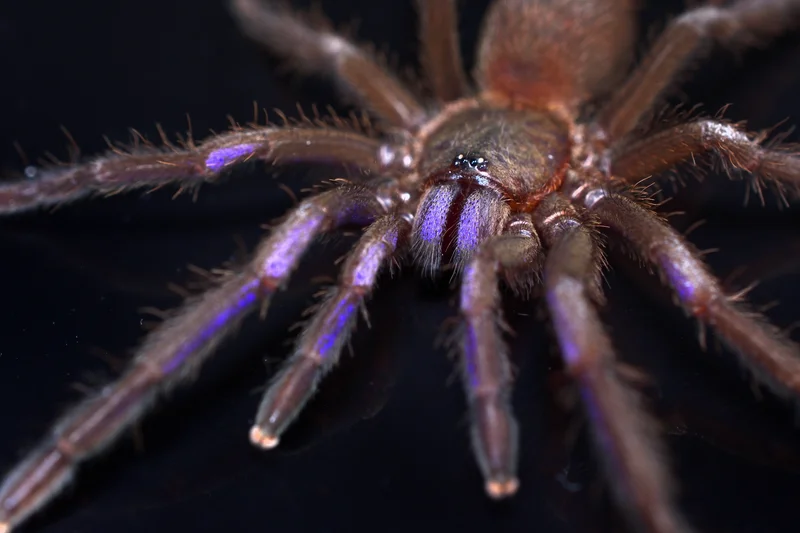
The Socotra Island blue baboon (Monocentropus balfouri) is a favorite for its blue legs and its unusual tolerance of siblings, which some keepers house communally. The horned baboons (Ceratogyrus), with a raised horn on the carapace, and the African Harpactira species round out a group that rewards careful research.
Leg spans generally land between about 2 and 8 inches depending on species. Larger Poecilotheria can sit near the top of that range, while many baboon species stay more compact.
Females of most species live 10 to 25 years with good care. Males grow faster and generally have a shorter life after their final molt. A confirmed female offers the longest companionship, while raising an unsexed sling lets you follow each molt from the very beginning.
Security comes first. Choose an enclosure with a tight-fitting lid and small ventilation holes, and arrange it so you can reach the water dish and remove leftover prey without putting your hand inside. Burrowing species need deep, firm substrate to dig their tunnels, while arboreal species need height, a cork bark tube or slab and plenty of cross-ventilation.
Most do well at normal indoor temperatures. Humidity needs vary, from drier setups for many African species to moister substrate for some Asian ones, so research the exact species. A molt and feeding log is valuable with reclusive spiders you may not see for weeks, and Husbandry.Pro makes it simple to record molt dates, meals and enclosure changes for each tarantula.
Start by confirming the full scientific name, because common names are shared or used loosely. Ask the seller for the current leg span, the last molt date and whether the spider has eaten since. If a female is advertised, ask how the sex was determined.
On ReptileAds you can compare listings from several sellers, read seller profiles and reviews, and message sellers directly through built-in chat. Hit List alerts will let you know when a specific species is posted. Regulations on keeping and transporting tarantulas differ between regions, so check your local rules before you purchase.
AI-assisted guide reviewed by the ReptileAds team. General information about these animals — not care, veterinary or legal advice, and not a description of any individual listing above.
Here you will find Old World tarantulas from Africa, Asia and the Middle East, posted by invertebrate breeders and dedicated hobbyists. Listings range from small spiderlings to juveniles and mature females, covering arboreal, terrestrial and deep-burrowing species.
Compare listings by species, current leg span and molt history, and pay attention to whether a spider's sex is described as confirmed or unknown. Checking each seller's profile and reviews helps you understand how they pack and ship.
Use the built-in chat to confirm the exact species name and how the spider has been housed. If you are waiting on a particular genus such as Poecilotheria or Monocentropus, set a Hit List alert to be notified when one is listed on ReptileAds.
ReptileAds brings keepers of Old World species together so you can find, compare and discuss animals in one place.
Browse Old World genera from multiple sellers and compare sizes, molt notes and photos side by side.
Message sellers about housing, feeding response and shipping, and review their profiles and feedback before you commit.
Set an alert for the species you are after and get a heads-up when a matching tarantula appears.
Old World tarantulas are fast, reclusive and rely on speed and bite rather than urticating hairs for defense, so good routines and secure housing are central to keeping them.
Read the ReptileAds tarantula care guides for detailed, species-level setups.
Thinking through a few points in advance makes it easier to choose a spider that fits your space and routine.