Sponsored
BOGO 1/2 Off!
Small Town
Buy one and get 50% off either of the other animals (equal or lesser value). Mention this ad.
AdvertisementWhy am I seeing this?

Explore a selection of healthy, captive-bred tegus for sale.
Showing 1 to 1 of 1 animals
Showing 1 to 1 of 1 animals
Buy one and get 50% off either of the other animals (equal or lesser value). Mention this ad.
Tegus are large, intelligent lizards from South America known for their curiosity and strong personalities. They grow quickly and need a lot of room, but many keepers find them among the most interactive lizards they have kept. Planning for the adult animal from day one is the secret to a good start.
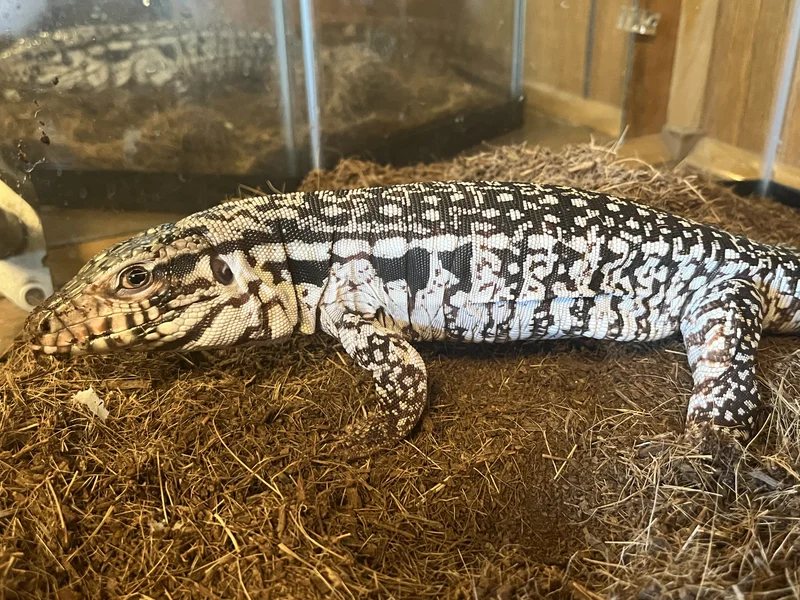
The tegus most often kept belong to the genus Salvator. The Argentine black and white tegu is the most familiar, recognized by its bold banded pattern. The red tegu is also popular, with a reddish tone that develops as it matures, and breeders sometimes offer blue-phase animals and other selectively bred lines.
In the wild these lizards range across South America, primarily Brazil, Argentina, Paraguay and Uruguay, where they live in grasslands, forest edges and scrub. That background explains their love of digging, their appetite and their seasonal rhythms.
Adult tegus typically measure about 3 to 4.5 feet in total length, and males tend to be bulkier than females, especially around the head and jowls. Growth is fast during the first couple of years.
Lifespans of around 15 to 20 years are common with good care. Because of that long life and size, prospective owners should be sure they can provide space, food and attention for many years.
Young tegus can start in a smaller enclosure, but adults need a large, sturdy space with plenty of floor area, and many keepers build custom enclosures. A hot basking area, a cooler side, strong UVB lighting and a deep layer of moisture-holding substrate for burrowing are standard features.
Many tegus slow down or go into a brumation period during cooler months, which is a normal seasonal behavior. The ReptileAds tegu care guide explains typical temperature ranges, humidity and how keepers manage brumation.
Tegus are omnivores. In the wild they eat small mammals, birds, eggs, insects, fruit and vegetation. Captive diets usually combine whole prey and other protein foods with insects, fruits and vegetables, with young tegus eating more often than adults.
Because tegus grow quickly and can gain weight easily, it helps to track what goes in and how the animal responds. Husbandry.Pro lets you record feedings, weights and sheds so you can review growth and adjust portions over time.
Before anything else, check local rules. Tegus are regulated in some states and countries, and certain regions require permits or ban ownership because of invasive species concerns.
Once you know you can keep one, compare listings on ReptileAds by species, age and lineage. Message sellers through built-in chat to ask how the tegu has been handled, what it is eating and how it will travel to you. Reviewing the seller's profile and buyer reviews helps you make a comfortable decision, and a Hit List alert can keep you posted if you are waiting on a specific line.
AI-assisted guide reviewed by the ReptileAds team. General information about these animals — not care, veterinary or legal advice, and not a description of any individual listing above.
Welcome to the Reptileads tegu marketplace - your destination for finding healthy, captive-bred tegus from experienced breeders and reptile enthusiasts. Tegus are large, powerful lizards known for their intelligence, strong feeding response, and unique personalities, making them a popular choice for serious reptile keepers.
Whether you're researching your first tegu or expanding your reptile collection, this category helps you explore available listings and connect directly with sellers.
Each listing typically includes:
These details help buyers make informed decisions before purchasing.
Tegus belong to the genus Salvator and related groups, native to South America. They are known for their large size, strong limbs, and inquisitive behavior. Many keepers appreciate tegus for their intelligence and ability to recognize routines.
Common characteristics include:
Because of their size and environmental needs, tegus require spacious enclosures and consistent husbandry.
Understanding proper husbandry is essential before purchasing a tegu.
Temperature
Humidity
Enclosure
Diet
Providing the correct environment supports healthy growth and behavior.
If you breed or keep tegus, you can list them on Reptileads and connect with buyers searching for healthy reptiles.
Creating a listing allows you to reach a targeted audience while building trust through seller reviews and reputation.