Sponsored
BOGO 1/2 Off!
Small Town
Buy one and get 50% off either of the other animals (equal or lesser value). Mention this ad.
AdvertisementWhy am I seeing this?

Shop emerald tree boas for sale from breeders and keepers. Compare Corallus caninus and Amazon basin lines, check feeding histories and chat with sellers before you buy.
Showing 1 to 1 of 1 animals
Showing 1 to 1 of 1 animals
Buy one and get 50% off either of the other animals (equal or lesser value). Mention this ad.
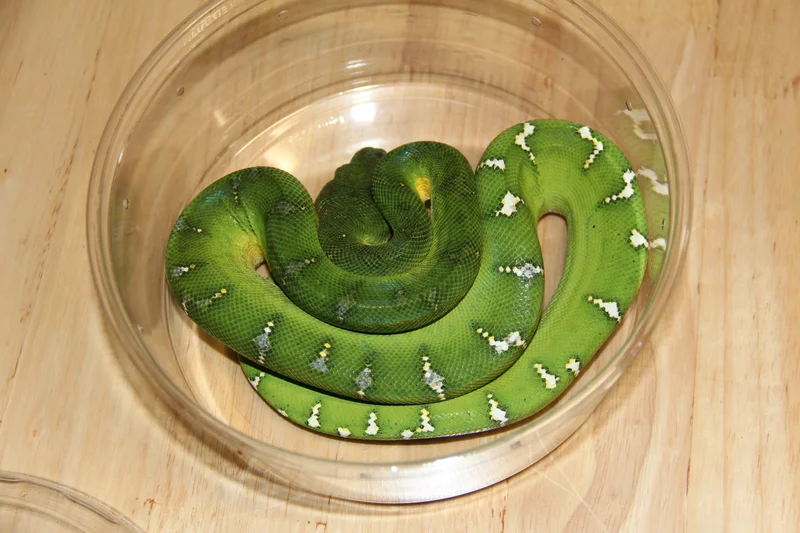
Emerald tree boas are among the most recognizable snakes in the world, draped in coils over a branch with a bright green body and white markings. Keeping one means building an arboreal, humid setup and learning their habits. This guide walks through what they need and how to pick one.
Emerald tree boas come from the rainforests of northern South America, including Brazil, Colombia, Venezuela, Peru, Bolivia and the Guianas. They spend nearly all their time in trees, resting in tight coils over horizontal branches by day and hunting at night.
Keepers often distinguish between the northern Corallus caninus and Amazon basin emeralds, which are now widely recognized as a separate species, Corallus batesii. Amazon basin animals are often described as heavier bodied with more white on the back. Ask sellers which type they are offering.
Emerald tree boas typically reach about 4 to 6 feet, although their coiled resting posture and relatively slender build make them look much smaller on a perch. Females tend to be the heavier sex.
In captivity they commonly live 15 to 20 years. Over that time, a record of meals, sheds and weights is one of the most useful tools you have, and a husbandry app like Husbandry.Pro can keep that history in one place.
Newborn emeralds are usually red, orange or brick brown rather than green. Over roughly the first year the color shifts, often gradually and sometimes quite quickly, until the adult green appears. The amount of white and the final shade vary from snake to snake.
Because of this change, photos of both parents are one of the best ways to guess how a young animal may look as an adult. There is never a guarantee, but it gives you a realistic starting point.
Emeralds need a secure arboreal enclosure with horizontal perches that match the thickness of their body. Warmth usually comes from above, giving warmer and cooler perch heights, and humidity is kept high with regular misting while still allowing good airflow.
They eat rodents in captivity and generally do well on modest meals at spaced intervals. Many keepers move them on their perch rather than lifting them off, which tends to be calmer for everyone. The ReptileAds emerald tree boa care guide explains setups and ranges in detail.
Look for an animal with a clear feeding history, sheds that come off cleanly and a relaxed perching posture. Ask the seller which lineage the parents come from, and request parent photos and recent images of the snake itself.
Check your local rules, since boas fall under international trade regulations and some jurisdictions require permits. Then use built-in chat to agree on shipping or pickup, and read the seller's profile and reviews before finalizing.
AI-assisted guide reviewed by the ReptileAds team. General information about these animals — not care, veterinary or legal advice, and not a description of any individual listing above.
Emerald tree boas are arboreal boas from the rainforests of northern South America, instantly recognizable by their green bodies and the way they coil over a horizontal perch. Listings here may describe the animal as Corallus caninus or as an Amazon basin emerald, and sellers often note the lineage of each parent.
Young emeralds are usually red, orange or brick colored and change to green as they grow, so photos of the parents give a useful preview. Ask about current prey size and how the snake has been perching and feeding.
For a related arboreal boa, see the Amazon Tree Boas category. Save a Hit List alert to be notified when a new emerald is listed.
ReptileAds gathers emerald tree boa breeders and keepers in one marketplace so you can compare lines carefully.
Ask sellers for parent photos and line history to see how a young emerald may color up.
Message sellers about perching, feeding and shipping arrangements before you commit.
Read the ReptileAds emerald tree boa care guide while you shop to plan your setup.
Emeralds live almost entirely in the branches, and their setup is built around that.
See the full ReptileAds emerald tree boa care guide for detailed ranges.
Clear answers make it easier to choose an emerald that suits your plans.