
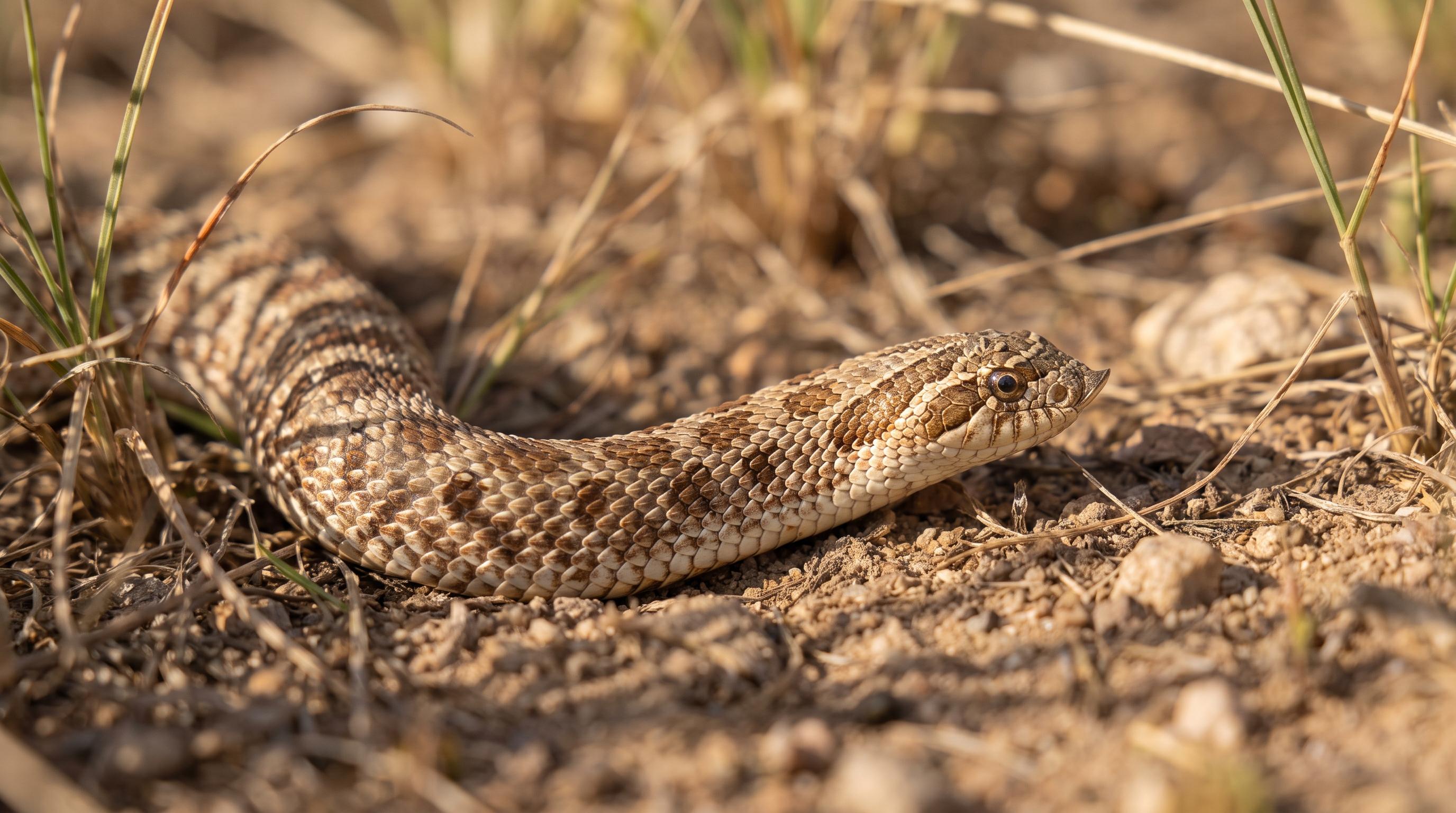
Is This Species Right for You?
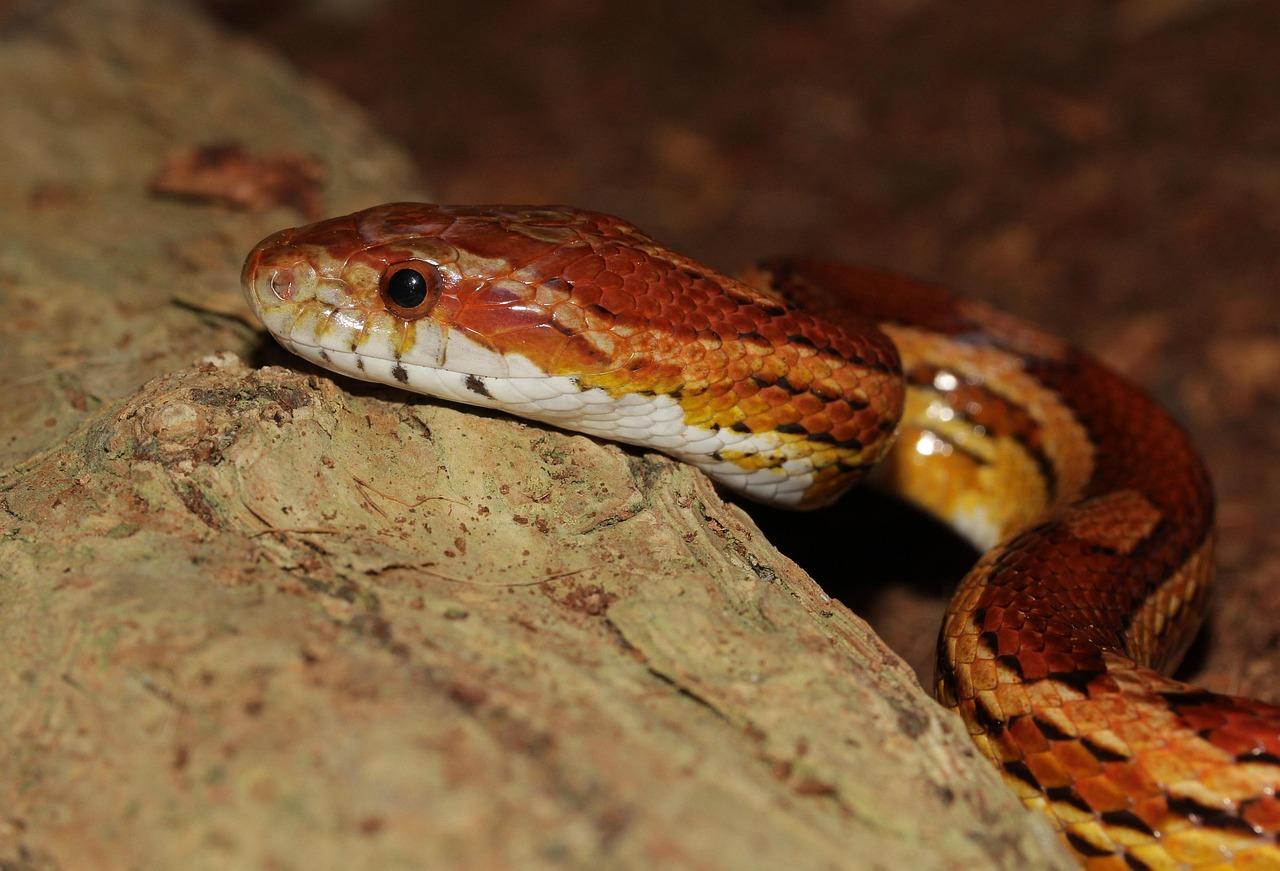
The Western Hognose is often marketed as an easy first snake because of its small size and food-driven reputation, but the husbandry record is more nuanced than that. It is mildly rear-fanged, with a Duvernoy's gland producing venom-like saliva, and it is genuinely prone to picky or stubborn feeding phases and brumation-related appetite loss. That combination makes it a better fit for someone who has already kept at least one uncomplicated colubrid, such as a corn snake, and wants a species with more personality and defensive theatre.
Space needs are modest — a single adult needs a minimum footprint of 36 x 18 x 12 in (90 x 45 x 30 cm) — but the running cost is real: $15–30 a month for feeder rodents, substrate top-ups and electricity, on top of $200–400 to set up correctly the first time. Whole rodents provide complete nutrition, so routine calcium or multivitamin supplements are not part of the standard feeding plan. At 15–20 years, this is a decade-plus commitment, not a school-term project. Handling tolerance is moderate; most individuals settle well, but expect hissing, flattened hoods, bluff strikes, and the well-known 'playing dead' display, especially early on. None of this is dangerous, but it can startle a young child, so sessions with kids need direct adult supervision. If you want a snake that is guaranteed calm and hands-off-tolerant from day one, look elsewhere in the care guides library first.
Natural History and Wild Behaviour
Heterodon nasicus is a colubrid from the central grasslands and semi-arid plains of North America, where it spends much of its life burrowed into loose, sandy soil — a strongly fossorial habit that shapes everything about how it should be housed. It is diurnal to crepuscular, most active in the morning and evening, and retreats underground to avoid heat and predators during the day.
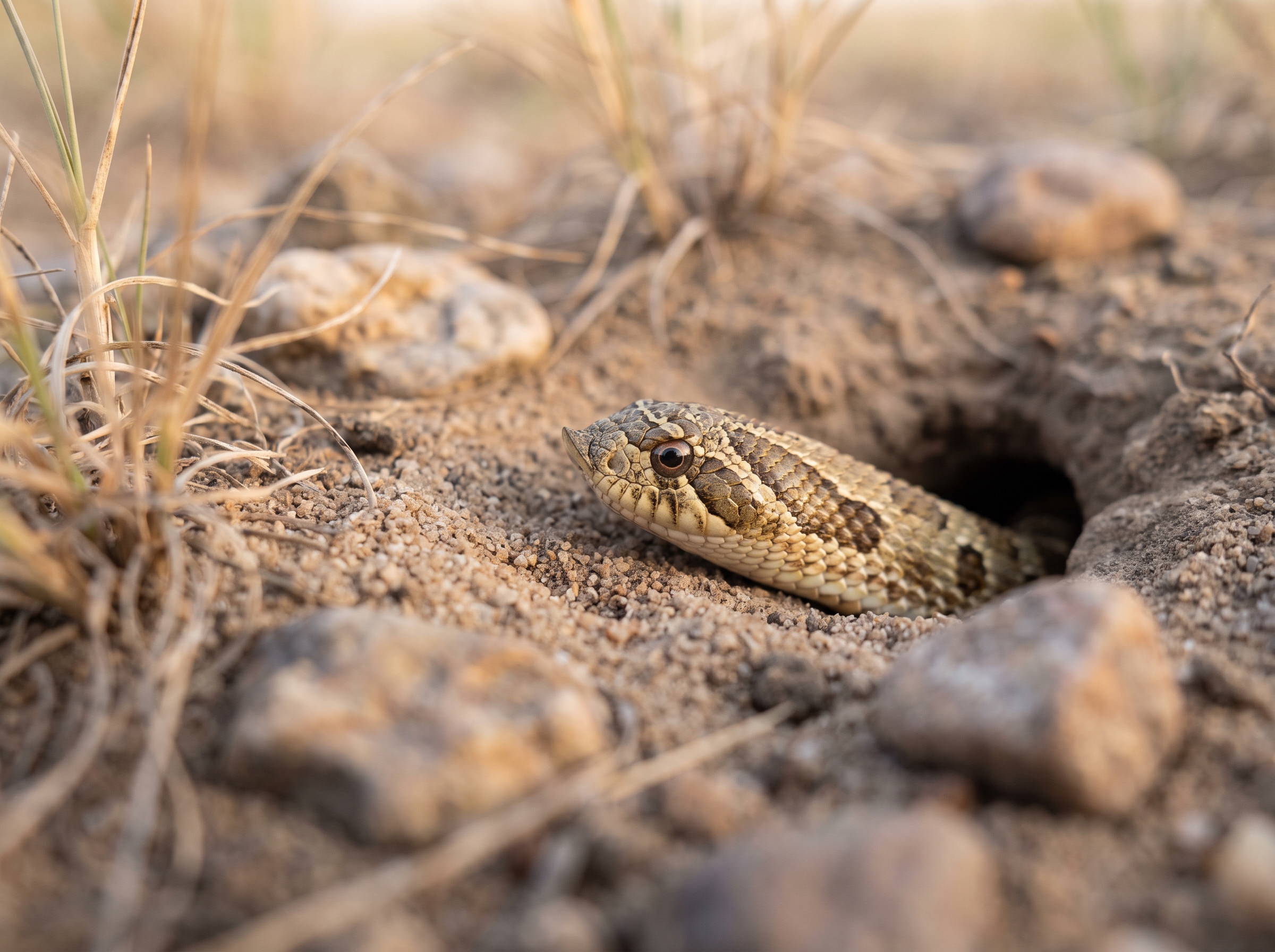
Its upturned snout is a digging tool, and its wild diet is heavily toad and amphibian based, which explains why some captive individuals are reluctant to switch to a rodent-only diet — this is a genuine species trait, not a training failure on the keeper's part. The rear fangs and mild venom evolved specifically to subdue toads, whose skin toxins would otherwise deter most predators.
Conservation-wise, Heterodon nasicus is assessed as Least Concern by the IUCN Red List and is not listed on any CITES Appendix, reflecting a stable wild population and a pet trade dominated by captive-bred stock rather than wild collection.
Enclosure Size and Setup
Every enclosure figure given for this species is a minimum, not a target — a larger footprint is always better, and floor space matters far more than height given its fossorial lifestyle. The life-stage sizes are listed separately in the stage table; what they do not tell you is when to move up. A hatchling settles faster in a small, heavily furnished tub than in a sparse adult enclosure, but the answer to a nervous young snake is more hides and deeper substrate, not a permanently cramped box: once a juvenile is feeding reliably every week, it can go straight into its adult-size enclosure. If you are only buying an enclosure once, buy to the adult minimum of 36 x 18 x 12 in (90 x 45 x 30 cm) from the start and furnish it densely.
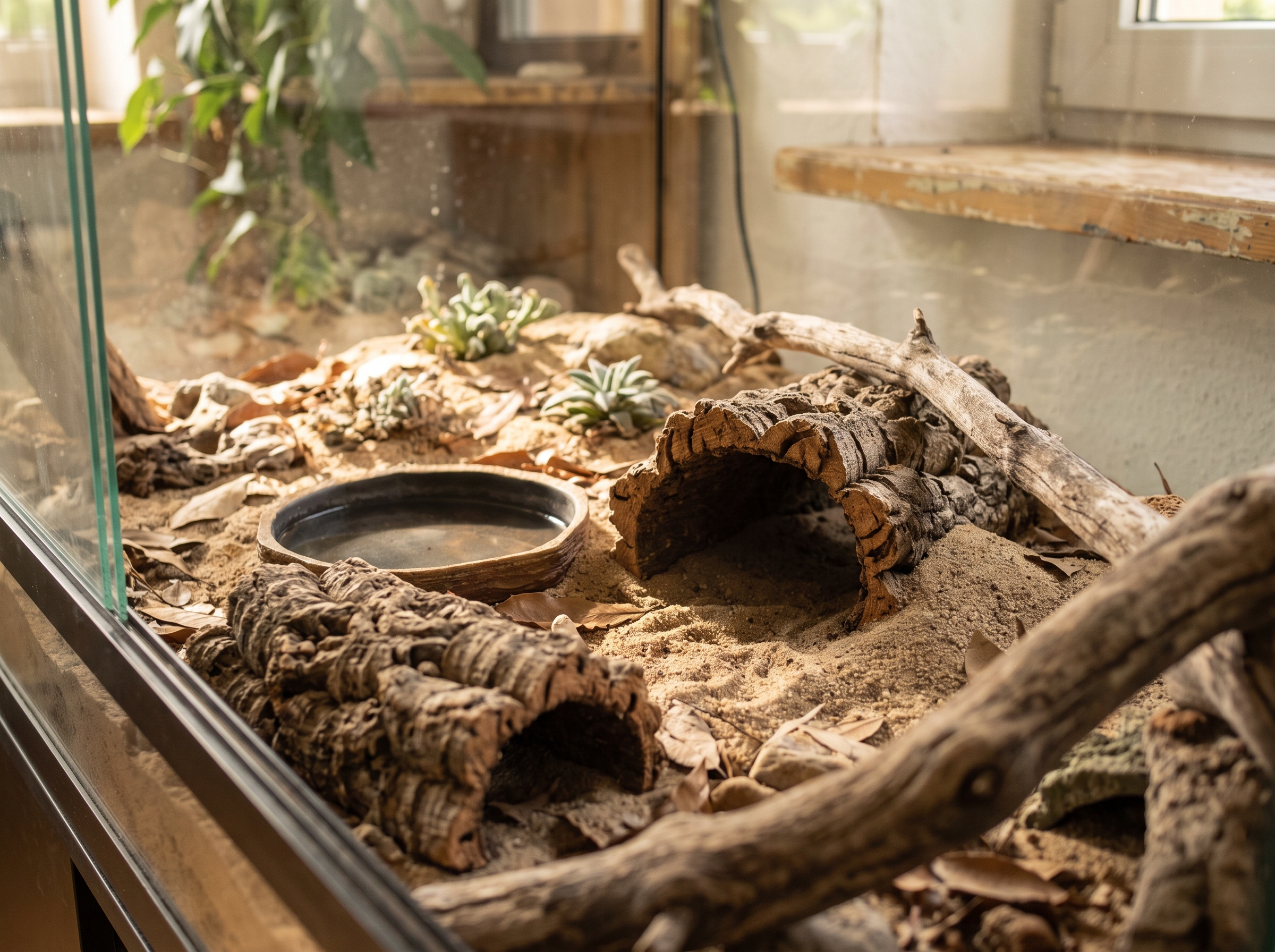
Front-opening enclosures with secure locking lids work well and make deep substrate management easier than top-opening tanks. PVC or melamine holds humidity gradients better than glass, though glass with a tight screen lid is workable if ventilation is controlled. Check every seam, vent gap, and substrate line against the enclosure wall — hognoses push into small gaps while burrowing and a loose vent screen is a common escape route. Provide at least two hides (one warm side, one cool side) plus a humid hide, a shallow water dish large enough to soak in but not to flood the substrate, and always house adults alone; this species is solitary and should only share space briefly under supervision. A separate, simply furnished quarantine enclosure with its own hide, water bowl and heat source is essential for any new arrival before it goes anywhere near an existing collection.
Heating, Lighting and Humidity
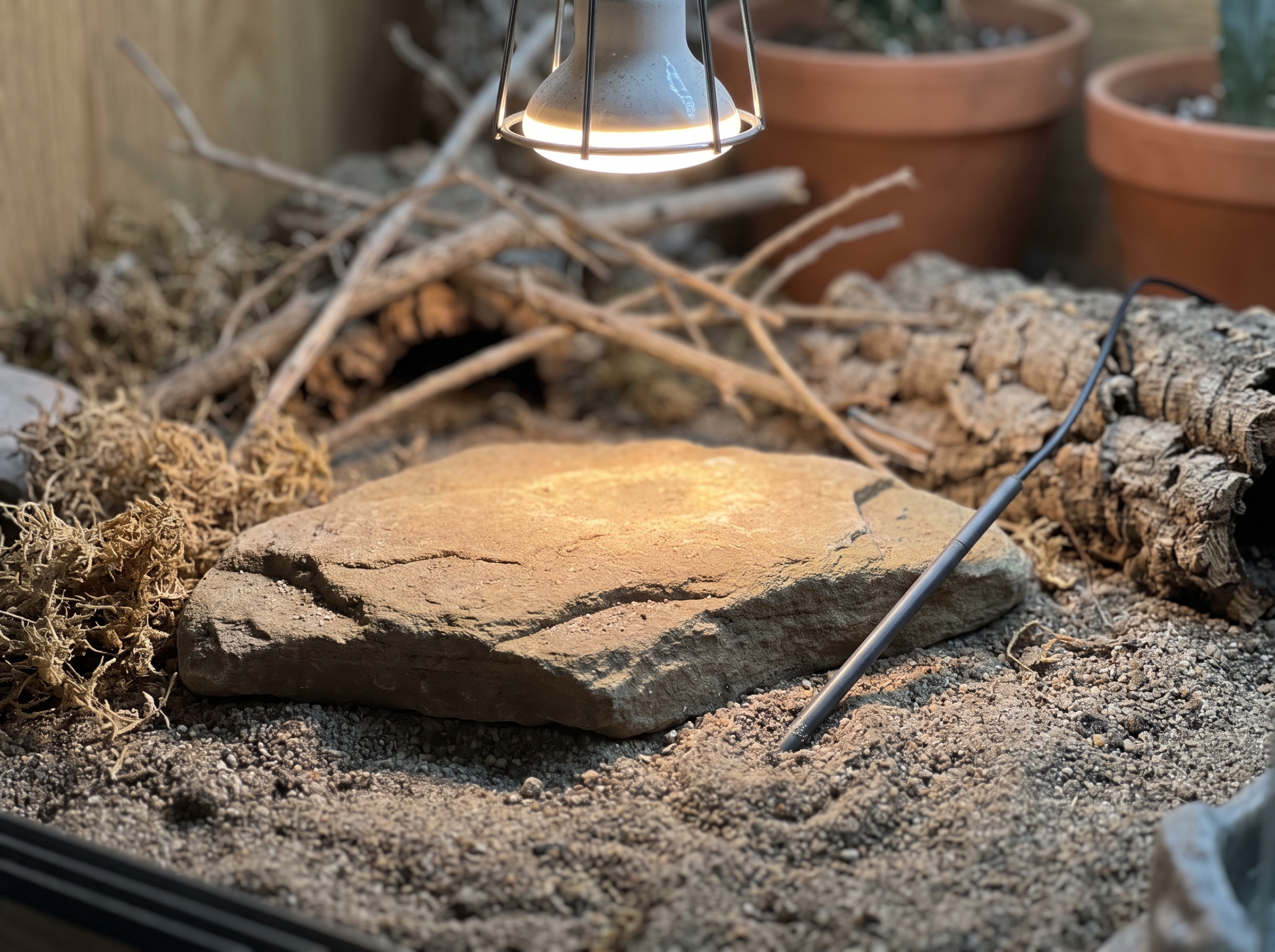
Temperatures must be measured, not guessed, and each one below is either a surface or an air reading — the two are not interchangeable.
| Parameter | Target |
|---|---|
| Basking spot (surface) | 88–92°F (31–33°C) |
| Warm side (air) | 80–85°F (27–29°C) |
| Cool side (air) | 72–78°F (22–26°C) |
| Night (air) | down to 68–72°F (20–22°C), a modest drop is natural and fine |
Use an overhead heat lamp or a low-profile radiant heat panel on a proportional or dimming thermostat, with the probe positioned at basking height on the substrate or décor at the hot spot — not clipped to the enclosure wall. Confirm the basking surface reading with an infrared temp gun or a surface probe, not the thermostat's internal sensor alone.
UVB should be provided as a low-output T5 fixture producing UVI 1.0–2.0 at the basking site (Ferguson Zone 2–3, the open/partial-sun basker zones); position it per the manufacturer's distance chart and remember that any mesh lid between lamp and animal reduces UV output, so re-check the reading with a UV index meter after installing a screen top, and always leave a shaded retreat so the snake can opt out. Run a 12-hour photoperiod in summer, shifting toward 10 hours in winter to mimic a seasonal cue.
Ambient humidity should sit at 30–50% during the day, checked with a hygrometer placed away from the water bowl. Allow it to rise to 50–60% during a shed cycle by adding a humid hide packed with damp sphagnum moss, then let it drop back to baseline once the shed completes — permanently high humidity in a dry-adapted species like this one invites skin and respiratory problems rather than preventing them.
Substrate, Decor and Enrichment
Because this species is fossorial, substrate depth is not decorative — it is the single furnishing choice that lets it express a core natural behaviour. Aim for enough loose, diggable material for the snake to fully disappear beneath the surface; a mix of play sand and topsoil, coconut fibre, or a commercial burrowing blend all work well. Aspen shavings are an acceptable, cheaper alternative for keepers not ready for a sand mix, though it holds humidity and burrow shape less well.
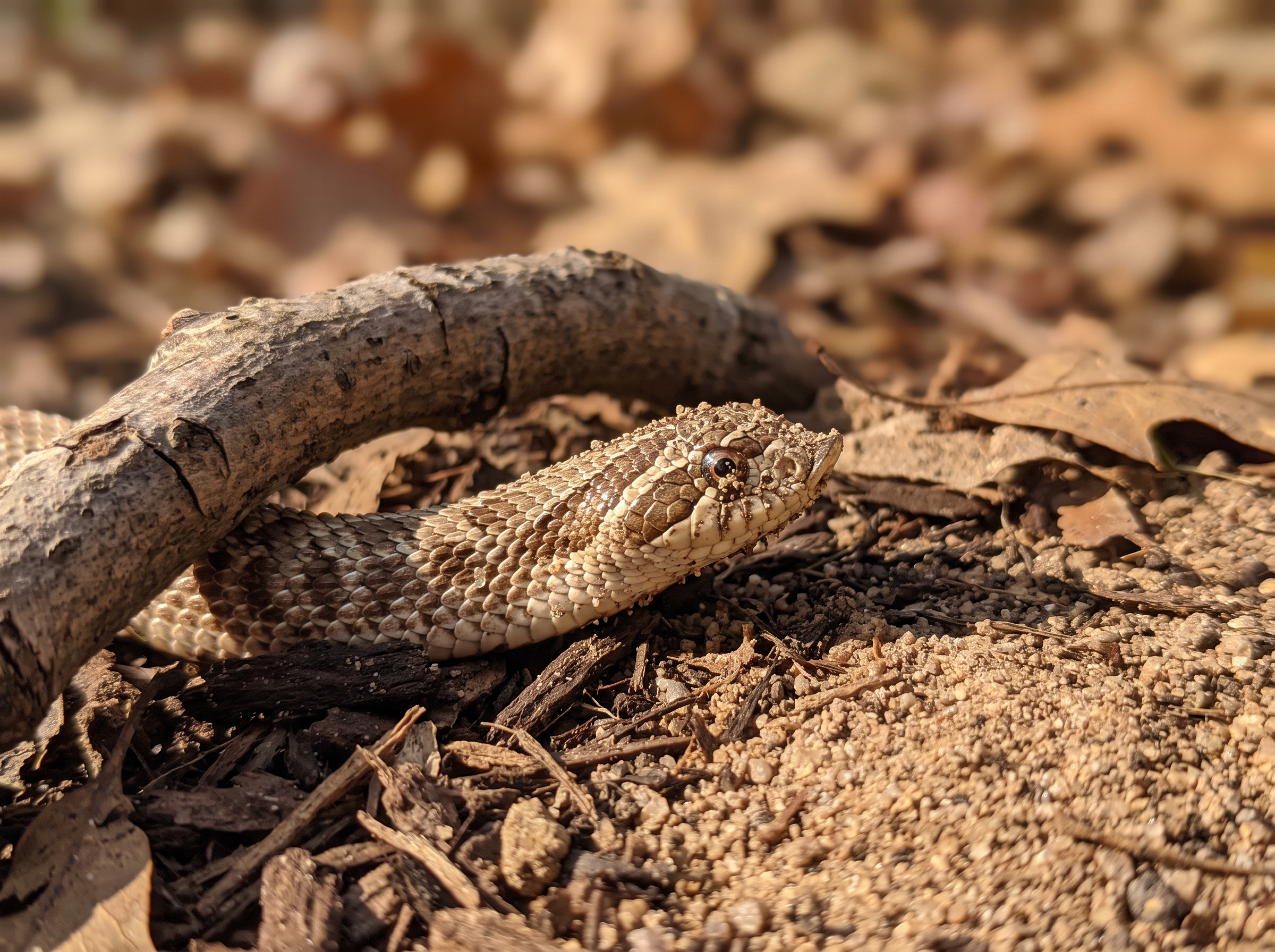
Avoid cedar and pine shavings entirely — their aromatic oils are respiratory irritants — and avoid loose calcium-sand or walnut-shell products marketed for burrowing species, which carry a real impaction risk if ingested with prey. A dedicated humid hide filled with damp sphagnum moss supports clean sheds without raising whole-enclosure humidity. Include at least one solid visual barrier per side of the enclosure so the snake is never fully exposed, plus a low piece of cork bark or a flat rock for occasional surface basking. Live plants are optional and largely cosmetic for this species given how much time it spends underground; a full bioactive setup is achievable but the plant selection needs to tolerate being buried and dug up repeatedly. Rotate enrichment simply — vary hide placement, add a new digging texture, or relocate the water bowl occasionally — rather than relying on novelty items, since this is a burrow-and-ambush animal, not an explorer.
Feeding, Supplements and Hydration
The staple diet is appropriately sized thawed frozen mice; there is no need to rotate in other rodent species for adults. Prey width is the measurable rule at every life stage: no wider than the widest part of the snake's body for hatchlings and juveniles, narrowing to no wider than the snake's midbody for subadults and adults. Occasionally a small rat can replace a mouse for a large adult female, sized by the same midbody rule. Because the wild diet is amphibian-heavy, some individuals take longer than average to settle onto a rodent-only diet — patience and scenting the prey item (rubbing it against a previously eaten food source or a safe amphibian-scented aid recommended by an exotics vet) is a common workaround, not a sign of a health problem.
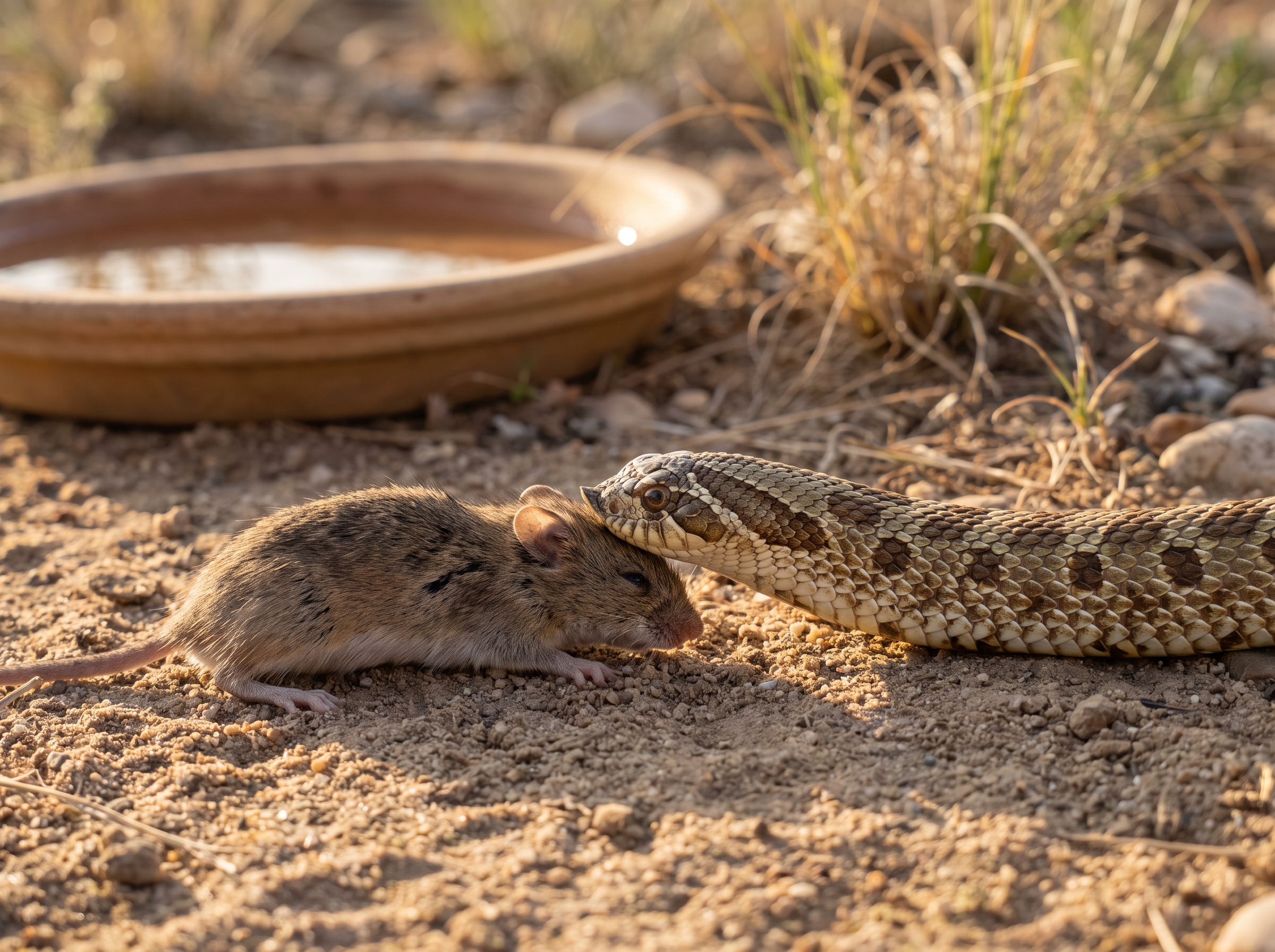
Whole rodent prey is nutritionally complete for snakes, so routine calcium or multivitamin dusting is not required at any life stage; supplement only if an exotics vet directs it for a specific animal. Feeder rodents should themselves be raised on a nutritionally complete diet before being offered, so the calcium and nutrient load passes on to the snake. Keep a shallow water dish available at all times, large enough for a soak, and change it whenever soiled.
A healthy body shows a smoothly tapered midsection with visible but not sharp muscle definition; an overweight Western Hognose develops a thickened, rounded body that no longer tapers cleanly toward the tail and can show visible skin folds along the sides — at that point, meal size or frequency should be reduced, not the prey width rule abandoned.
Daily, Weekly and Monthly Care
Day to day, this species asks for very little hands-on time — a temperature and water check takes under five minutes — but the tasks that slip first are the quiet ones: logging feeding dates and weights, and checking UVB bulb age against its replacement schedule. A UVB tube that still glows can have dropped well below an effective UVI months before it visibly dims, so tracking installation date matters more than eyeballing the light. Weekly feeding and cleaning add perhaps twenty minutes, and the monthly deep clean and weigh-in is the checkpoint where a slow weight trend, rather than a single skipped meal, tells you whether a feeding refusal is normal seasonal behaviour or something to watch more closely.
Handling and Behaviour
Give a newly acquired hognose at least a week of undisturbed settling time before any handling, with feeding established on schedule first. Lift from below rather than grabbing from above, supporting the body along its length rather than pinning the head or tail. Sessions of 10–15 minutes are enough; more frequent short sessions build tolerance better than one long one.
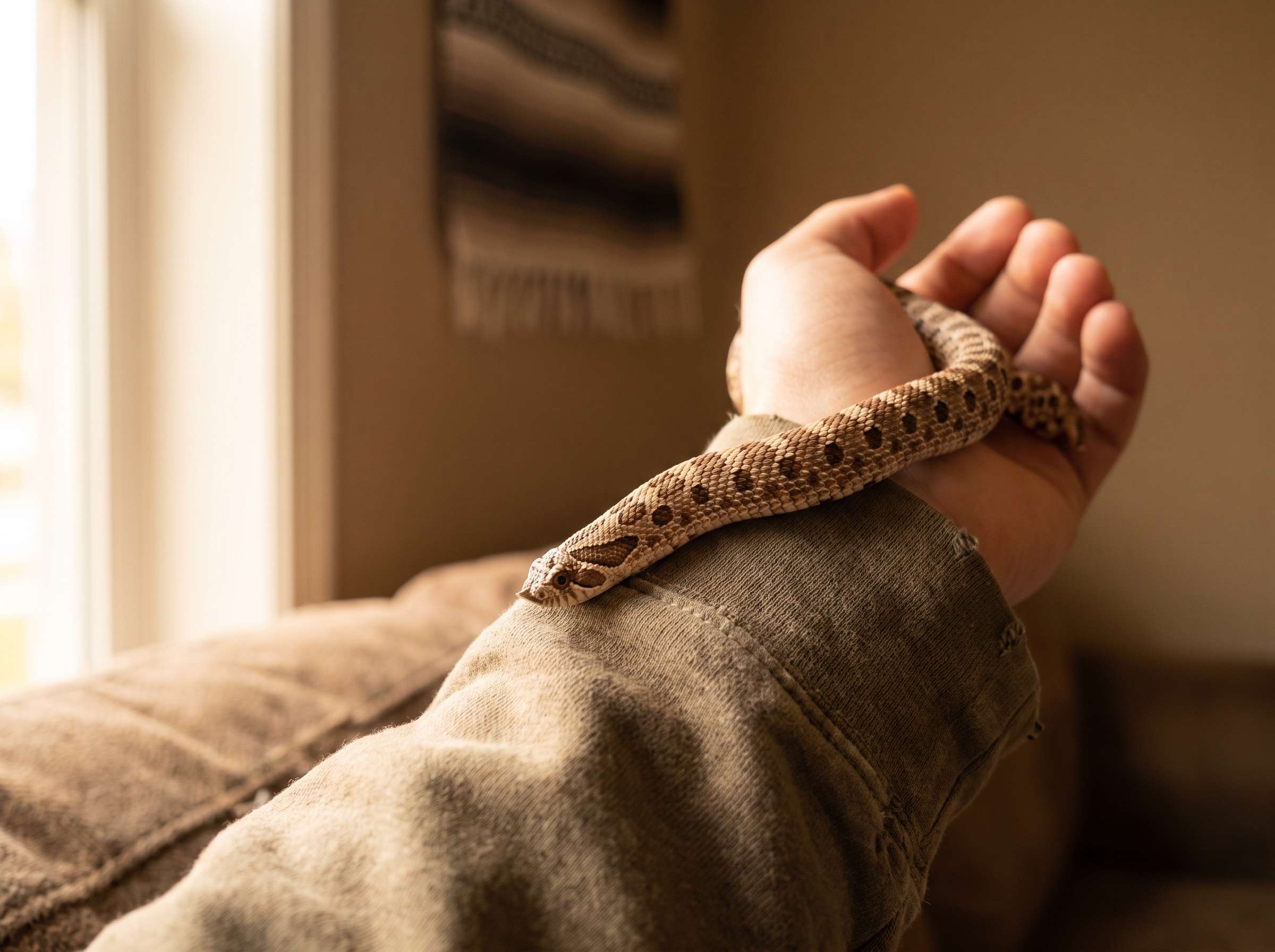
Normal body language includes steady tongue-flicking and calm exploratory movement across your hands. Stress or defensive behaviour includes hissing, flattening and widening the neck into a hood, bluff-striking with the mouth closed, and the well-documented 'playing dead' response — rolling onto the back, gaping the mouth, and releasing musk. All of these are normal defensive displays for this species, not aggression, and the correct response is to set the snake down and give it space rather than persist. A bite is uncommon and, given the mild rear-fanged venom, should be washed and watched rather than dismissed, though it is not comparable to a front-fanged venomous bite. Any handling around children should be directly supervised, and the enclosure lid should be checked closed and latched every single time after a session — an unlatched lid is the most common cause of escapes in this fossorial, surprisingly strong-nosed species.
Health and Veterinary Care
Any new hognose should go through a quarantine period of at least 60 days (90 days if you keep a larger collection) before joining an existing collection, with a baseline exotics vet check and a faecal parasite screen early on. In practice quarantine means a separate, simply furnished enclosure — paper towel substrate so mites and abnormal stools are visible, a hide, water bowl and its own thermostatted heat source — ideally in a different room, serviced last with dedicated tools and hand-washing between animals. Normal stools are firm and formed with a small white urate cap; normal sheds come away in one piece, and normal weight should track upward steadily through the juvenile and subadult stages before leveling off in adulthood — this is why a monthly weigh-in matters more than it might seem.
Most of what goes wrong in this species traces back to a specific husbandry error rather than an unavoidable illness: retained shed usually means humidity dropped too low around the shed cycle rather than staying in the 50–60% range that shedding calls for; persistent soaking outside of a shed cycle often points to temperatures or humidity being off, or occasionally mites; and appetite loss lasting many weeks is frequently a normal seasonal pattern rather than disease, though it still deserves a temperature check and a watchful eye on weight. Anything involving audible breathing sounds, a firm unexplained lump, or a prolapse is outside the range of anything to manage at home — that calls for an exotics vet, not a wait-and-see approach. If something looks wrong and you are unsure, browsing established stores or other care guides won't replace a vet visit; use them for prevention, not diagnosis.
Buying This Species
The overwhelming majority of Western Hognoses in the pet trade today are captive bred, and that is the strong preference here: captive-bred animals feed more readily on rodents from the start and carry a much lower parasite burden than the wild-caught individuals that still occasionally enter trade from the central US range. A healthy animal in photos shows clear, alert eyes, smooth unmarked scales, a well-rounded but not lumpy body, and no visible mucus around the nostrils or mouth; in the hand it should feel firm with steady, unlabored breathing and normal defensive posturing rather than complete limpness.
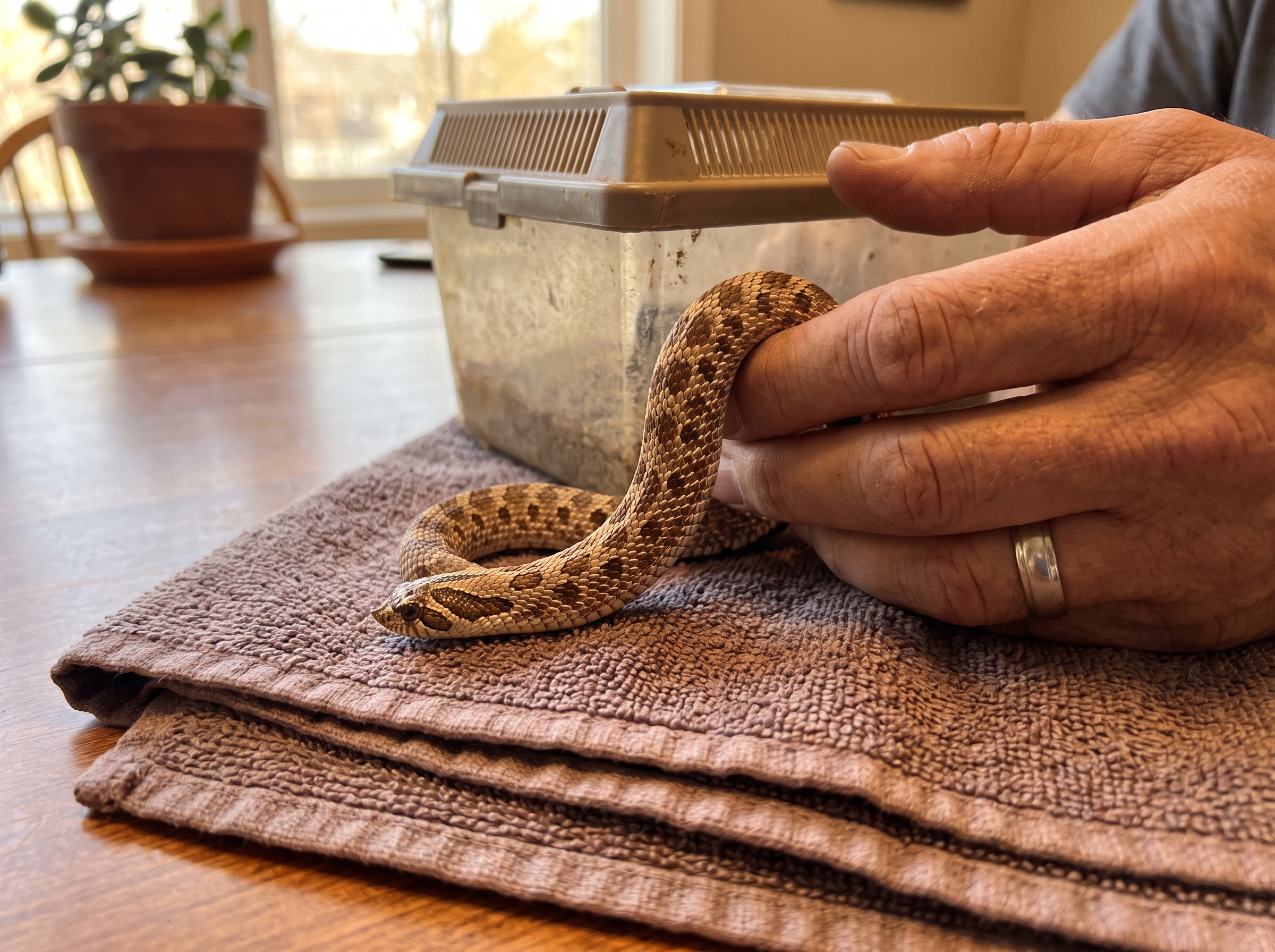
Because color and pattern lines in this species are extremely well established, some morph lines have been associated with health concerns in other colubrids through irresponsible line-breeding — this is a welfare question to ask a seller about directly, not a feature to shop for. Before transport, have the quarantine enclosure fully set up and warm ahead of arrival, and minimize handling for the first week to let the animal settle. Because Heterodon nasicus is rear-fanged and mildly venomous, some states, countries, and local councils place restrictions on ownership that vary and change over time — check your own state, country, and municipal or council rules, including any native-species or exotic-venomous-reptile ordinances, before you commit to buying one. When you're ready, current Western Hognose Snakes for sale can be browsed directly, and the wider marketplace is worth checking for verified sellers with clear husbandry records to hand over at pickup.
- IUCN Red List
- Least Concern (IUCN Red List assessment for Heterodon nasicus).
- CITES
- Not listed on any CITES Appendix.
- Ownership restrictions
- Because Heterodon nasicus is rear-fanged and mildly venomous, some states, countries, or local councils classify it (or 'venomous/medically significant' reptiles generally) under restricted or permit-requiring categories — this varies widely and changes over time, so buyers must verify their own state, country, and municipal/council rules (including any native-species or exotic-venomous-reptile ordinances) before acquiring one.
- Wild-caught in trade
- Wild-caught animals still enter trade from parts of the central US range, but the vast majority of pet-trade specimens today are captive bred; wild-caught individuals are often harder feeders and more parasite-prone.
- Captive-bred availability
- Extremely widely captive bred, with an enormous range of morphs/color lines readily available from breeders and marketplaces such as ReptileAds.
Ownership rules vary by country, state and even city, and they change. Check what applies where you live before you buy.
Feeding by Life Stage
What changes as the animal grows. Portions are measurable rules, not estimates.
- Food
- Thawed frozen pinky or fuzzy mice.
- Portion
- Pinky or fuzzy mouse no wider than the widest part of the snake's body.
- Frequency
- Every 5–7 days.
- Supplements
- None required — whole rodent prey from well-fed feeders is nutritionally complete for snakes, including calcium from bone. Routine dusting is unnecessary; only supplement on the specific advice of an exotics vet.
- Enclosure
- Small enclosure or rack tub, roughly 12 x 12 x 6 in (30 x 30 x 15 cm) minimum, with secure lid and multiple hides.
- Food
- Thawed frozen fuzzy to hopper mice.
- Portion
- Fuzzy to hopper mouse no wider than the widest part of the body.
- Frequency
- Every 6–8 days.
- Supplements
- None required — whole rodent prey is nutritionally complete; no routine dusting needed.
- Enclosure
- Minimum 20-gallon-long equivalent, ~30 x 12 x 12 in (76 x 30 x 30 cm).
- Food
- Thawed frozen adult mice.
- Portion
- Adult mouse sized no wider than the snake's midbody.
- Frequency
- Every 7 days.
- Supplements
- None required — whole rodent prey is nutritionally complete; no routine dusting needed.
- Enclosure
- Working toward adult minimum, ~30–36 x 12–18 x 12 in (76–90 x 30–45 x 30 cm).
- Food
- Thawed frozen adult mice; occasionally a small rat for a large female.
- Portion
- One appropriately sized adult mouse (occasionally a small rat for large females) no wider than the snake's midbody.
- Frequency
- Every 7–10 days.
- Supplements
- None required — whole rodent prey is nutritionally complete; no routine calcium or multivitamin dusting needed for a healthy adult on quality feeders.
- Enclosure
- Minimum 36 x 18 x 12 in (90 x 45 x 30 cm), ~40-gallon breeder equivalent (~150 L).
- Food
- Thawed frozen adult mice — the same staple as non-breeding adults, offered more often pre-breeding.
- Portion
- Increase meal size/frequency slightly pre-breeding to build reserves; gravid females often refuse food entirely for weeks — do not force feed.
- Frequency
- Pre-breeding: every 5–7 days; gravid females fed only if they voluntarily accept, checked every 5–7 days.
- Supplements
- No routine dusting required; breeding females are supported by well-raised feeders and correct feeding frequency, with any supplementation directed by an exotics vet.
- Enclosure
- Same as adult minimum, but with an added secure nest box of moist substrate once gravid.
Daily, Weekly and Monthly Care
What keeping this animal actually costs you in time, week to week.
- Check both hot-end and cool-end air temperatures against the thermostat/probe readout.
- Confirm water bowl is full and clean.
- Visually check the snake for normal posture, alertness, and no signs of regurgitation or discharge.
- Check the UVB fixture is powered on and within its rated lifespan.
- Spot-clean feces and shed skin from substrate and decor.
- Feed on schedule and log the date, prey size, and whether it was taken voluntarily.
- Check humidity reading against the hygrometer, especially before an expected shed.
- Inspect the enclosure for escape gaps around the lid, vents, or substrate depth near the walls.
- Do a full substrate change or deep spot-clean depending on substrate type.
- Weigh the snake and log the weight to track growth or condition trends.
- Check UVB bulb output age against manufacturer replacement schedule (typically 6–12 months for compact/tube fixtures).
- Disinfect water bowl and any hides with a reptile-safe disinfectant.
When to Call a Vet
What you can see, and how quickly it needs acting on.
| What you see | Urgency | What to do |
|---|---|---|
| Dull, bluish-grey skin with cloudy eyes for a few days | Normal | This is a normal pre-shed cycle; ensure humidity rises slightly and a humid hide is available. No action needed unless shed does not complete cleanly within a few days after eyes clear. |
| Refusing food for 1–3 weeks, especially in cooler months | Normal | Common seasonal appetite dip/brumation-like response in this species; verify temperatures are correct and re-offer food in a week. Only escalate if fasting extends beyond 6–8 weeks with weight loss. |
| Hissing, puffing the neck flat (hood), or fake striking with mouth closed | Normal | Classic hognose bluff display, not a medical or dangerous sign; give the snake space and minimize handling until it settles. |
| Playing dead (rolling over, gaping mouth, releasing musk) | Normal | Normal defensive behavior for this species; leave the animal undisturbed and it will right itself. |
| Retained shed on the tail tip or eye caps | Check the setup | Raise humidity and provide a damp hide or brief soak; if retained caps persist after 2 sheds, arrange a vet check. |
| Persistent time spent soaking in the water bowl outside of shed cycles | Check the setup | Check for mites, verify temperatures/humidity are not too low, and confirm ambient temps aren't too high. |
| Small moving dots on the snake's body or in the water bowl | Check the setup | Likely mites — isolate the enclosure, deep clean, and treat the environment; consult an exotics vet if infestation is heavy or the snake seems unwell. |
| Mild scale rub or minor abrasion with no swelling or discharge | Check the setup | Clean the enclosure, remove abrasive decor, and monitor daily for worsening; keep the substrate clean to prevent infection. |
| Regurgitating a meal | See a vet | Stop feeding for at least 2 weeks, verify temperatures are correct, and schedule an exotics vet visit, especially if it happens more than once. |
| Firm, unusual lump or swelling along the body not related to a recent meal | See a vet | See an exotics vet for evaluation; keep the snake warm and calm for transport. |
| Complete loss of appetite lasting more than 6–8 weeks with visible weight loss | See a vet | See an exotics vet; bring feeding and weight logs to the appointment. |
| Stringy, bubbly saliva, open-mouth breathing, or audible clicking/wheezing | Urgent | Signs of respiratory infection — see an exotics vet urgently, keep the snake warm during transport, and do not offer food. |
| Prolapse of tissue from the vent | Urgent | Keep the tissue moist and clean with a damp paper towel if possible, keep the snake warm, and get to an exotics vet immediately without attempting to push tissue back in yourself. |
| Sudden limpness, inability to right itself, seizure-like activity, or unresponsiveness | Urgent | Transport warm and immediately to an exotics vet; this can indicate severe neurological or metabolic crisis. |
This guide does not diagnose and does not replace a veterinarian. Nothing here is a treatment or a dose. If you are unsure, an exotics vet is always the right call.
Buying Checklist
What to check, what to ask, and what to have ready.
Quarantine every new arrival for at least 60 days (90 days with a larger collection): a separate, simply furnished enclosure on paper towel with its own hide, water bowl and thermostatted heat source, ideally in a different room, serviced last with dedicated tools. Book a baseline exotics vet check and faecal parasite screen during this period, and watch for mites, regurgitation, abnormal stools or weight loss before introducing the animal near an existing collection.
Roughly $380–760 in the first year, excluding the price of the snake: $200–400 for a correct setup (enclosure, thermostat, heat source, low-output UVB fixture, substrate, hides) plus $15–30 a month (about $180–360) for feeder rodents, substrate top-ups and electricity. Budget an extra $50–150 for the baseline exotics vet check and faecal parasite screen during quarantine.
Frequently Asked Questions
Do Western Hognose Snakes make good pets for beginners?
Not usually as a very first snake. They are hardy and food-driven overall, but they are mildly rear-fanged with venom-like saliva, prone to picky feeding phases, and prone to seasonal appetite loss, so they suit a keeper who already has some colubrid experience rather than a total first-timer.
How big do Western Hognose Snakes get?
Males reach 14–24 in (36–61 cm) while females are noticeably larger at 24–36 in (61–91 cm), roughly 1.5–2 times the mass of a male. This marked size difference between sexes should factor into enclosure planning from the juvenile stage onward.
How long do Western Hognose Snakes live?
With correct husbandry, a captive Western Hognose Snake typically lives 15–20 years, so acquiring one is a decade-plus commitment rather than a short-term pet.
Do hognose snakes need UVB lighting?
Low-level UVB is increasingly recommended even though hognoses were historically kept without it. Aim for a UVI of 1.0–2.0 at the basking site using a low-output T5 fixture, always paired with a shaded retreat so the snake can move away from it.
Are Western Hognose Snakes dangerous to humans?
They are mildly rear-fanged with a Duvernoy's gland producing venom-like saliva, meant for subduing toads, not people. A bite is uncommon and not comparable to a front-fanged venomous snake, but it should still be washed and monitored, and local laws on owning a mildly venomous or rear-fanged species should be checked first.
Why is my hognose snake refusing food?
Refusing food for one to three weeks, especially in cooler months, is a common and normal seasonal appetite dip in this species. Verify temperatures are correct and re-offer food after about a week; only escalate to an exotics vet if fasting extends beyond six to eight weeks alongside visible weight loss.
Why does my hognose snake flatten its neck and hiss?
Hissing, hooding the neck flat, and bluff-striking with a closed mouth are classic defensive displays for this species, along with the well-known 'playing dead' response. These are normal behaviors, not aggression or illness, and the right response is to give the snake space rather than continue handling.
What size enclosure does an adult hognose snake need?
An adult needs a minimum footprint of 36 x 18 x 12 in (90 x 45 x 30 cm), roughly equivalent to a 40-gallon breeder tank (about 150 L). This is a floor stated as a minimum, not a target, and a larger enclosure with deep, loose substrate is always better for this burrowing species.
References and Revision History
September 30, 2026
- 1.
IUCN Red List — Heterodon nasicus assessment
Supports: Least Concern conservation status
- 2.
Supports: Not listed on any CITES Appendix
- 3.
Supports: The mild rear-fanged/Duvernoy's gland venom status and its relevance to ownership restrictions
- 4.
Association of Reptilian and Amphibian Veterinarians (ARAV) — general husbandry and health resources
Supports: General health triage guidance for husbandry-correctable vs. urgent signs in colubrid snakes
- 5.
Reptiles Magazine — Western Hognose Snake care sheet
Supports: The 88–92°F (31–33°C) basking surface range, the 36 x 18 x 12 in (90 x 45 x 30 cm) adult enclosure minimum, the 7–10 day adult feeding interval, and the 15–20 year captive lifespan
- 6.
Ferguson, G.W. et al. — UVB exposure and Ferguson zone classification framework for reptiles
Supports: The UVI 1.0–2.0 / Ferguson Zone 2–3 target range
- September 30, 2026First draft generated and reviewed.
Was this guide helpful?
Rate this guide
Questions & Answers
0 questions from the community
Comments
0 comments