Sponsored
#1 Podcast
Reptiles Guild
Watch Now!!!
AdvertisementWhy am I seeing this?

Browse Pacman frogs for sale from breeders and keepers, including Cranwell's, ornate and popular color morphs, and chat with sellers to bring home one of the hobby's most laid-back, big-appetite frogs.
Showing 1 to 1 of 1 animals
Showing 1 to 1 of 1 animals
Watch Now!!!
Pacman frogs earn their nickname from their round bodies and huge mouths, which let them ambush almost anything that wanders by. These horned frogs of the genus Ceratophrys come from South America, mainly Brazil, Argentina, Uruguay and Paraguay. Their calm, sit-and-wait lifestyle and simple housing needs have made them one of the most popular frogs in the hobby.
The Cranwell's horned frog, Ceratophrys cranwelli, is the species most commonly bred in captivity. The ornate horned frog, C. ornata, is admired for its bold green and red markings, and the Surinam horned frog, C. cornuta, is noted for its pronounced horns.
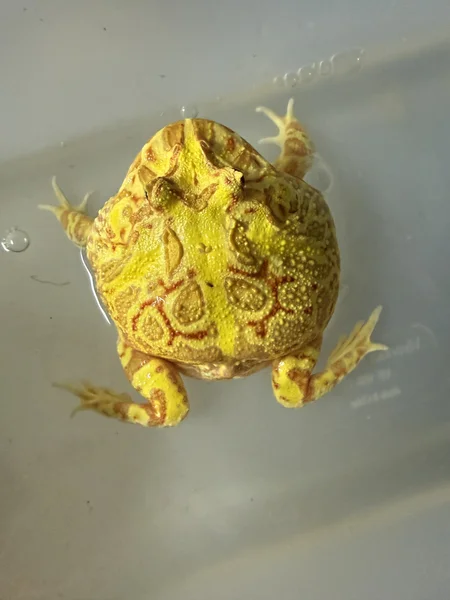
Breeders have developed many color morphs over the years. Keepers commonly look for albino, strawberry, green, and apricot-colored lines, and hybrids such as the widely known Fantasy frog, a cross between Cranwell's and Surinam horned frogs, also appear. Asking the seller about a frog's background helps you understand exactly what you are buying.
Adult Pacman frogs typically measure 4 to 6 inches, with females generally larger than males. Juveniles grow quickly when well fed, so a small froglet can reach adult size within its first year or two.
In captivity, Pacman frogs commonly live 6 to 10 years. That makes them a meaningful commitment, but one with modest space and equipment needs compared with many other amphibians.
Pacman frogs are terrestrial and spend most of their time partly buried, so floor space and substrate depth matter more than height. A few inches of damp, moisture-holding substrate such as coconut fiber lets them dig in, and a shallow water dish gives them a place to soak. Live or artificial plants and a bit of leaf litter add cover.
They prefer warm conditions, and many keepers use a low-wattage heat source on one side to create a gentle gradient. Humidity should stay fairly high without the substrate becoming waterlogged. The ReptileAds care guide goes into typical ranges and maintenance routines.
Pacman frogs are carnivores with an enormous appetite. In captivity they are usually fed earthworms, nightcrawlers, roaches and crickets, often offered with feeding tongs to avoid accidental substrate ingestion. Insects are typically dusted with calcium and vitamins, especially for growing juveniles.
Larger adults are sometimes offered bigger prey on occasion, but most keepers build the diet around insects and worms. Because these frogs will eat readily and can become overweight, a feeding schedule is helpful. Logging meals and weigh-ins in Husbandry.Pro makes it easy to see whether your frog is growing steadily.
Most Pacman frogs are sold as juveniles, so start by checking the listed age and size. A healthy young frog looks round and well filled, with clear eyes and clean skin. Ask the seller how often it eats and what it is currently eating, since a strong feeding response is a good sign that it has settled well.
Decide whether you want a particular species or a color morph, and confirm whether the animal is a hybrid. Local regulations are generally light for Pacman frogs, but it is still worth checking your local rules. Have the enclosure warm and stable before the frog arrives.
AI-assisted guide reviewed by the ReptileAds team. General information about these animals — not care, veterinary or legal advice, and not a description of any individual listing above.
Pacman frogs, also called horned frogs, are round, wide-mouthed ambush predators from South America. Listings here typically feature Cranwell's horned frogs and ornate horned frogs, along with color morphs keepers commonly look for such as albino, strawberry and green. You may also see hybrid lines sold under trade names.
Because Pacman frogs are usually sold as juveniles, pay attention to the size and age in each listing and ask whether the frog is already eating well. Use the built-in chat to confirm its current diet and how it will be packed for shipping, and check seller profiles and reviews. If you have a particular morph in mind, set a Hit List alert so you know when one is listed.
ReptileAds lets you compare Pacman frog morphs from different breeders and talk to them directly.
Compare listings for different species and color morphs, with photos and notes from each seller.
Ask sellers about feeding response, size and shipping plans before you make a decision.
Set a Hit List alert for the morph you want and be notified when a match is listed.
Pacman frogs spend most of their time buried and waiting for food, which keeps their setup refreshingly simple:
See the full ReptileAds Pacman frog care guide before your frog arrives.
These tips will help you choose a healthy Pacman frog.