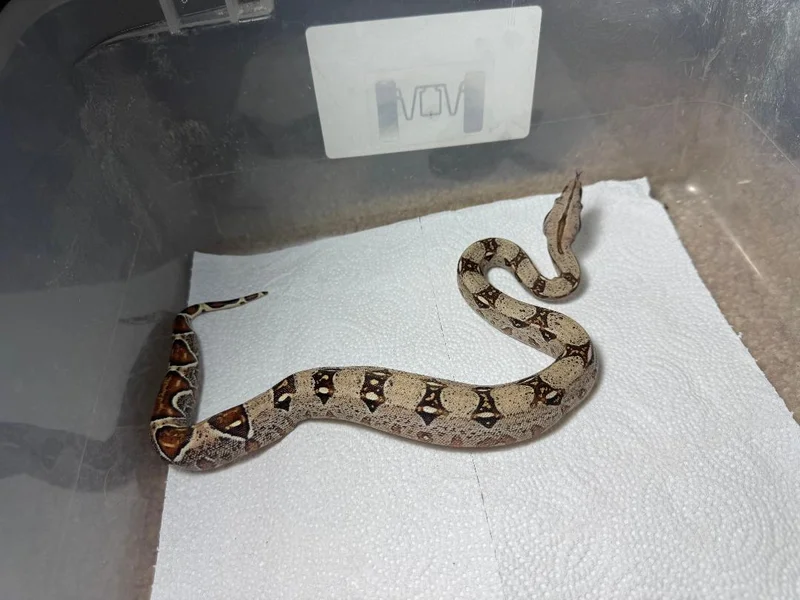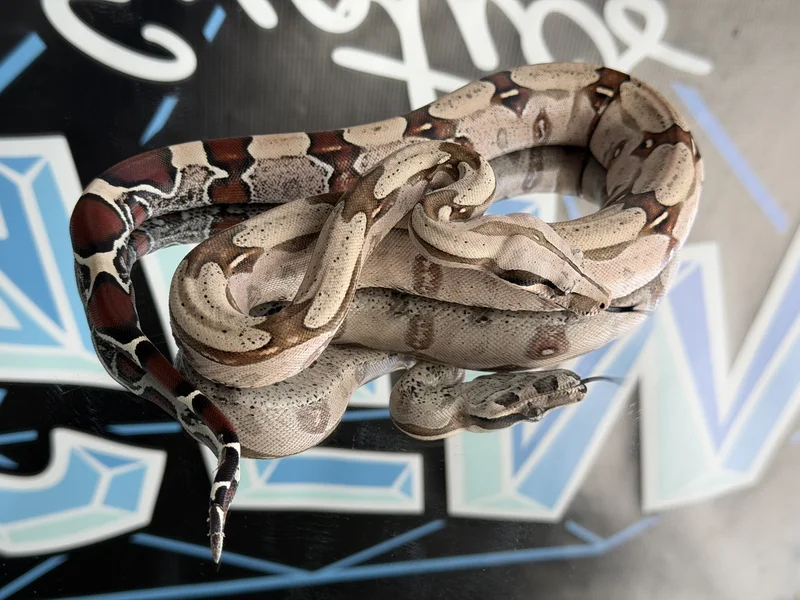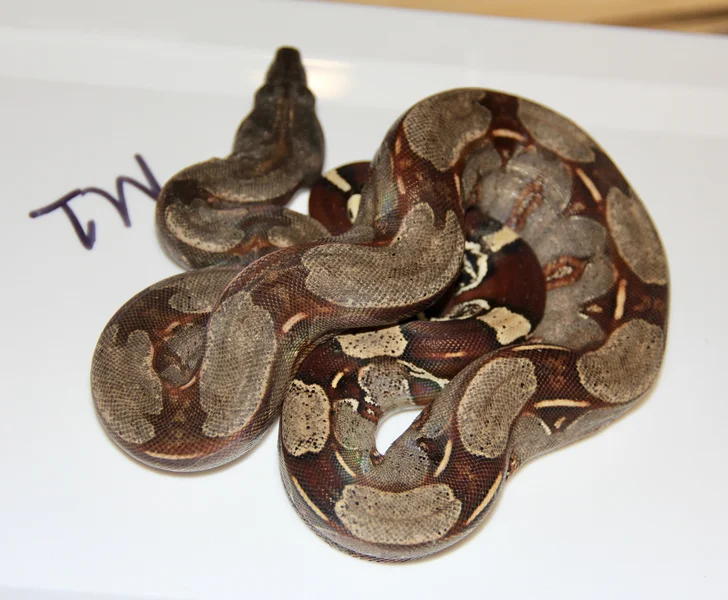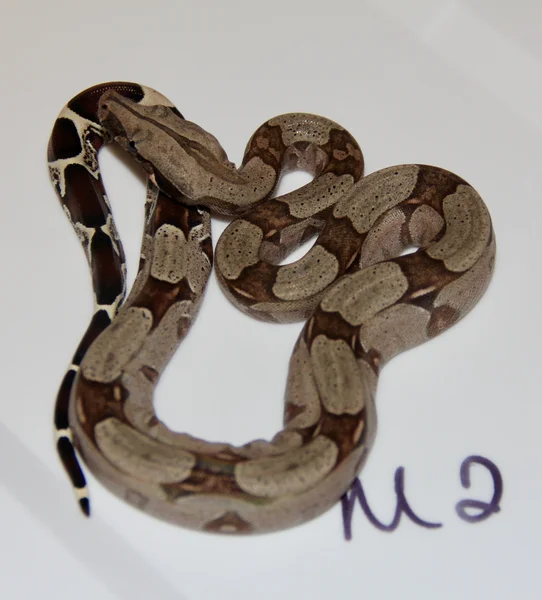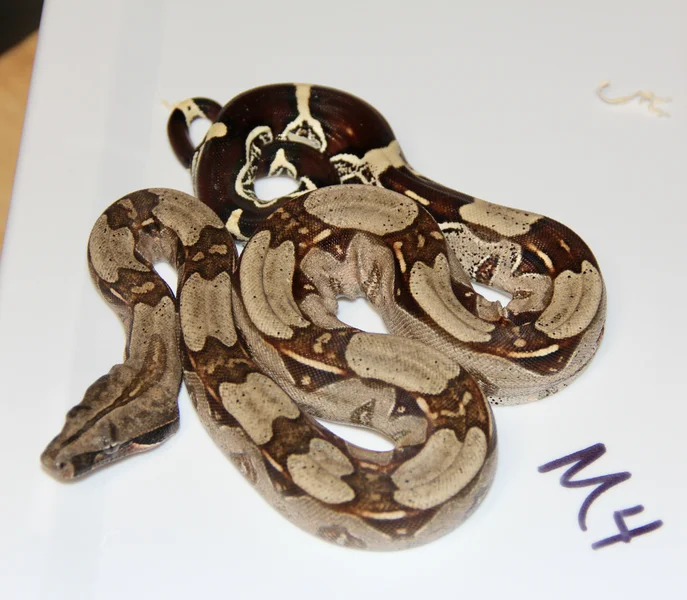
Find true red-tailed boas (BCC) for sale from breeders and keepers, including Suriname, Guyana and other South American locality lines of Boa constrictor constrictor.
Showing 1 to 5 of 5 animals
Showing 1 to 5 of 5 animals

SAVE 10% OFF ONE ANIMAL! MUST MENTION THIS AD FOR DISCOUNT!
True red-tailed boas are the South American boa constrictors that many keepers consider the classic boa. They are prized for bold tail coloration and for locality lines kept pure over generations. This guide covers what sets them apart, how large they grow and how to choose one.
In the hobby, BCC refers to Boa constrictor constrictor, the nominate boa from northern South America, including Colombia, Venezuela, Ecuador, Peru, Brazil and the Guianas. Common boas, or BCI, come from Central America and are now usually classed as a separate species.
Many BCC show deep red or maroon saddles toward the tail and a lighter background color, though appearance varies by locality and individual. The bigger practical difference is lineage. People buying a BCC usually want a snake from a specific place, so provenance is part of what they are paying for.
Suriname and Guyana red-tails are among the most sought after, often admired for their clean backgrounds and rich tail color. Brazilian and Peruvian animals are also kept, and each locality tends to have its own following among breeders.
When a listing names a locality, ask how the line was established and how far back records go. A seller who can explain the history clearly is giving you more than a label.
Red-tailed boas typically grow to about 8 to 10 feet, with females usually larger and noticeably heavier than males. They are powerful snakes, so plan for a sturdy adult enclosure from the start.
With good care, BCC commonly live 20 to 30 years in captivity. Over a life that long, consistent records are valuable; many keepers log feedings, sheds and weights, and Husbandry.Pro is one app that keeps that history organized alongside any breeding notes.
BCC generally appreciate a setup similar to other boas with a slight lean toward warmth and humidity. Offer a warm basking area, a cooler side, secure hides and a large water bowl, and keep an eye on humidity during sheds. Thick branches give adults a place to climb and stretch out now and then.
They eat rodents, moving from mice or small rats to larger prey as they mature, and like other boas they tend to do well on a measured feeding schedule rather than frequent large meals. The ReptileAds care guide goes into enclosure sizes and ranges.
Decide first which locality appeals to you, then compare several listings for that line. Look for clear photos of the tail and body, a hatch date, and notes on what the snake is eating.
Message the seller to ask about parent photos, how purity of the line is documented, and how shipping or pickup works. Check the seller's reviews on ReptileAds, and confirm your local rules, since some jurisdictions require permits for large constrictors.
AI-assisted guide reviewed by the ReptileAds team. General information about these animals — not care, veterinary or legal advice, and not a description of any individual listing above.
This category is for Boa constrictor constrictor, the South American boa that hobbyists call a true red-tail or BCC. Listings often highlight the locality, such as Suriname, Guyana or Brazil, and the deep red saddles near the tail that draw many keepers to this group.
Because locality and lineage are the main reasons people choose a BCC, ask sellers how the parents were sourced and whether records go back several generations. Clear photos of the tail and full body help you compare animals fairly.
Looking for Central American boas or morph projects instead? Browse Common Boas (BCI). Set a Hit List alert to hear when a red-tail matching your criteria is posted.
ReptileAds makes it easier to find locality BCC from breeders and keepers who specialize in them.
Compare listings by locality and ask sellers about the history of each line before you decide.
Chat with sellers through ReptileAds to request extra photos, parent pictures and feeding notes.
Check seller profiles and reviews from other buyers to see who has worked with red-tails for years.
BCC come from warm, humid South American forests, and their care reflects that background.
The ReptileAds red-tailed boa care guide covers each point in detail.
Good questions protect the value of a locality animal.