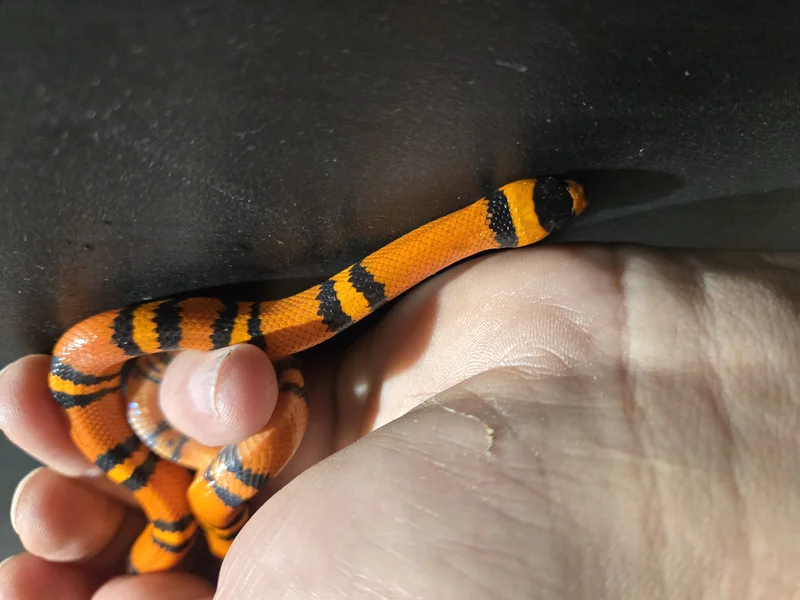
Shop milk snakes for sale from breeders and keepers, including Honduran, Pueblan, Sinaloan and Nelson's milk snakes in classic tricolor and bred color forms, and message sellers directly.
Showing 1 to 9 of 9 animals
Showing 1 to 9 of 9 animals

Proudly Support Vets & 1st Responders
Milk snakes are tricolored members of the kingsnake genus, ranging from Canada down into South America. Their bold red, black and pale bands, harmless nature and hardy constitution have made them a hobby favorite for generations. This guide covers the main types, their care and how to pick one.
Milk snakes belong to Lampropeltis, the same genus as kingsnakes. For many years they were treated as dozens of subspecies of one widespread species, and more recent research has split them into several species. Listings may use either the older or newer names, so the common name is usually the simplest guide.
On ReptileAds, the most popular types have their own subcategories: Honduran Milk Snakes, Pueblan Milk Snakes, Sinaloan Milk Snakes and Nelson's Milk Snakes. Everything else, from Mexican and Central American forms to northern types, can be found under Other Milk Snakes.
Adult size depends heavily on the type. Pueblan milk snakes are compact and often stay around 2 to 3 feet. Sinaloan and Nelson's milk snakes are medium-sized, and Honduran milk snakes are among the largest, with big adults reaching 4 to 5 feet or more and a noticeably heavier build.
Knowing which type you are buying tells you what size enclosure you will eventually need, so it is worth checking before you commit.
Milk snakes do well in a secure enclosure with a warm side and a cooler side, each with a snug hide, and a water bowl that is always available. Moderate humidity suits most types, and a humid hide helps shedding go smoothly. They tend to be secretive and nocturnal, spending the day burrowed or hidden.
In captivity they eat frozen-thawed mice. Hatchlings are often small and may take a few meals to get going, which is why buying one that is already feeding is so valuable. Young milk snakes can be jumpy and may musk when first handled, and they usually settle with calm, regular handling. Keeping a simple log helps here, and Husbandry.Pro makes it easy to record each feeding, shed and weight so you can see progress at a glance. The ReptileAds care guide has full details.
First decide which type fits your space and taste. A Pueblan suits a smaller setup, while a Honduran is a larger, bolder-looking snake, and each has its own well-known color forms, such as albino and tangerine Hondurans or albino and apricot Pueblans.
Then browse the relevant subcategory, filter by age and sex, and compare listings. Message sellers through built-in chat to ask about feeding history and lineage, look at their profiles and reviews, and set up a Hit List alert if the snake you want is not listed yet.
AI-assisted guide reviewed by the ReptileAds team. General information about these animals — not care, veterinary or legal advice, and not a description of any individual listing above.
Milk snakes are grouped here by type, so start with the subcategory that fits what you want: Honduran, Pueblan, Sinaloan or Nelson's milk snakes, or Other Milk Snakes for the many additional forms kept in the hobby.
Within each group, filter listings by sex, age and genetics and compare photos side by side. Tricolor snakes can look quite different from hatchling to adult, so it is worth asking sellers for photos of the parents, as well as notes on what each hatchling is eating.
Use built-in chat to reach sellers directly, check their profiles and reviews, and set a Hit List alert to hear when a milk snake matching your search is listed.
ReptileAds groups milk snake listings by type, making it simple to compare breeders and lines.
Dedicated categories for Honduran, Pueblan, Sinaloan and Nelson's milk snakes help you find the right snake faster.
Compare wild-type tricolors alongside bred forms such as albino and tangerine from different breeders.
Save a Hit List search and get notified when a milk snake that matches your criteria is listed.
Most milk snakes share similar, manageable care needs. In general terms:
See the ReptileAds milk snake care guide for detailed temperatures and feeding schedules.
These questions help you find a well-started milk snake:
Photos of the parents help you picture how a hatchling's colors may develop.