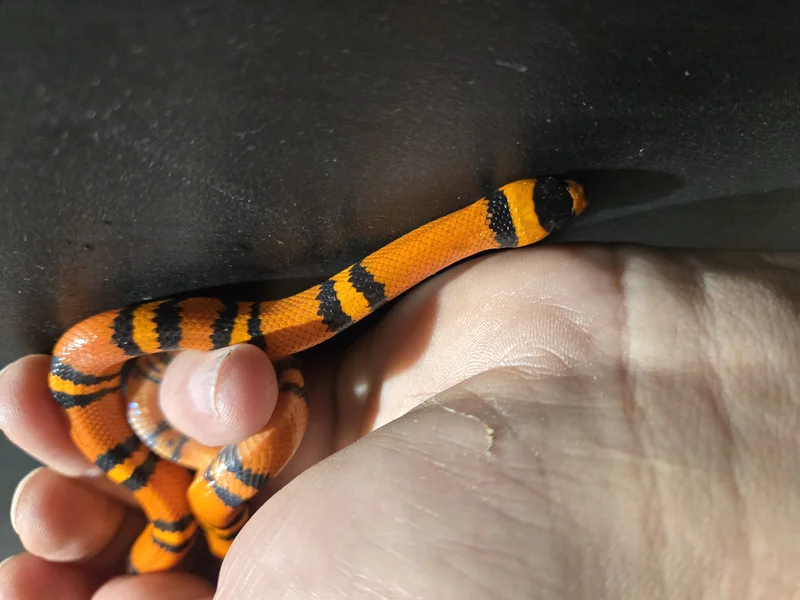
Shop Honduran milk snakes for sale from breeders and hobbyists. Known for bold red, black and yellow or orange bands and a sturdy build, Honduran milks come in a wide range of colors keepers love to collect.
Showing 1 to 9 of 9 animals
Showing 1 to 9 of 9 animals

Proudly Support Vets & 1st Responders
The Honduran milk snake is one of the most recognizable milk snakes in the hobby, with wide red bands framed by black and yellow or orange rings. It grows larger and thicker than many of its relatives, which gives it a satisfying, solid feel in the hand. Captive breeding has also produced a long list of color variations that keep collectors interested.
Honduran milk snakes are native to Honduras and nearby areas of Central America, where they live in tropical and subtropical forest. Warm temperatures and fairly humid conditions year-round shape their care in captivity.
They have traditionally been classified as Lampropeltis triangulum hondurensis, and many keepers still use that name. Taxonomists have since revised the milk snake group, so you may see other scientific names in older and newer references for the same animal.
Most adults measure around 3 to 4 feet, with some individuals growing a little larger. Hatchlings are small and slender, but they fill out steadily with regular feeding.
A lifespan of 15 to 20 years is common with good care. That long horizon is worth considering before you buy, since a hatchling can easily be part of your household for well over a decade.
Their larger build also means adults take bigger prey than most milk snakes, often graduating from adult mice to small rats. That makes feeding efficient, since a grown Honduran generally needs meals less often than a fast-growing juvenile.
The classic look is the tricolor, with red, black and yellow bands. Tangerine animals trade the yellow for orange and are one of the most sought-after natural color forms. Selective breeding has added amelanistic (albino), hypomelanistic, anerythristic and snow types, along with combinations such as ghost.
Colors in young milk snakes often develop over the first year or two, so photos of the parents can give you a sense of how a hatchling may mature, though no one can promise how an individual will turn out.
Provide a secure enclosure with a tight lid, a warm end and a cooler end, several hides and a water bowl large enough to soak in. A humid hide helps with shedding. Frozen-thawed rodents make up the diet, with prey size increasing as the snake grows.
Keepers often track meals, sheds and weights to confirm steady growth, and Husbandry.Pro is a helpful tool for keeping those notes organized. The ReptileAds milk snake care guide covers setup details and temperatures in full.
Focus first on a snake that is feeding reliably on frozen-thawed prey and has a clean recent shed. After that, choose the color or line that appeals to you and ask the seller for parent photos and any genetic details.
On ReptileAds you can message sellers directly, check their reviews and set a Hit List alert for a specific color. Setting up the enclosure ahead of time makes the transition smoother for your new snake.
AI-assisted guide reviewed by the ReptileAds team. General information about these animals — not care, veterinary or legal advice, and not a description of any individual listing above.
This category is for the Honduran milk snake, one of the largest and most widely bred milk snakes. Breeders produce classic tricolor animals along with color variations, so you can compare pattern, color and size across listings in one place.
Each listing includes photos and details from the seller, such as hatch date, sex if known and what the snake is eating. Use built-in chat to ask follow-up questions, and look over seller profiles and reviews before you decide.
If you are after a particular color or age, set a Hit List alert for Honduran milk snakes. You can also browse the Pueblan, Sinaloan, Nelson's and Other Milk Snake categories to compare related animals.
ReptileAds connects you with breeders and keepers who work with Honduran milk snakes.
See tricolor, tangerine and other color variations side by side and compare their details.
Message sellers directly to ask about feeding, sheds and parent animals before buying.
Read profiles and feedback left by other buyers to get to know each seller.
Coming from warm tropical forest, Honduran milk snakes do well in a secure, moderately humid setup. In general terms:
For more detail, see the ReptileAds milk snake care guide.
Keep these points in mind while you compare listings: