If your new ball python has not eaten since it arrived and you are refreshing search results in a panic, let us walk through it together. A ball python not eating after shipping is one of the most common things new owners worry about, and in the vast majority of cases it is a normal, temporary response to stress rather than a sign that something is wrong.
Is it normal for a ball python to refuse food after shipping?
Yes, it is normal, and it is actually the expected outcome rather than the exception. Shipping stress in reptiles comes from a combination of temperature swings, vibration, unfamiliar smells, and hours spent in a dark container, and ball pythons respond to that kind of stress by shutting down non-essential behaviors, including eating. A snake that skips its first one or even first two feedings after arrival is behaving exactly as most healthy ball pythons do.
The mistake we see beginners make is trying to feed on day one or two because they are anxious to see the snake eat. That eagerness usually backfires. Offering food too soon adds another stressor to an already stressed animal, and a refused rodent left sitting in a warm enclosure teaches nothing except that food arrives when the snake is not ready for it.
How long can a ball python go without eating after being shipped?
Far longer than most new keepers expect. An adult ball python in good body condition can go through months of voluntary fasting without a health problem, and many established adults do exactly that every winter or through breeding season. The first two or three missed meals after shipping are not a countdown to anything.
Age and body condition matter more than the calendar. A 1,200 g adult with rounded sides and a smooth spine has reserves to spare. A 90 g hatchling does not, and a young snake that refuses food for several weeks while losing weight is the one situation here that deserves a veterinary appointment rather than patience.
The practical move is to weigh the snake the day it arrives and then once a week, on the same scale, and write the numbers down. Weight is the only honest measure of whether a fast is harmless or not. A few grams either way is noise. A steady downward line across three or four weeks, sunken eyes, loose skin along the flanks, or a spine that starts to feel ridged means it is time to see an exotics vet.
What the first two weeks of acclimation should look like
Give the snake seven to fourteen days of being left alone before you ask anything of it. That means water changed, spot cleaning only, and no handling, no photo sessions, and no rearranging the enclosure while you watch. Most ball pythons that arrive healthy will start exploring at night within the first few days, and that nighttime movement is the sign you are looking for.
What you should not read as a problem: hiding all day, sitting balled up in one hide for 48 hours straight, refusing the first offered meal, or drinking a lot in the first day or two. What you should read as progress: night activity, tongue flicking around the enclosure, a normal urate and stool within a week or so, and a snake that tightens up but does not strike or hiss when you finally open the lid.
Check your husbandry numbers before you blame shipping stress
Shipping stress gets blamed for a lot of refusals that are actually a cold enclosure. Ball pythons digest on heat, and a snake that cannot reach a proper surface temperature will decline food indefinitely no matter how settled it is. Verify these with a digital probe or infrared thermometer, not with the dial on the thermostat and not with a stick-on strip.
| Parameter | Target | What goes wrong |
|---|---|---|
| Warm side surface | 88–92°F (31–33°C) | Below about 86°F digestion slows and feeding response drops off |
| Cool end ambient | 76–80°F (24–27°C) | Whole-tub gradients that are uniformly warm leave the snake nowhere to cool down |
| Nighttime low | No lower than 75°F (24°C) | Unthermostatted heat left to crash overnight in a cold room |
| Humidity | 55–65%, higher during a shed cycle | Chronic dry air causes stuck shed and refusal; permanently soaked substrate causes scale rot |
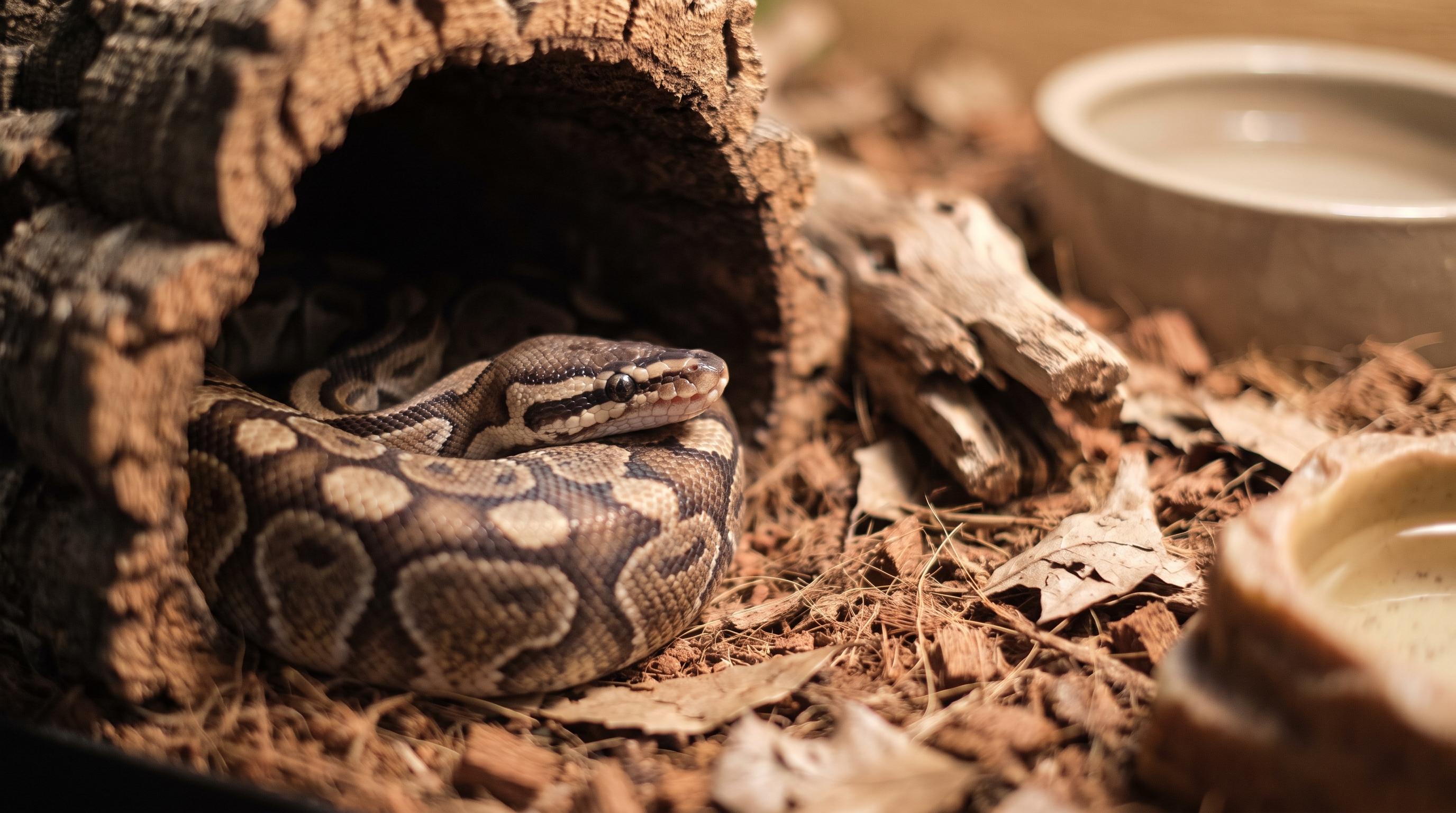
| Hides | Two, one per thermal end, snug enough to touch the snake on all sides | One big open hide, or hides so large the snake cannot feel walls, keeps the animal insecure |
Heat sources must be on a thermostat, and any heat mat or cable running without one is the single most common cause of a burn in this species. If your enclosure is a bare tub with one hide in the middle, add clutter: crumpled paper, cork, fake foliage. A cluttered enclosure gets used; an empty one gets endured. Our species care guides go deeper on setting up the gradient and picking a substrate that holds humidity without going swampy.
When and how to offer the first meal
Offer food on day seven at the earliest, and day ten to fourteen is a better bet with a stressed or freshly imported-into-your-home animal. Then follow these rules, because the first offer sets the pattern:
- Match the prey the breeder used. Ask whether the snake was on live, frozen-thawed, rats or mice, and offer the same thing for the first few feedings. Switching prey type and settling a new snake at the same time is two problems at once.
- Size the prey at roughly 10–15% of the snake's body weight, or a rodent about as thick as the widest part of the snake. Oversized prey is a common cause of refusal and regurgitation.
- Feed at night, with the room quiet and the lights low. Ball pythons are crepuscular to nocturnal and a daytime offer in a bright room is working against instinct.
- Get thawed prey properly warm. Thaw in the fridge or in cool water, then bring the surface to around 100°F before offering. A lukewarm rodent reads as not-food.
- Leave and walk away. With frozen-thawed prey you can leave the rodent in the enclosure overnight near a hide entrance and check in the morning. Never leave live prey unattended — a live rat will chew a snake that is not interested.
- If it is refused, wait a full week. Re-offering the next day teaches the snake to ignore food. One offer per week is plenty.
If two or three weekly offers pass with no interest, change one variable at a time rather than everything at once: prey species first, then live versus frozen-thawed, then scenting a thawed rodent by rubbing it against used bedding from the prey supplier.
Red flags that are not shipping stress
Most refusals resolve themselves. A handful of signs mean the refusal is a symptom and the snake needs an exotics vet rather than more patience:
- Open-mouth breathing, audible clicking or wheezing, or bubbles and mucus around the nostrils or mouth
- Regurgitation of a meal that had already been swallowed
- Stargazing, corkscrewing, or an inability to right itself when gently turned
- Tiny black or reddish moving specks on the snake or floating in the water bowl
- Persistent weight loss, sunken eyes, or loose folds of skin along the sides
- Swelling, discoloured or lifting scales, or any wound or blister on the belly
None of that is something to manage at home with heat adjustments or over-the-counter products. Book the appointment. It is also fair to message the seller — a reputable breeder wants to know how an animal settled, and buying from a shop with a track record and reviews makes that conversation easier. You can see who has been trading and how long they have been at it by browsing seller stores before your next purchase.
What to do if the refusal runs past two months
At this point the question shifts from whether it is normal to what has been ruled out. Work through it in order: confirmed surface temperatures with an instrument you trust, two tight hides, enough clutter, no daily handling, correct prey size, prey type matched to the snake's history, and a weekly rather than nightly offer. Season matters too — adult males in particular routinely go off food from autumn through spring, and that is behaviour rather than illness.
If the weight chart is flat and the snake is alert and hydrated, a long fast in an adult is a waiting game you will win. If the weight chart is heading down, or the snake is a hatchling, that is the point where a vet exam and a faecal check earn their fee — parasites and low-grade respiratory infections both present as a snake that simply will not eat. For your next animal, a feeding record from the breeder is worth asking for before money changes hands, and plenty of the listings on our reptile marketplace include exactly that.
Frequently asked
How long should I wait to feed a new ball python after it arrives?
Wait at least seven days, and ten to fourteen days is safer for a visibly stressed animal. During that window change the water, spot clean, and otherwise leave the snake alone. Offer food at night with the room quiet, then wait a full week before offering again if it is refused.
Is it normal for a new ball python to refuse its first meal?
Yes. Refusing the first one or two offered meals after shipping is the expected response, not the exception. Temperature swings, vibration and unfamiliar smells cause ball pythons to shut down non-essential behaviour, including feeding, and most resume eating within two to four weeks of settling in.
How long can a ball python go without eating?
An adult in good body condition can fast for months without a health problem, and many do so every winter or breeding season. Hatchlings and small juveniles have much less reserve. Weigh the snake weekly on the same scale: a flat weight line means the fast is harmless, while steady loss, sunken eyes or a ridged spine means it is time to see an exotics vet.
What temperature does a ball python need to digest food?
A warm-side surface temperature of 88–92°F (31–33°C) with a cool end around 76–80°F (24–27°C), never dropping below about 75°F (24°C) overnight. Below roughly 86°F digestion slows and feeding response falls away. Measure with a digital probe or infrared thermometer, and run every heat source through a thermostat to avoid burns.