A new reptile can look healthy and still carry parasites or an infectious disease that has not shown obvious signs yet. A proper quarantine gives you time to observe the animal, arrange appropriate screening, and reduce the chance of exposing reptiles already in your collection. It means more than putting the new animal in a spare enclosure for a few weeks: it is a planned period of separation, dedicated equipment, testing when appropriate, and record-keeping.
Before the animal arrives, ask the seller about its health and testing history using this guide to questions to ask a reptile breeder. Read the seller’s health and testing terms as well; this guide to reptile health guarantees explains why those details matter. Set up the quarantine enclosure using the animal’s species-specific care guide, then review the reptile shipment unboxing checklist so you know how to handle arrival day.
What does a proper quarantine setup require?
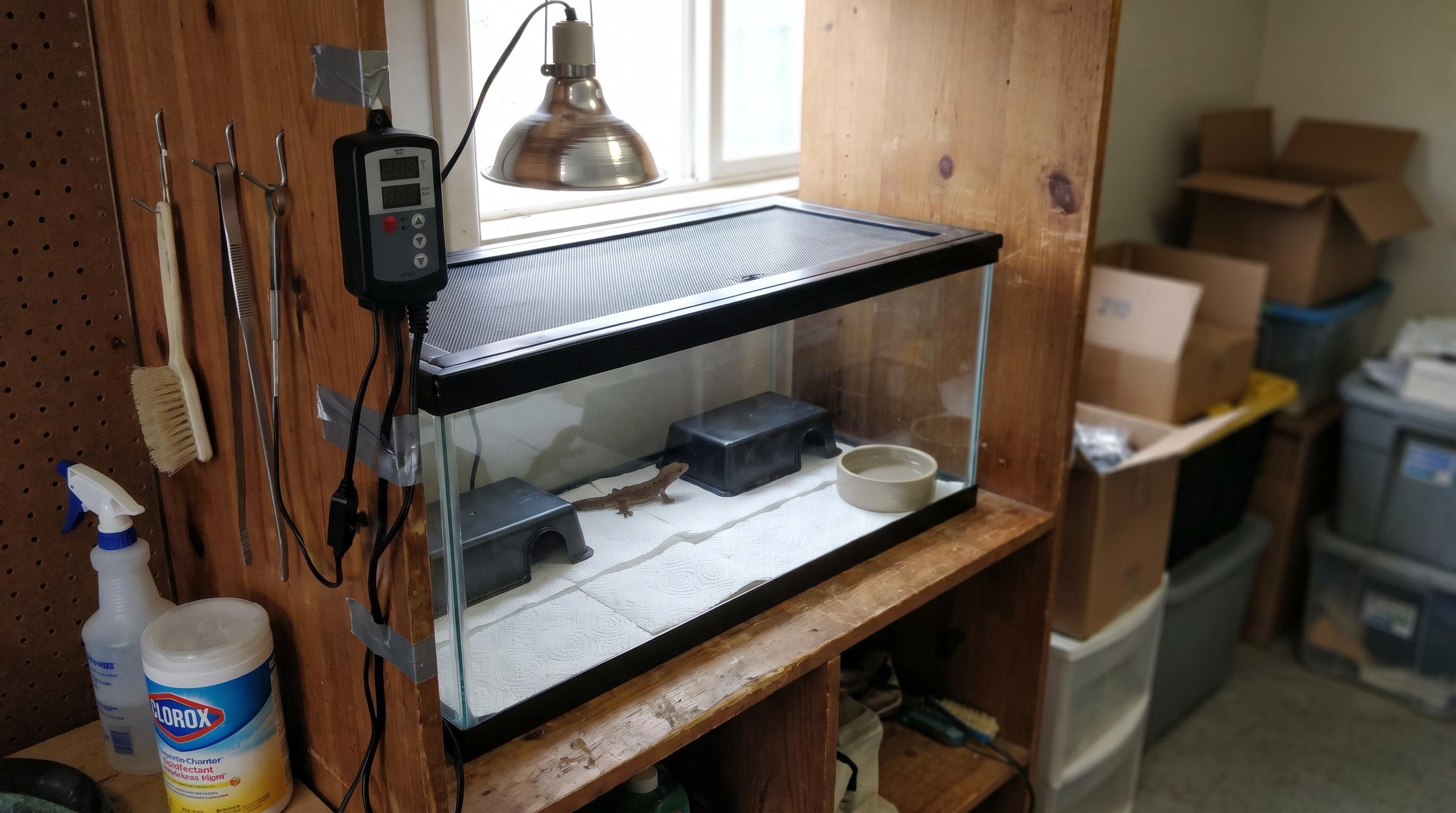
Quarantine requires physical separation from your established reptiles, plus a routine that reduces the transfer of waste, parasites, and pathogens on hands, tools, and enclosure surfaces. A separate room with a door is ideal. If that is not available, use the greatest practical distance and separation you can.
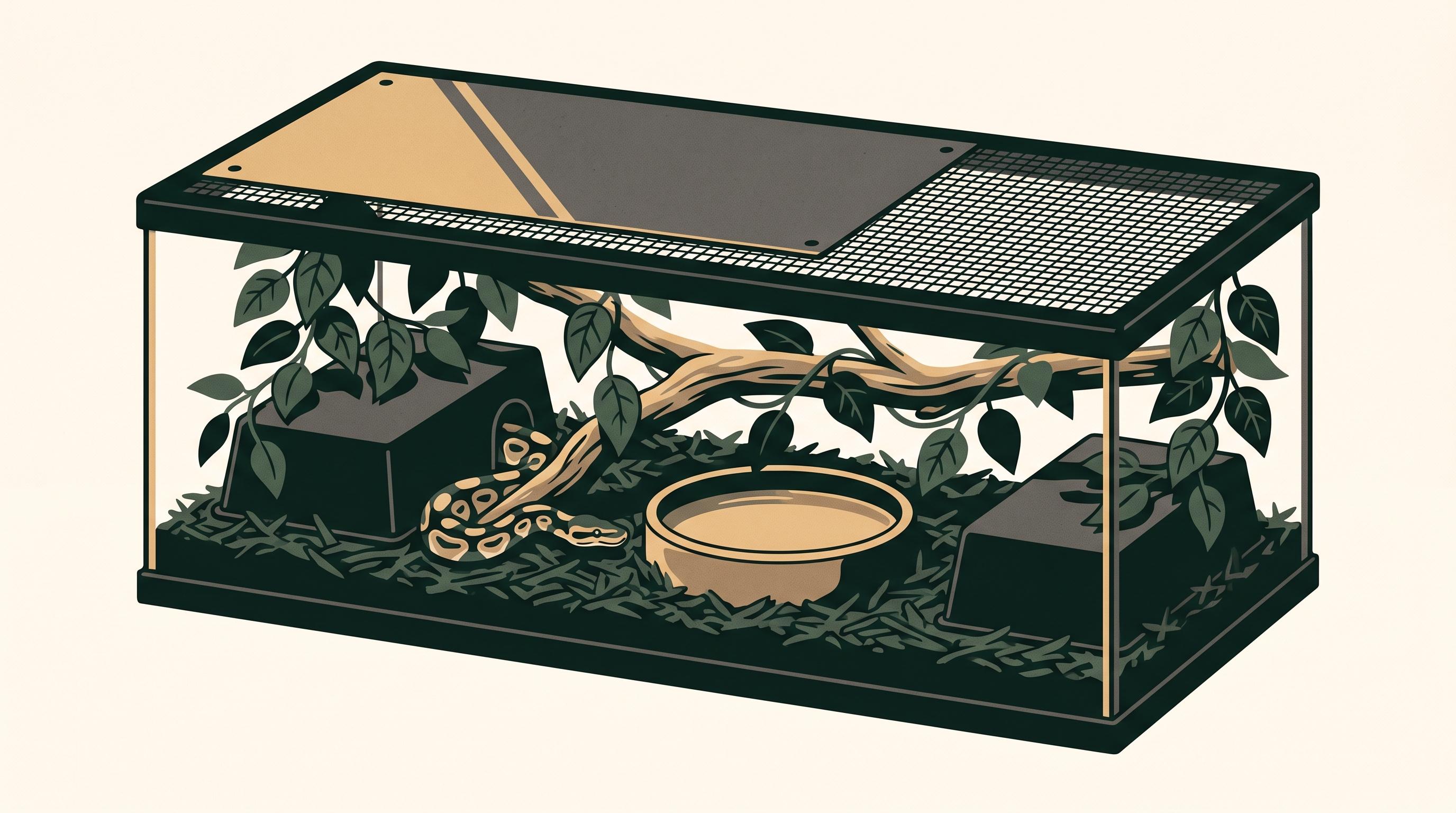
Set up a secure, species-appropriate enclosure with the correct temperature, humidity, lighting, hides, and water. A simple enclosure that is easy to inspect and clean can make monitoring easier, as long as it still meets the animal’s husbandry needs. Baseline care requirements come from the species-specific guide; quarantine changes the separation and routine, not the animal’s environmental needs.
Use dedicated equipment and a consistent care order
Keep separate water dishes, feeding tongs, cleaning tools, substrate supplies, and storage containers for the quarantined animal. Label them so they do not get mixed up. Care for established animals first and quarantined animals last. Wash your hands between areas and avoid carrying tools, waste, or substrate from quarantine back to the main collection.
If equipment must be reused, clean and disinfect it with a product appropriate for the suspected pathogen, following the product’s instructions for dilution, contact time, rinsing, and drying. Washing alone may not disinfect every surface or remove every pathogen.
How to quarantine a new reptile: step-by-step protocol
- Prepare the quarantine area before the animal arrives. Set up and check the enclosure, thermostat, temperature gradient, humidity, lighting, hides, and water. Gather dedicated tools and supplies. Confirm that the enclosure is secure and appropriate for the species.
- Get the animal’s history from the seller. Record the animal’s source and arrival date, feeding and shedding history, prior illnesses, and any previous testing or treatment. Ask which tests were performed, when they were performed, what sample was used, and whether you can see the results.
- Keep the animal physically separate. Move it directly into the prepared quarantine area. Do not house it with established reptiles or share their enclosure space. If you cannot use a separate room, maximize separation and maintain strict hand and equipment hygiene.
- Document arrival and let the animal settle. Photograph the animal and shipping materials if needed, record its arrival condition, and avoid unnecessary handling. Follow species-specific feeding guidance and the seller’s instructions. If the animal appears injured or ill, contact a reptile veterinarian promptly.
- Choose any screening based on the animal’s risk. Consider the species, source, prior exposure, symptoms, and the collection it may eventually join. A routine quarantine does not require a veterinarian’s permission or a clinic visit just to begin isolation. If the animal is actively sick or already receiving veterinary care, follow the veterinarian’s treatment and isolation instructions.
- Plan sample collection and any repeat tests. Check the test’s sample requirements before collecting. Record the collection date, sample type, result, and any recommended retest date. A negative result early in quarantine may not answer every question if the animal had a recent exposure or the pathogen calls for repeat sampling.
- Keep dated health records throughout quarantine. Track body weight, appetite, food offered and accepted, stools, sheds, behavior, and visible changes. A husbandry log such as Husbandry.Pro can keep weights, feeding records, and test results together.
Can you collect samples at home and save money?
For some routine screening, yes. RAL accepts pet owner and breeder test submissions and lists sample collection supplies for those submissions. Depending on the test, collecting an appropriate non-invasive sample yourself may save the cost of a clinic visit that would otherwise be needed only to obtain that sample. You will still need to pay for the test, supplies, and shipping, and self-collection does not replace veterinary care when an animal is sick or needs treatment.
Start with RAL’s current reptile and amphibian test menu, its sample collection supplies, and the reptile and amphibian submission form. RAL’s supplies page says collection supplies are required for pet owner and breeder submissions. Confirm that the sample you plan to collect is accepted for the specific test before ordering supplies or collecting anything.
Basic steps for an owner-collected sample
- Choose the test first. The test determines the acceptable specimen, swab type, collection location, quantity, and handling requirements. Do not collect a sample and then guess which test it can be used for.
- Read the current lab instructions and get the required supplies. Use the collection materials specified by RAL for that submission. Do not substitute a household container or swab unless the lab says it is acceptable.
- For a non-invasive fecal sample, collect fresh material carefully. Use clean gloves and a clean disposable tool. Collect the sample before it contacts loose substrate, standing water, or cleaning products. Keep samples from different animals separate.
- Label the sample and complete the paperwork. Include the animal’s species and identification, collection date, and requested test information. Make sure the sample label and submission form match.
- Store and ship it exactly as instructed. Follow the lab’s current requirements for temperature, packaging, timing, and shipping. Do not assume a sample should be refrigerated or frozen unless the instructions say so.
Swabs must be collected from the correct site using the required swab and method. Do not use a generic online tutorial to collect a mouth, cloacal, or other body-site swab; check the test-specific instructions first. Blood collection and other invasive sampling should be handled by a veterinarian or another trained professional. Improper collection can injure the animal or make the sample unusable.
What tests might be relevant to a reptile?
There is no single quarantine panel that is right for every species or source. These are examples from RAL’s current menu, not a universal testing checklist. The animal’s history and the reason for testing should determine which options are appropriate.
- Arenavirus: May be considered when screening for inclusion body disease risk in snakes. Confirm whether testing fits the animal’s species and exposure history, and which sample is required.
- Nidovirus (Python): May be discussed for pythons when the animal’s source, history, or symptoms raise concern. Confirm the correct test and collection method.
- Cryptosporidium: RAL lists tests for different reptile groups, including snake and lizard Cryptosporidium. Confirm which species-specific test and specimen are suitable.
- Ophidiomyces ophiodiicola (snake fungal disease): May be discussed when a snake has relevant signs or exposure risk. Confirm whether the animal’s history justifies testing and how to collect the sample.
- Ophionyssus mite: May be relevant when snake mites are suspected or there is a known exposure. Confirm whether the lab test is appropriate and what sample is needed.
Test availability and sample requirements can change, so check RAL’s current test menu and submission instructions before collecting a sample. If the animal has symptoms, do not rely on a mail-in test alone to decide whether it needs treatment. Veterinary care is appropriate for an actively sick animal; it is not a prerequisite for routine quarantine or every owner-collected screening sample.
A negative result means the target was not detected in that sample at that time. It does not prove the animal is free of every pathogen; low pathogen levels, intermittent shedding, collection errors, and testing too soon after a possible exposure can affect results.
Why is the quarantine period three to six months?
The MSD Veterinary Manual recommends a 3–6 month quarantine because the incubation period of many reptile disorders is unknown. That range is a practical baseline for observation and biosecurity; it is not a guarantee that every infection will become visible before quarantine ends.
Research on sunshinevirus in carpet pythons shows why the first few weeks are not enough. In a controlled study, obvious clinical signs began 3–7 months after exposure. The infected pythons shed infectious virus for months before obvious signs appeared. This is one virus in one python species, not a timeline that applies to every reptile, but it demonstrates that an animal can pass a 60-day or even a three-month symptom-only observation period while infection is still developing. Read the experimental sunshinevirus study for the details.
Other viruses create a different problem: an animal may never show obvious illness during quarantine. A longitudinal study of serpentovirus, also called reptile nidovirus, documented persistent infection, intermittent negative PCR results, and pythons that remained PCR-positive without clinical signs for more than two years. The study’s authors recommended at least three months of quarantine and multiple negative tests over time for that specific virus risk. This does not mean every new reptile needs two years in quarantine; it means that time without symptoms cannot prove an asymptomatic carrier is virus-free. See the longitudinal serpentovirus study.
The often-repeated 60-day rule is hobby lore, not a dependable blanket clearance standard. Two months without obvious symptoms does not establish that an animal is safe to introduce to an established collection. Use three to six months as the baseline, and extend or adapt the plan when the animal’s source, exposure history, symptoms, or a pathogen-specific recommendation calls for more.
How should you plan follow-up testing?
Testing is most useful when the test, specimen, and timing fit the pathogen being investigated. A negative result means the target was not detected in that sample at that time; it does not prove the animal is free of every pathogen. Low pathogen levels, intermittent shedding, collection errors, and testing too soon after a possible exposure can affect results.
Do not invent one retesting schedule for every reptile virus. Check the test instructions and any disease-specific guidance. For example, the sunshinevirus study recommends a second sample at least six weeks after a negative result when recent exposure is a concern. The serpentovirus study describes why repeated negative tests over time may be needed for that specific risk. Those are pathogen-specific examples, not a universal six-week or four-month rule.
Keep a simple timeline with the arrival date, known exposures, test name, sample type, collection date, result date, and next planned sample date. If the animal has a known exposure or a test result that needs follow-up, keep it isolated until the planned testing and observation are complete. Record the reason for any retest and the result so you can make a clear decision later rather than relying on memory.
What should you watch for and record?
Keep records dated and continue them throughout quarantine. Note body weight, appetite, food offered and accepted, stool appearance, shed quality, activity, and any unusual behavior or visible changes. Weigh the animal consistently and note the date and context. Photograph lesions, abnormal stools, or other changes so you can compare them over time.
If the animal becomes actively ill, keep it isolated and contact a reptile veterinarian. If it is already under veterinary care, follow the veterinarian’s treatment and isolation instructions instead of using the routine quarantine timeline as a release date.
When can quarantine end?
For a healthy animal, quarantine can end after the planned isolation period is complete, there have been no concerning signs, and any testing or repeat testing selected for the animal’s risk has been completed. The routine process does not require a veterinarian to approve the release. Do not rely on a calendar date alone, a single negative test, or the fact that the animal still looks normal.
If signs of illness appear, a test is positive, or a known exposure calls for follow-up testing, keep the animal separate while you complete the relevant next steps. If the animal is sick and under veterinary care, defer to the veterinarian’s treatment and release instructions.
The practical rule is straightforward: prepare a separate space, use dedicated equipment, keep consistent records, and plan for three to six months of isolation. Some viruses can produce signs after that baseline window, and some infected reptiles may remain asymptomatic. Targeted testing and planned repeat samples help address risks that observation alone cannot resolve.
Frequently asked
How long should I quarantine a new reptile?
The MSD Veterinary Manual recommends 3–6 months for new reptiles. Ask a reptile-experienced veterinarian to tailor the duration to the animal’s species, source, health and your collection’s risks.
Is 60 days long enough to quarantine a reptile?
Do not treat 60 days as a reliable blanket clearance period. It is a common hobby rule of thumb, while the MSD Veterinary Manual recommends 3–6 months for new reptiles. Your veterinarian can advise whether the quarantine should last longer based on the animal’s risk.
What tests should a new reptile have during quarantine?
There is no universal test panel for every reptile. A reptile-experienced veterinarian can recommend fecal screening and any additional tests based on species, source, history, symptoms and collection risk. RAL’s reptile and amphibian test menu lists available options.
Can a healthy-looking reptile still carry parasites or disease?
Yes. Some infections or parasites may not be obvious during a visual check. That is why quarantine combines separation, veterinary assessment, risk-based testing and continued observation.
Can I quarantine two new reptiles together?
Keep new arrivals in separate enclosures and use separate equipment, especially when they come from different sources. This helps prevent one animal from exposing the other during quarantine.