Short answer: a Western hognose bite can cause more than a small nick. Published reports describe marked swelling, bruising and blisters, with some reactions lasting weeks or months. One published case report also described a low platelet count. Platelets are blood components that help form clots. These cases show what can happen, but they do not tell us how often it happens. Don’t assume a bite is harmless, and don’t assume every bite is a medical emergency.
Are hognose snakes venomous?
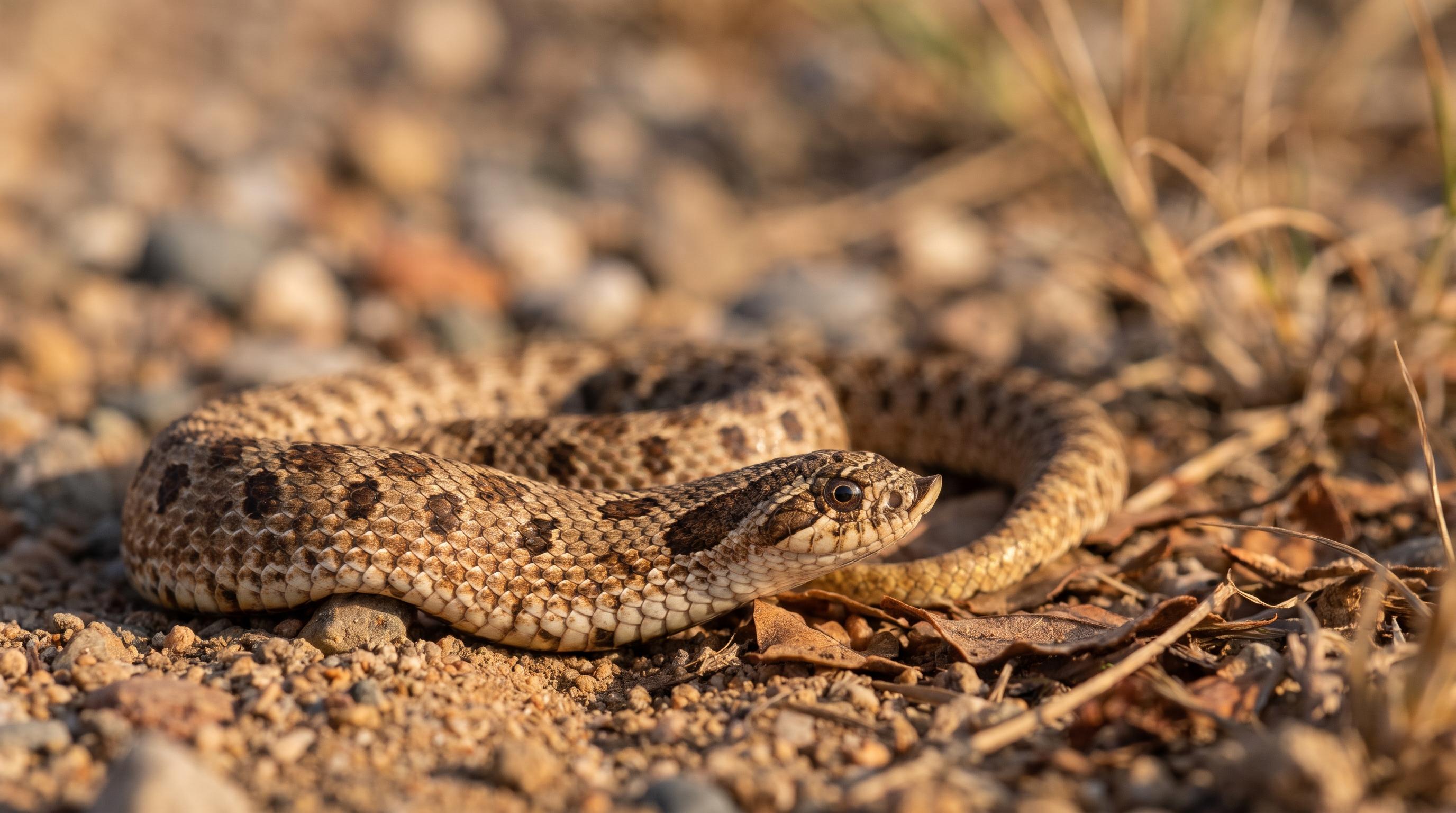
Hognose snakes have enlarged rear teeth and a Duvernoy’s gland that produces a protein-rich secretion. Sources differ on whether to call that secretion venom or venom-like saliva, so you’ll see both descriptions. The practical point is clearer: a bite from a Western hognose (Heterodon nasicus) has caused significant reactions in people. Most published human bite reports concern this species, so don’t automatically apply those details to every Heterodon.
What can a hognose snake bite do?
Reported reactions include pain, swelling, bruising and blisters around the bite. In a 2009 case report, a Western hognose held on for several minutes. The person developed marked swelling, bruising and blisters, and recovery took about five months. A later report also described pronounced local swelling after a bite. These are documented cases, not evidence that every bite will be this severe.
A 2026 case series reviewed 35 hognose bites reported to one statewide poison-control system over ten years. Swelling was recorded in 32 cases; in 15, it extended into the wrist or forearm. Nine cases included skin changes such as redness, bruising or blisters. Because this was a group of calls to one poison-control system, not a count of all hognose bites, these figures cannot tell us the chance of a particular bite causing those symptoms. They do show that reported bites can involve more than a brief sting. Read the case-series abstract.
Some published cases involved a prolonged bite, but the limited reports don’t let us predict how severe a reaction will be based on bite duration alone. A brief bite is not a reliable way to rule out a reaction.
What does a “low platelet count” mean?
One case report described thrombocytopenia, the medical term for an unusually low number of platelets. Platelets are blood components that help form clots and stop bleeding. In that report, the person also had pain, swelling and blistering. This has been described in one published case report; the available evidence does not tell us how often it occurs. Read the case report.
What should you do after a hognose bite?
Wash the bite with soap and running water. If the bite is on a hand or finger, remove rings or tight jewelry if you can do so easily, since swelling may make them difficult to remove later. Watch for changes around the bite.
Seek medical advice promptly if swelling or pain is significant or getting worse, swelling spreads beyond the bite area, blisters develop, redness spreads, or you notice unusual bruising, bleeding or other symptoms. Trouble breathing, fainting, or swelling of the face, tongue or throat needs emergency care. A small bite does not automatically mean an emergency, but a worsening reaction should not be ignored.
How can keepers reduce bite risk?
Bites have been reported during feeding, enclosure cleaning and handling. Use feeding tongs rather than hand-feeding, keep your hands clear of the snake when offering prey, and avoid unnecessary handling when the snake is focused on food. Work calmly during enclosure maintenance and know where the snake is before reaching into its enclosure.
Does the word “venomous” determine whether hognoses are legal to own?
No. Biological descriptions and legal classifications are separate questions, and rules vary by location. Check the current regulations that apply where you live before acquiring a hognose. Our guide to venomous snake permits and ownership laws explains what to check.
What should keepers remember?
A Western hognose bite is not automatically harmless: published cases include marked swelling, bruising and blistering, sometimes with a long recovery, plus one published report of a low platelet count. The available evidence cannot tell us how often significant reactions occur. Clean the bite, watch for worsening symptoms, and get medical advice if the reaction is significant or spreading. For species-specific husbandry, see our Western Hognose Snake Care Guide.
Frequently asked
Can a hognose snake kill you?
The published bite reports cited here do not describe a human fatality, but there are too few reports to use that as proof of zero risk. Documented bites have caused substantial swelling, bruising and blistering, and one published case report described a low platelet count. Get medical advice if symptoms are significant or worsening.
Do you need a venomous snake license to own a hognose?
Rules vary by location, and a biological description does not determine legal status. Check the current exotic-animal rules with the relevant local or state authority before acquiring one. See our permit guide for what to check.
What happens if a hognose snake bites you?
Reactions vary. Published reports describe pain, swelling, bruising and blisters; some significant reactions lasted weeks or months. One published case report described a low platelet count. The available reports cannot tell us how often these outcomes occur.
When should I seek medical care after a hognose bite?
Seek medical advice promptly if pain or swelling is significant or worsening, swelling spreads, blisters develop, redness spreads, or you notice unusual bruising, bleeding or other symptoms. Trouble breathing, fainting, or swelling of the face, tongue or throat needs emergency care.
How long can a hognose bite reaction last?
It varies. Some reported reactions improved sooner, while one published case took about five months to resolve. Case reports cannot predict how long an individual bite will take to heal.