If you have ever read a breeder's health guarantee and felt like you needed a law degree to understand it, you are not alone. Reptile health guarantee terms are often written in dense, defensive language that is hard to parse when you are brand new to the hobby. Let us walk through what these clauses actually mean, what to look for, and which terms should make you pause before you pay.
What is the difference between a live arrival guarantee and a health guarantee?
A live arrival guarantee only covers the animal reaching you alive, usually within a very short window of 2 to 4 hours after delivery. A health guarantee is a separate, broader promise about the animal's condition over days or weeks, and the two are frequently confused because sellers bundle them into one paragraph.
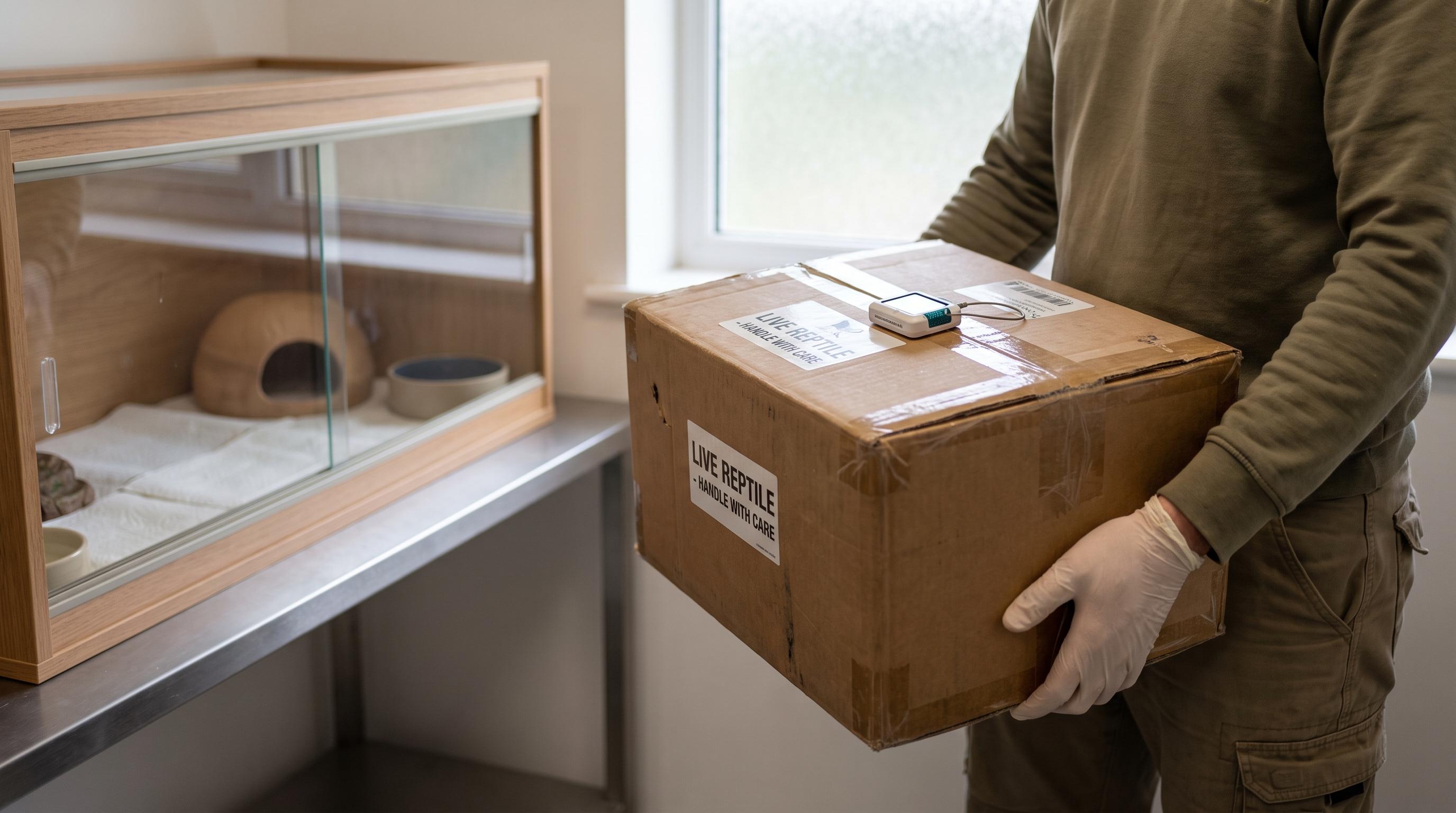
Live arrival claims almost always require you to film the unboxing, unedited, from the moment the box is opened. If you skip this step and the animal arrives sluggish or worse, the seller may deny a claim under the terms of their policy, live arrival or otherwise. This is one of the most common first-year mistakes: buyers assume they can just take a photo afterward, and by then the window may have already closed.
How long should a reasonable health guarantee actually last?
Health guarantee periods vary by seller and by the conditions covered. Rather than expecting one standard number, check exactly how long the guarantee lasts, when the period begins, which concerns are covered, and what proof you need to make a claim.
A clear, detailed policy can be a useful trust signal because it spells out what is covered, how to report a concern, and what happens next. But do not assume a short policy with few stated limits means you are covered for everything; it may leave key questions unanswered. A longer policy is not a guarantee either, so read the terms and ask the seller to clarify anything that is unclear before you buy.
What is a parasite exclusion, and what should you ask about it?
A parasite exclusion is a clause stating that internal or external parasites are not covered under the general health guarantee, or are only covered if a fecal test was done before purchase. Some sellers exclude parasites or require testing for a claim, because wild-caught or imported stock and even some captive-bred animals can carry low-level parasite loads that are manageable but technically present.
What matters is whether the seller tells you upfront whether pre-sale disease testing was done. Reputable sellers of higher-value animals, especially species prone to parasite issues like certain wild-caught geckos or imported chameleons, will often have fecal float results or vet screening available on request. If a seller cannot tell you anything about testing history and also excludes parasites entirely, you are taking on more risk than the price might suggest.
Why does an infectious disease guarantee matter more than people realize?
An infectious disease guarantee is the clause that matters most, because infectious diseases such as inclusion body disease (IBD), nidovirus, and Cryptosporidium can pose serious risks to a collection, not just one animal. Some infected animals may show few or no obvious signs for an extended period, which is why quarantine matters even when an animal looks healthy. This is the section of a contract you should never skip past.
Here is what a solid infectious disease clause looks like in practice: it names specific testable conditions relevant to that species, states what proof is required (often a vet diagnosis, not just your own observation), and gives you a replacement or refund option rather than only a store credit. If a guarantee lumps infectious disease in with general wear-and-tear issues like a stuck shed, and offers the same short window for both, that is a mismatch. Disease symptoms can take weeks to show, while a stuck shed is obvious within days.
For reptile pathogen testing, Research Associates Laboratory (RAL) is one of the most recognized names in reptile diagnostics. Its reptile and amphibian test menu includes testing for Cryptosporidium and arenavirus. Review current test options and sample requirements with RAL and your reptile veterinarian.
If you are buying an animal that will share space with an existing collection, I recommend quarantining it for at least six months in a separate room with its own tools. That gives you more time to observe the animal and work with a reptile veterinarian on appropriate testing. It reduces risk, but no quarantine period or single negative test can guarantee an animal is free of infection. The guarantee is about financial recourse after the fact. Quarantine is about not needing the guarantee at all.
Refund, replacement, or store credit: which should you expect?
Sellers may offer store credit, a replacement animal, a cash refund, or no remedy, depending on their policy and the circumstances. Read the written terms before purchasing so you know what the seller promises and what conditions apply.
| Possible outcome | Example situation | What to consider |
|---|---|---|
| Store credit only | A seller's policy may offer credit for certain health issues | Check what issues qualify and whether credit has an expiration date |
| Replacement animal | A seller may offer a replacement under specific guarantee terms | Check whether you can choose a refund instead |
| Full cash refund | A seller may offer a refund for a qualifying claim | Check whether shipping costs are included |
| No remedy offered at all | The policy may exclude the concern or provide no claim process | Understand the limits before you buy |
What voids a health guarantee, and how do you avoid triggering it by accident?
Some policies may void coverage if housing temperatures fall outside a stated range, if the animal is fed within 24 to 48 hours of shipping, or if you fail to provide photo or video proof within a stated timeframe, often 24 to 48 hours after symptoms appear. Read the seller's policy before the animal even arrives, not after something goes wrong, because by then it may be too late to meet the proof requirement.
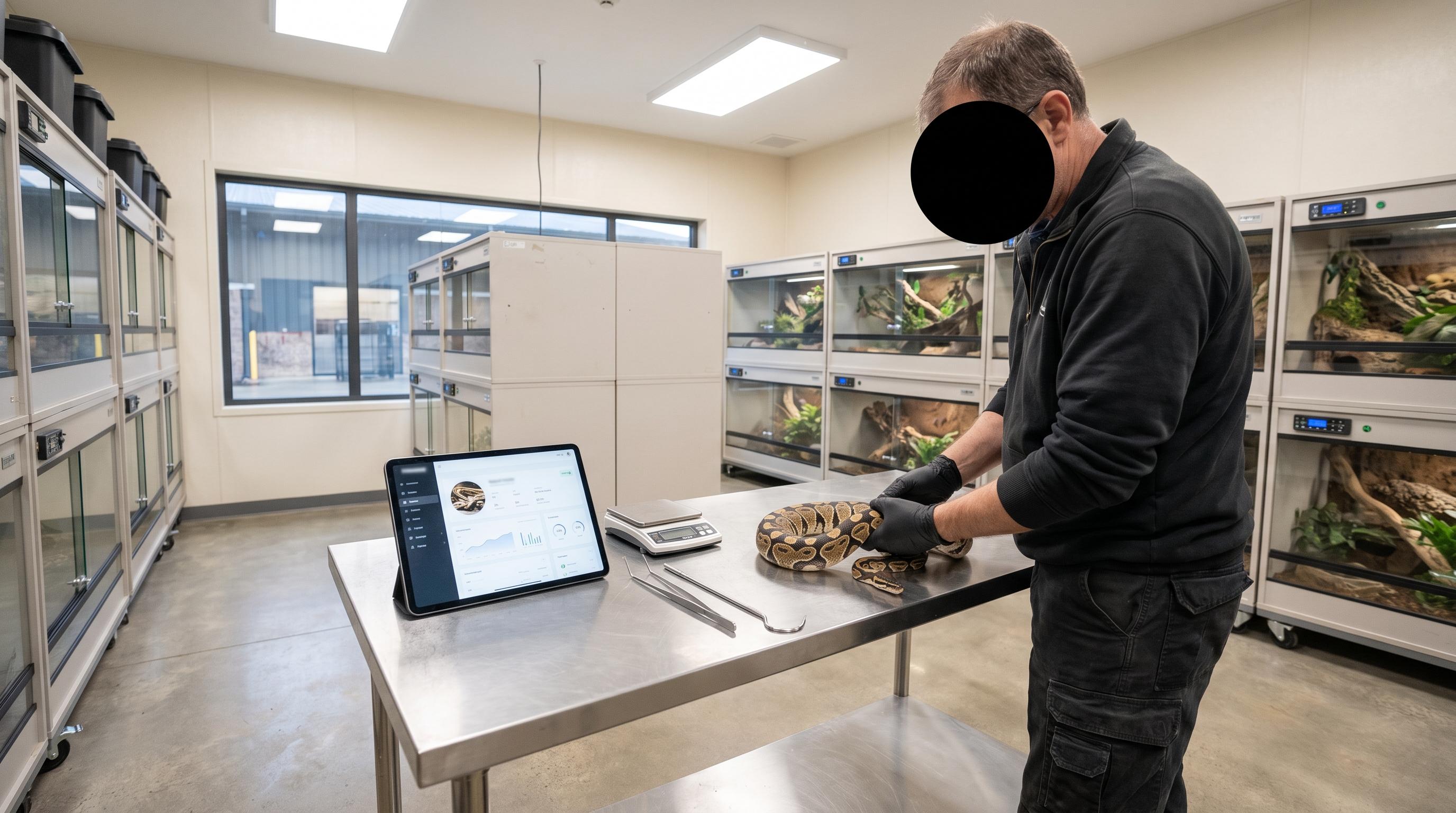
Before you buy, set up the enclosure completely, including a thermostat-controlled heat source and a reliable thermometer and hygrometer, so you can show your husbandry was correct from day one if a claim ever comes up. Keeping dated records of temperatures, feeding, and sheds is genuinely useful here, and a husbandry logging tool such as Husbandry.Pro makes those records easy to keep and easy to share with a seller or an exotics vet if a claim ever comes up.
Do not worry if the fine print still feels dense on a first read. Compare a few sellers' terms side by side as you browse reptiles currently listed for sale, look at the seller stores behind those listings, and read the terms alongside a species care guide so you know what healthy and normal look like before the animal arrives. Reading a guarantee properly is a skill you will pick up faster than you expect.