Standing in front of a crowded table with a line forming behind you is the worst time to figure out whether an animal is healthy. A reptile expo buying checklist solves that problem by giving you a fixed set of physical and behavioral checks to run through in under two minutes, before cash changes hands. The goal is not to turn you into a vet on the spot — it's to catch the obvious red flags and ask the right questions so a bad purchase doesn't go home with you.
What does a healthy reptile's body actually look like up close?
Start at the head and work backward: clear eyes with no retained spectacle, nostrils free of discharge, and a mouth that closes fully with no visible swelling along the jawline. Signs of a healthy reptile at expo tables also include body condition appropriate for the species. Some snakes naturally show a visible dorsal ridge, including slender arboreal species such as green tree pythons and emerald tree boas, as well as short-tailed pythons. A ridge alone does not mean an animal is underweight. Look instead for a sharply prominent spine with hollowing of the muscle on either side, or a lizard with a pinched tail base. Check the vent area for staining or swelling, which can point to retained shed or a prolapse history. Run a finger lightly along the body if the vendor allows handling; skin should feel taut, not loose or wrinkled, and there should be no retained shed trapped around toes or tail tips, which left unaddressed can cause tissue loss.
Respiratory and skin red flags
Open-mouth breathing, audible clicking or wheezing, and bubbling at the nostrils can indicate respiratory disease or distress. They are concerning signs, not quirks to dismiss, and no amount of discount justifies taking on an animal with unexplained symptoms. Likewise, irregular lumps, dark patches that don't match normal pigmentation, or asymmetrical swelling anywhere on the body warrant walking away or at minimum asking pointed questions about the animal's history.
How can you tell if an animal's behavior at a show table is normal or a warning sign?
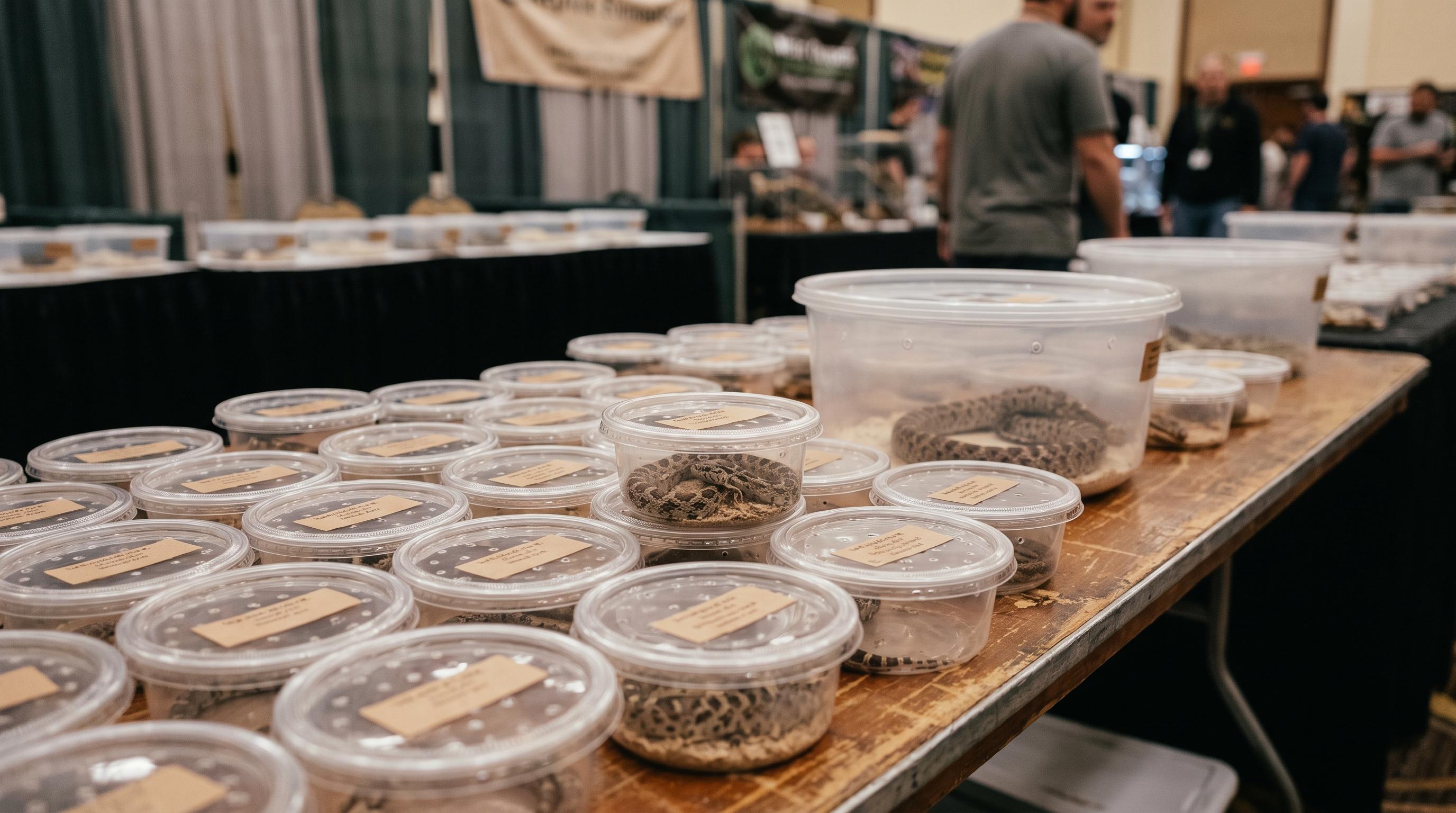
A healthy reptile at a loud, bright expo will usually be alert but not frantic — calm investigation of its surroundings is normal, and so is a defensive posture from a stressed animal that's been handled by dozens of strangers that day. What's not normal is persistent lethargy with no response to touch, repeated gaping, or a complete lack of muscle tone when picked up. Ask the vendor how long the animal has been at the table and whether it's eaten recently; an animal that's been sitting in a deli cup since 7 a.m. will look different from one that just came out of its tub ten minutes ago, and that context matters when you're judging activity level.
What should you check about the enclosure or tub at the vendor's table?
Look at the animal's enclosure or deli cup as well as the animal itself. Clean, well-maintained containers are useful clues about the vendor's care. Deli cups at an expo will naturally show some wear from regular use, but heavily scuffed or dirty cups, waste buildup, or enclosures that look neglected are worth paying attention to. Most reptiles commonly sold as pets are housed individually. If multiple animals are kept together, ask whether that is appropriate for the species and their current setup; some species and life stages have different needs, so consider the specific animals in front of you.
Water needs and expo setups vary by species, so focus on the animal's overall condition and whether its setup suits its needs. Skin that appears unusually loose or wrinkled may be worth asking about, though appearance alone can't confirm whether an animal is hydrated. Substrate should also suit the species. Damp substrate may be appropriate for some animals, while mold, waste buildup, or a setup that clearly doesn't match the animal's needs are concerns. Ask what substrate and heat source the animal has been kept on; if the answer doesn't match basic care requirements for that species, cross-reference it against a species care guide before you commit. The point is to look for signs of thoughtful, species-appropriate care rather than judge every table by one setup standard.
Why should you always ask if the vendor bred the animal themselves?
Because reselling is common at expos, and a reseller usually can't answer the questions that actually matter — feeding history, parentage, genetic lineage, or whether the animal has ever tested positive for anything. Ask directly: did you produce this animal, or is it resold? A confirmed, verifiable breeder should be able to name the sire and dam, describe the clutch, and tell you the hatch or birth date without hesitation. If the animal is resold, that's not automatically disqualifying, but it means the paper trail on health and genetics is thinner, and you should price that uncertainty into your decision.
It's also worth asking other breeders or vendors at the same show about the seller's reputation before you buy, not after. Expos are small communities that repeat season after season, and established breeders generally know who's reliable and who's had recurring complaints about sick animals or misrepresented morphs. This kind of word-of-mouth vetting is something you can't do from a listing page, which is one reason in-person shows still matter even with strong online marketplaces available.
Should you ask about infectious disease testing before buying?
Yes, especially when you're buying an animal from someone who did not produce it. Ask the seller what testing they perform, which animals they test, how often they test, and what quarantine procedures they follow. A breeder may test their adult animals and manage offspring through established quarantine and biosecurity practices instead of testing every baby individually. That's a different situation from an animal that has already been sold, kept in someone else's collection, and then brought to an expo for resale. If a seller is reselling an animal they took into their care, it is reasonable to expect them to have tested it or to have reliable test results for it before offering it for sale. If they can't provide that information, or they dodge the question by saying they know the breeder or source, treat that as a serious red flag. Knowing where an animal came from does not tell you what happened to it after it left that source.
Ask what health or disease-free guarantee the seller provides and where you can review its terms. You aren't necessarily going to receive a printed guarantee at the table; many vendors explain their terms verbally, while others publish them on their website or seller profile. For species-specific pathogens, ask about relevant testing such as serpentovirus (commonly called nidovirus) in boas and pythons, reptarenavirus (the virus associated with inclusion body disease, or IBD) in snakes, and adenovirus in species such as bearded dragons. A serious breeder should be willing to explain their testing and quarantine approach, including which animals are tested and how offspring are managed. Reputable operations working with snakes in particular often send samples to an independent diagnostic lab such as Research Associates Laboratory (RAL) for PCR testing. A breeder who can explain their testing and quarantine practices — and provide relevant results when asked — is showing the kind of operational seriousness buyers should look for. For anything beyond a quick table-side check — unexplained weight loss, odd neurological signs, or test results you don't know how to interpret — an exotics vet is the right call, not a guess made in a convention hall.
What information should you get before paying?
Before you buy, make sure you have the seller's name or business name and a way to contact them after the show. Get the animal's species, morph or other identification, and any available hatch or birth date and feeding information. Ask about the seller's health and genetic terms so you understand what they will stand behind if a problem comes up after the purchase. Those terms may be explained verbally at the table; if the seller is registered online or has a website, look for their published policies there so you can review them later. A clearly identified seller with an established online presence gives you somewhere to follow up and a better chance of understanding the terms of the sale.
If you're buying into a specific morph project, cross-check the stated genetics against a genetic calculator before assuming the pairing produces what's advertised. Verbal morph claims at a crowded table are an easy place for misunderstandings to happen, so ask the seller to clarify how the animal's genetics are known and what is documented. You don't need a stack of paperwork for every animal, but you should leave knowing who sold it to you, what you bought, and how to reach the seller afterward.
Where the expo buying experience is headed
Expos are increasingly functioning as a trust layer on top of online sales rather than a separate channel — buyers now expect the same transparency about breeding history and health practices at a table that they'd expect from a vetted seller's store page. Vendors who can clearly explain where their animals came from, how they manage health and quarantine, and what support they offer after a sale give buyers a better basis for making a decision. The single habit worth keeping from this checklist is simple: ask who actually produced the animal, how it has been cared for since, and what health practices the seller follows before you ask about price.
Frequently asked
What should I check first on a reptile before buying it at an expo?
Start with the eyes, nostrils, and mouth for discharge or swelling, then check body weight along the spine and tail, skin texture, and the vent for staining. Watch how it moves and reacts to handling. Any open-mouth breathing, lethargy, or visible lumps are reasons to ask more questions or walk away.
Should I ask a vendor if they bred the reptile themselves?
Yes. Ask directly whether they produced the animal or are reselling it. A genuine breeder can name the parents, clutch details, and hatch date without hesitation. Resold animals aren't automatically a problem, but the health and genetic history behind them is harder to verify, so factor that into your decision and the price.
Is it normal to ask about disease testing before buying a snake at a show?
It's a reasonable and increasingly expected question, especially for boas and pythons given concerns like nidovirus. Serious breeders often test through independent labs such as RAL Research Associates Laboratory and can discuss results openly. A vendor who avoids the question is worth noting before you commit to a purchase.
What are the biggest red flags at a reptile expo vendor table?
Dirty or overcrowded tubs, animals that are lethargic or unresponsive, visible respiratory symptoms, and a vendor who can't answer basic questions about breeding history or testing. Defensiveness when asked about genetics, health, or resale status is also a signal worth taking seriously before paying.
How do I know if an expo seller has a good reputation?
Ask other breeders or vendors at the same show, since expo communities tend to know who has recurring complaints about sick animals or misrepresented morphs. Checking seller reviews and store history online beforehand, where available, adds another layer of confidence before you buy in person.