That moment when the delivery truck pulls away and you're standing there with a live animal shipment in your hands is stressful even after you've done it a hundred times. Knowing what to check when a reptile arrives after shipping, and in what order, takes most of the panic out of it. This is the same sequence I run through every time a box lands at my door.
Should you open the box outside or bring it in first?
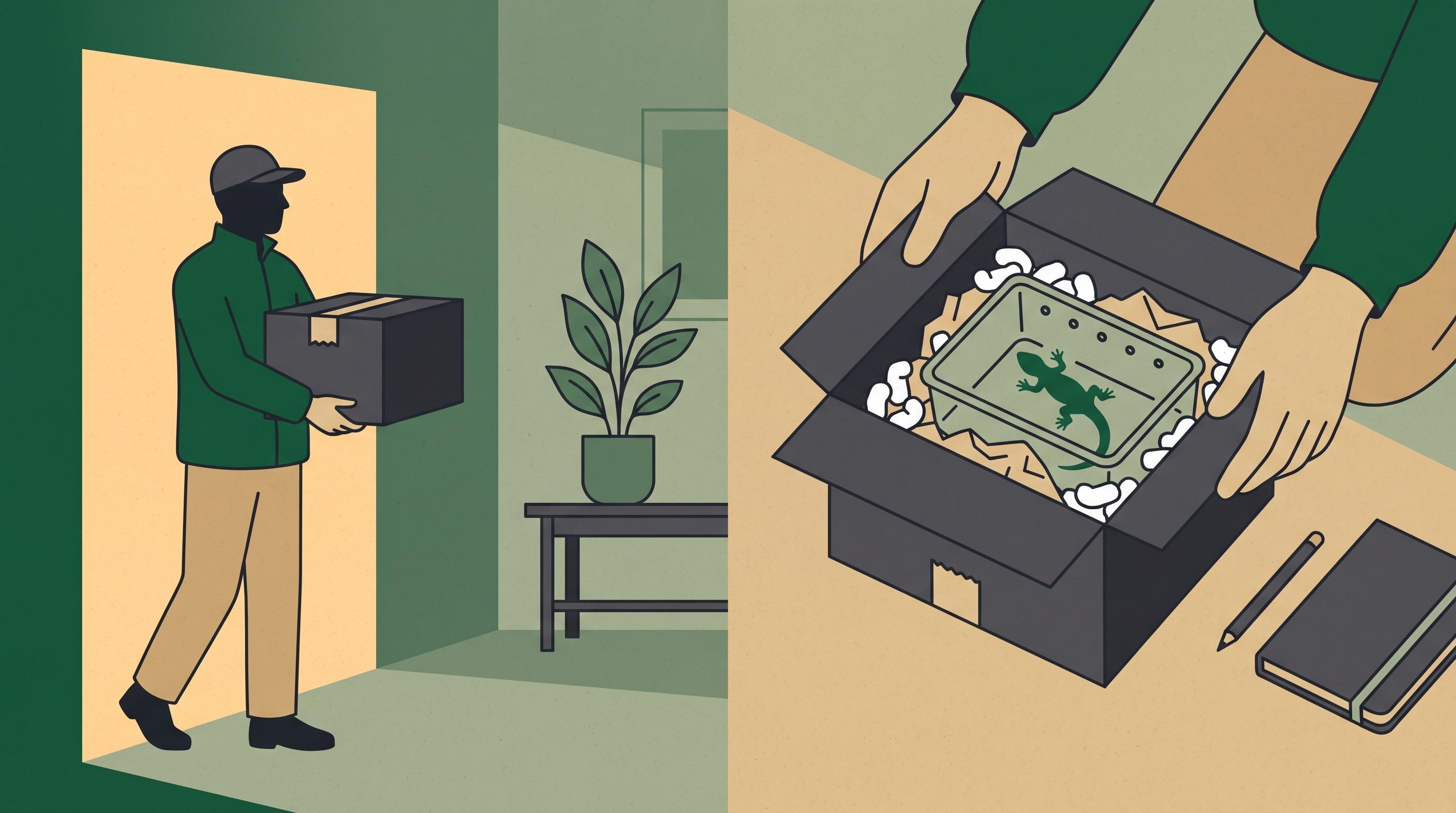
Bring the box straight to the animal's prepared quarantine area before opening it. Never unbox a new reptile in the same room or area as your established animals. Unboxing can expose the area to waste, bedding, or other material from the shipment, so keep the new animal and its supplies separate from your collection. Use dedicated quarantine tools and wash your hands before returning to your established animals. Open the shipment promptly and follow the seller's instructions for documenting the arrival. Do not wait for the box to "stabilize" or delay opening it to take a temperature reading.
What should you check about the box and packing?
Check for obvious damage to the box, shipping container, and animal bag, and note anything unusual as you unpack. A temperature reading from the box or bag surface does not tell you the animal's body temperature or, by itself, determine what care it needs. Do not delay unboxing to take a reading. Follow the seller's instructions for documenting the shipment and contact them promptly if you see damage or have a concern.
Reptile arrived cold — what should you do first?
Place the animal in its prepared quarantine enclosure with the correct, thermostat-controlled temperature gradient for its species. Let it warm up gradually through the enclosure's normal temperature range. Do not apply direct heat or try to warm the animal faster with a heating pad, hot water, or body heat. If the animal appears severely weak, injured, or has labored breathing, contact the seller and an exotics veterinarian.
What should the bag and packing material look like?
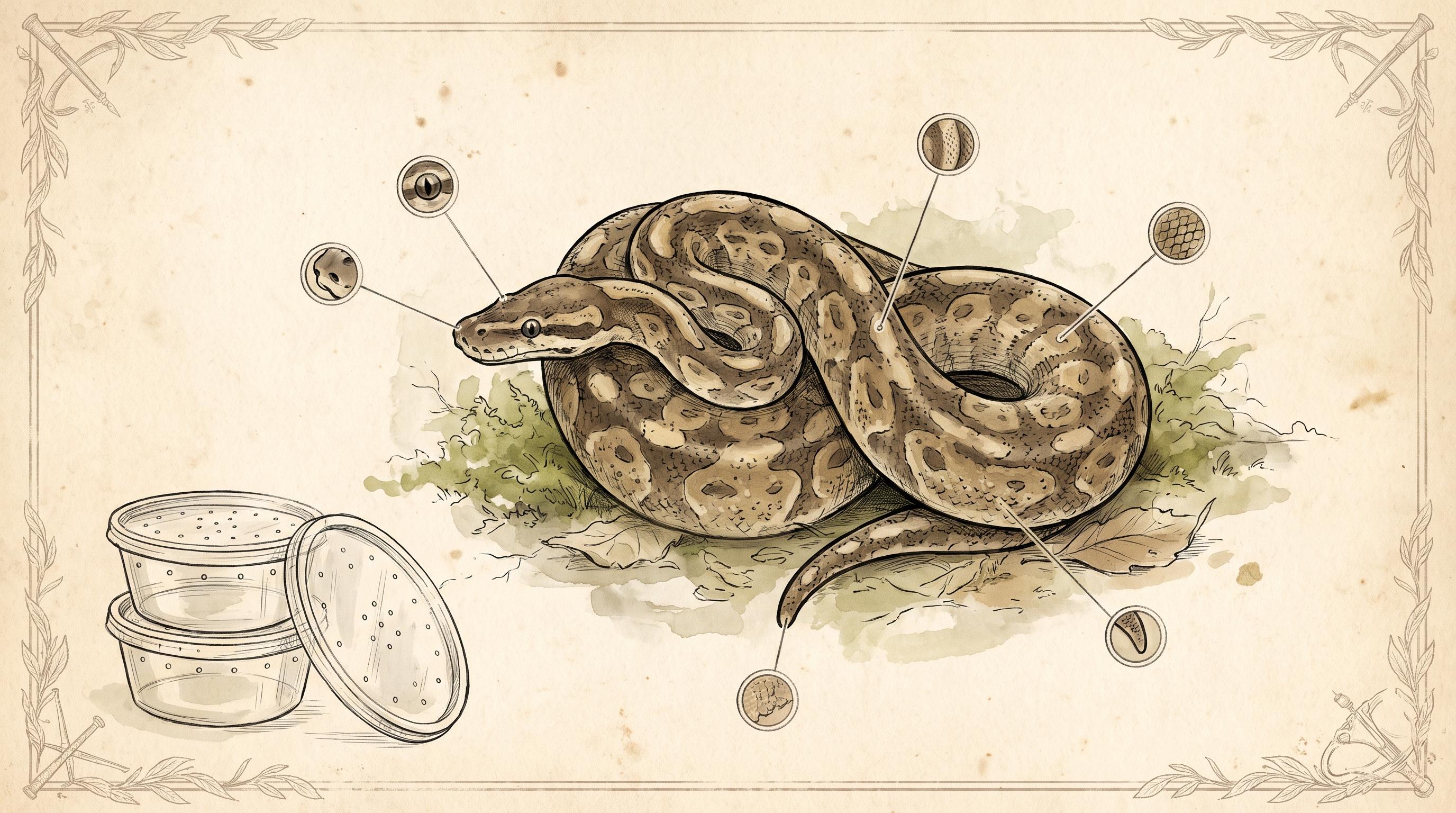
Check that the bag or shipping container is intact and that the animal was not injured during transit. Finding urates or feces in the bag is common during shipping and is not, by itself, evidence of poor packing or poor shipping. Some breeders take steps to reduce the chance of it happening, but it can still occur during normal transit. Note obvious damage, leakage, or anything that concerns you, and follow the seller's instructions for documenting it.
What does a normal versus concerning first response look like?
Reptiles can respond to shipping in different ways, and some may remain quiet or still after arrival. Avoid handling or touching the animal to test its response. Watch for obvious injury, severe weakness, or labored or open-mouth breathing. If you see these signs or are concerned about the animal's condition, contact the seller and an exotics veterinarian rather than guessing.
| What to check | Can be normal after shipping | Follow up if you notice |
|---|---|---|
| Box and packing | Some shifting or minor packing changes during transit | A crushed or punctured box, a leaking package, or damage that may have injured the animal. Photograph it and contact the seller. |
| Bag or container | Some condensation or a small amount of waste | A torn container, a leak, or conditions that appear to have left the animal wet or exposed. Photograph what you see and contact the seller. |
| Urates or feces | Either may be present after shipping. This is common and does not, on its own, mean the animal was shipped poorly. | Contact the seller if you see blood, unusual discharge, or another concerning change. Do not treat ordinary waste as proof of a shipping problem. |
| Appearance and posture | The animal may be still, tucked away, or less responsive than usual while settling in. | Seek prompt veterinary advice for severe weakness, inability to hold itself up, visible injury, or a condition that worsens. |
| Breathing | Breathing may be subtle and difficult to notice, especially while the animal is still. | Open-mouth breathing, wheezing, or obvious effort to breathe warrants prompt veterinary advice. |
| Temperature and settling | The animal may feel cool after transit. Move it into the prepared quarantine enclosure and let it adjust naturally. | Do not use a heating pad, hot water, or direct body heat to warm it. Contact the seller or an exotics veterinarian if you are concerned about its condition. |
What do you do once the animal checks out okay?
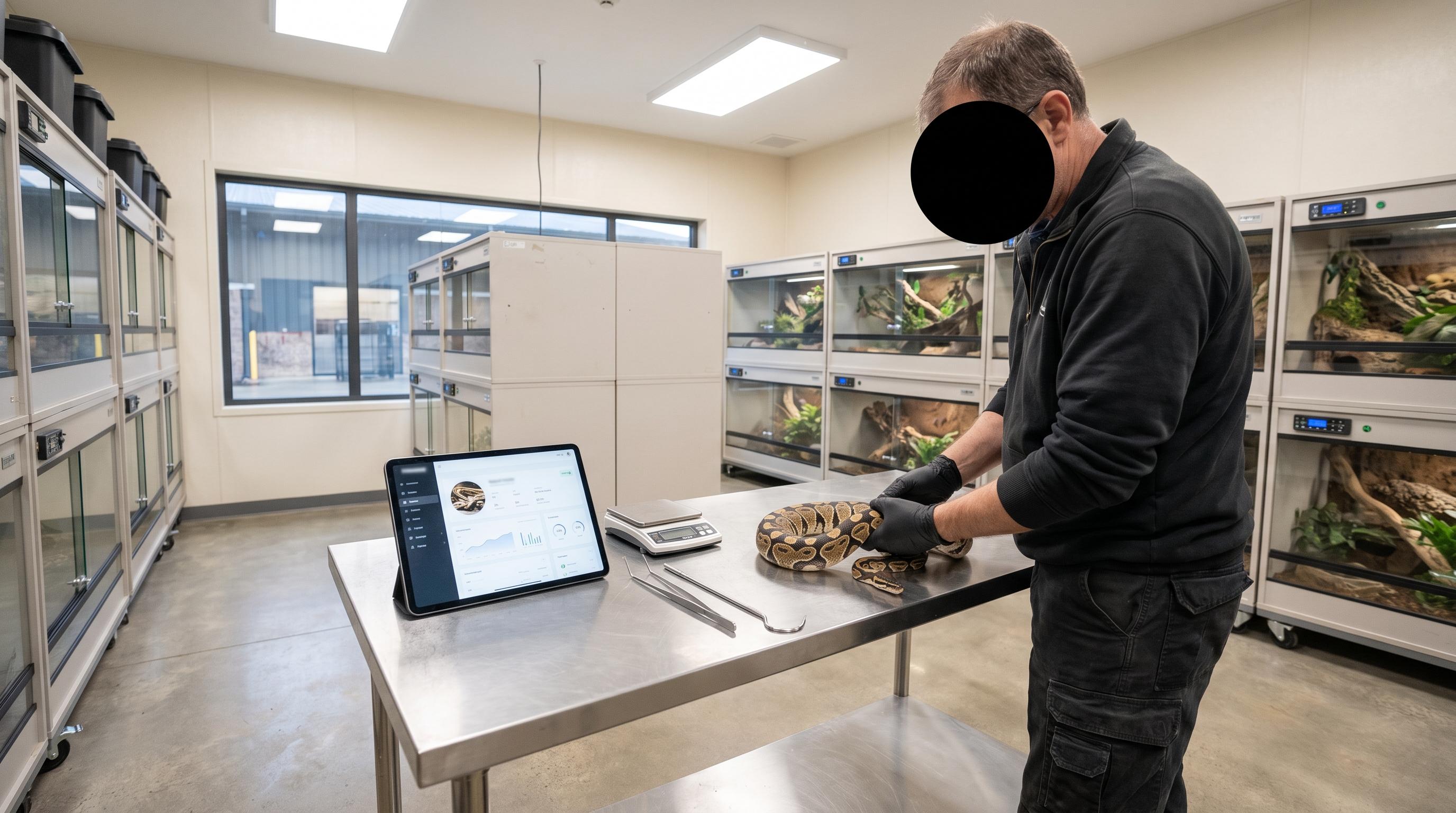
Keep it in the prepared quarantine enclosure with the correct temperatures already set, and give it time to settle. It is common to wait 24 to 48 hours before offering the first meal, but the right timing can be shorter or longer depending on the species and the seller's instructions. Follow the seller's guidance for that animal. Avoid unnecessary handling while it settles. This is also the point where I log the arrival: weight, photos, seller, shipping date, and first impressions. If the seller already keeps feeding and shed records, ask whether they can transfer the animal's history across to your Husbandry.Pro account so you are not rebuilding the paperwork from scratch.
How do you make the next shipment arrive in better shape?
Most rough unboxings I have had started before the box ever shipped: no heat pack during a cold snap, or a seller who would not check the forecast at the delivery end. Reading a seller's shipping notes on their store page before you buy tells you a lot, and if you are still deciding what to bring home, the species care guides help you get the quarantine enclosure ready before the animal is in transit. The honest answer is that no checklist makes shipping risk-free — it just means you catch a problem early and know what to do next. Start with one animal from a seller you trust, run this sequence end to end, and the whole thing gets far less nerve-wracking from there.