Most people asking about low maintenance pet reptiles are actually asking the wrong question — they want to know which species tolerates a busy week without suffering for it, not which one needs literally nothing. Every reptile needs stable temperatures and regular monitoring; the difference between species is how forgiving they are when you feed a day late, skip a misting, or spot-clean on day four instead of day two. This ranking is built on actual weekly time cost, and it is worth reading alongside the full species care guides before you commit to any animal.
Which pet lizard genuinely needs the least daily attention?
The leopard gecko remains the benchmark for the least demanding pet lizard in the hobby. Adults eat every 2–3 days rather than daily, sit comfortably at ambient humidity around 30–40% with a humid hide for shedding, and do not require UVB to survive — though low-level UVB (a 2–4% tube over part of the enclosure, so the animal can move in and out of it) supports long-term bone health and more natural activity, a point older hobby advice often skipped. A warm surface of roughly 88–92°F over a thermostat-controlled heat mat or overhead source, with a cool end in the mid-70s°F, is the whole thermal setup. Spot-cleaning takes under five minutes a few times a week and a full substrate change is monthly, not weekly.
The trade-off is longevity rather than effort: 15–20 years is common, so this is a low weekly burden attached to a long total commitment. The most frequent failure in busy households is not starvation but a dried-out humid hide, which shows up as retained shed on toes and tail tip. Checking that the moss is actually damp takes ten seconds and prevents the problem entirely.
Is a snake actually less work than a lizard?
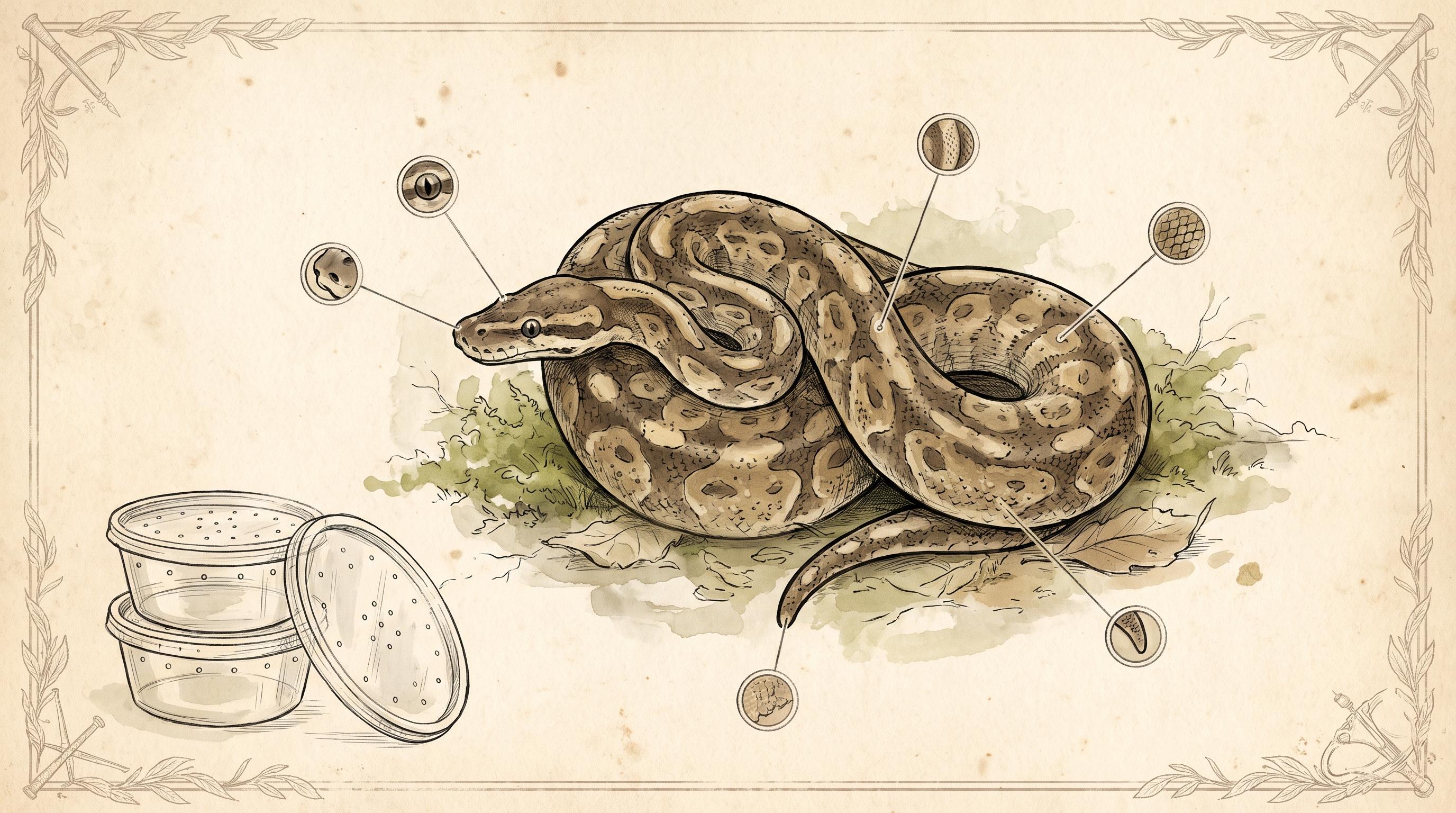
For most keepers, yes. A well-established corn snake or ball python on appropriately sized rodent prey is less weekly work than any lizard, because feeding is once every 5–14 days depending on age and size, and whole prey removes supplement dusting from the routine. Low-level UVB is optional enrichment for both species rather than a survival requirement, so there is one less piece of equipment to service.
The catch is humidity for ball pythons, which want roughly 55–65% ambient, rising toward 70% through a shed cycle. Run them dry and you get food refusal and incomplete sheds. The fix is structural rather than daily: a solid-sided PVC or wooden enclosure instead of a mesh-lidded glass tank, a large water bowl positioned on the warm side, a deeper moisture-holding substrate such as cypress mulch, and a damp hide. Those four choices hold humidity for days without you touching anything. If a snake refuses several consecutive meals, loses weight, or has repeated bad sheds after the enclosure is corrected, that is a conversation with an exotics vet, not a home troubleshooting project.
Corn snakes are the more forgiving of the two and sit happily at normal household humidity with a warm side around 82–85°F, which is why they consistently top lists of easy reptiles to care for among first-time snake owners. Their one busy-owner hazard is escape: a corn snake will find any gap in a lid, and the check is that the enclosure locks or clips shut every single time.
How do the most popular species compare on weekly workload?
| Species | Adult feeding interval | Humidity target | UVB | Rough hands-on time per week |
|---|---|---|---|---|
| Corn snake | Every 7–10 days | Household ambient | Optional | 15–20 minutes |
| Ball python | Every 7–14 days | 55–65% | Optional | 20–30 minutes |
| Leopard gecko | Every 2–3 days | 30–40% plus humid hide | Recommended, low level | 25–35 minutes |
| Crested gecko | Prepared diet 3x weekly | 60–80% with a daily dry-down | Recommended, low level | 25–35 minutes |
| Bearded dragon | Daily greens, insects every 1–2 days | 30–40% | Required, high output | 60–90 minutes |
Are crested geckos the lowest-effort option for someone who is out all day?
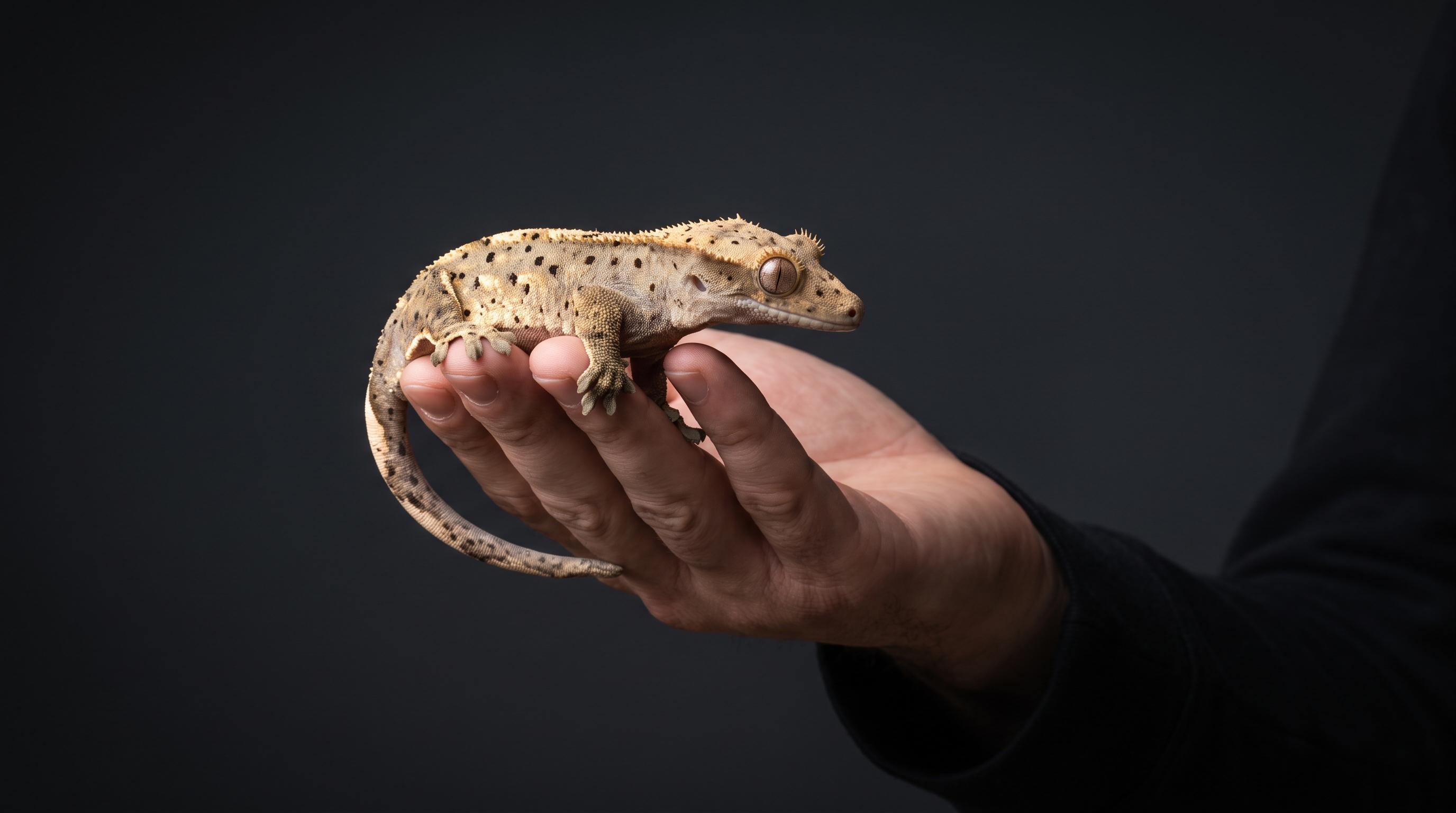
Crested geckos come closer to a genuinely hands-off pet reptile than anything else commonly available, with one condition: your home has to sit naturally in the low-to-mid 70s°F. They need no basking lamp at those temperatures, and sustained heat above the mid-80s°F is actively dangerous to them, so a cool flat is an advantage rather than a problem. A complete commercial powdered crested gecko diet mixed with water, offered three times a week, covers nutrition without insect colonies or supplement routines.
The workload is a spray-down that raises humidity into the 60–80% band and then lets the enclosure dry back toward 50% before the next cycle. Constant saturation, not dryness, is the common mistake — a permanently wet bioactive setup with poor airflow grows mould and stresses the animal. In practice a planted enclosure with live moss and good cross-ventilation holds the cycle on its own for a day or two, which covers a long shift or an overnight away.
Where do bearded dragons really sit on the effort scale?
Bearded dragons are the species most often mis-sold as low upkeep, and they are not. They need a minimum 4x2x2 ft enclosure as adults, a basking surface in the region of 100–107°F with a cool end in the low 80s°F, high-output UVB replaced on the manufacturer's schedule rather than when it stops glowing, fresh greens chopped daily, and calcium supplementation on insect feeds. That is realistically an hour or more a week of active care, plus a daily food prep step.
What they buy you is a diurnal animal that basks in the open, learns your routine and handles well — something no nocturnal gecko or snake offers. That is a fair reason to choose one. It is not a reason to call it a low-maintenance pet, and a keeper who wants visibility on a tight schedule is usually better served by a corn snake in a well-lit front-opening enclosure or a bold crested gecko.
What actually goes wrong during a busy week?
The failures that hurt animals in busy households are almost never dramatic. They are a thermostat probe that slipped off the heat mat, a water bowl that ran dry over a weekend away, a feed that everyone assumed someone else had done, and a slow weight loss nobody noticed because nobody was weighing. Every one of those is caught by a written record rather than by memory.
This is where a dedicated husbandry tracker earns its place. Husbandry.Pro lets you log feeds, refusals, sheds, weights, defecation and enclosure checks per animal, and set reminders so a 10-day feeding interval does not quietly become 18 days across a bad fortnight. If you keep more than two or three animals, or you share care with a partner or housemate, running your collection through Husbandry.Pro is the difference between a routine you follow and a routine you think you follow. Reviewing weights month over month is also the earliest signal you will get that something needs a vet's eyes.
How do you buy an animal that starts out easy?
Low maintenance is partly a purchasing decision. An established, feeding, correctly weighted captive-bred animal from a keeper who can tell you its last three feed dates and shed history is a fundamentally lighter commitment than an unsexed, unweighted, unknown-history animal — no matter how well the species scores on paper. Ask for feeding records, ask what the animal has been kept on, and ask to see it eat if that is possible.
You can compare what is currently available from breeders on the reptile marketplace, and browsing individual seller stores gives you a sense of who keeps detailed records before you commit to an animal that will be with you for the next fifteen years.
Frequently asked
What is the easiest reptile to care for if you work full time?
A corn snake is usually the easiest fit for a full-time work schedule. Adults eat once every 7–10 days, whole prey means no supplement dusting, they sit happily at normal household humidity with a warm side around 82–85°F, and total hands-on care is roughly 15–20 minutes a week. Crested geckos are a close second if your home stays in the low-to-mid 70s°F, since they need no basking lamp and eat a prepared powdered diet three times a week.
Are bearded dragons low maintenance?
No. Bearded dragons need a minimum 4x2x2 ft enclosure, a basking surface around 100–107°F, high-output UVB replaced on the manufacturer's schedule, fresh greens chopped daily and calcium supplementation on insect feeds — realistically an hour or more of active care a week plus a daily food prep step. They are an excellent pet for someone who wants a visible, handleable diurnal lizard, but they are not a low-upkeep choice.
How long can a pet reptile be left alone?</h2>
An established adult snake on a 7–14 day feeding interval can generally be left over a long weekend provided temperatures are thermostat-controlled, water is topped up and humidity is held structurally rather than by daily misting. Geckos and lizards fed every 2–3 days, and any juvenile animal on a daily or near-daily feeding schedule, need someone checking in. Anything beyond a few days should involve a competent sitter with written instructions.
Do leopard geckos need UVB?
Leopard geckos can survive without UVB, which is why older hobby advice omitted it, but current practice favours offering low-level UVB — a 2–4% tube covering part of the enclosure so the gecko can move in and out of it — for long-term bone health and more natural activity patterns. It adds no meaningful daily workload; the tube is replaced on the manufacturer's schedule.