Finding the best reptiles for small apartments means solving two problems at once: fitting an enclosure into a limited footprint and choosing a species whose behavior, noise, and odor profile won't cause friction with roommates, neighbors, or a landlord. This guide covers the specific species, tank dimensions, and space math that make reptile keeping realistic in under 500 square feet.
Before setting up anything, start logging feeding, shedding, and weight data in a tool like Husbandry.Pro from day one. Apartment keepers especially benefit from tight records, because subtle problems (a gecko losing weight, a snake refusing food after a move) get caught faster when you have a baseline to compare against. If food refusal persists for weeks, weight keeps dropping, or you hear clicking or wheezing, that is a conversation for an experienced exotics vet rather than something to troubleshoot at home.
What actually makes a reptile apartment-friendly?
An apartment-friendly reptile needs a small adult footprint, low ambient odor, minimal audible activity at night, and tolerance for the temperature swings common in rental units with shared HVAC. Size is the obvious factor, but odor and noise are what actually generate complaints or awkward conversations with a landlord. A well-maintained bioactive setup for a 20-gallon species produces less smell than a poorly spot-cleaned setup for a much smaller animal, so husbandry consistency matters as much as species choice.
Nocturnal rustling is a genuine issue in studios where the enclosure sits near a bed. Species that are active climbers or diggers overnight will make audible substrate or glass sounds — crested geckos jumping against glass and sand boas ploughing through substrate are the two most commonly reported culprits. If you're a light sleeper, factor this in before buying, not after, and plan for the enclosure to sit on the far wall rather than the nightstand.
Which small snakes work best in a compact terrarium?
Kenyan sand boas, rosy boas, and ball pythons top the list for renters wanting a snake in a genuinely small footprint. An adult Kenyan sand boa (usually 24-30 inches) is comfortable in a 20-gallon long or an equivalent 30x12x12 inch enclosure for life, and their fossorial habits mean minimal visible activity or odor once buried. Rosy boas run similarly small (24-36 inches) and tolerate a comparable footprint with slightly more climbing enrichment.
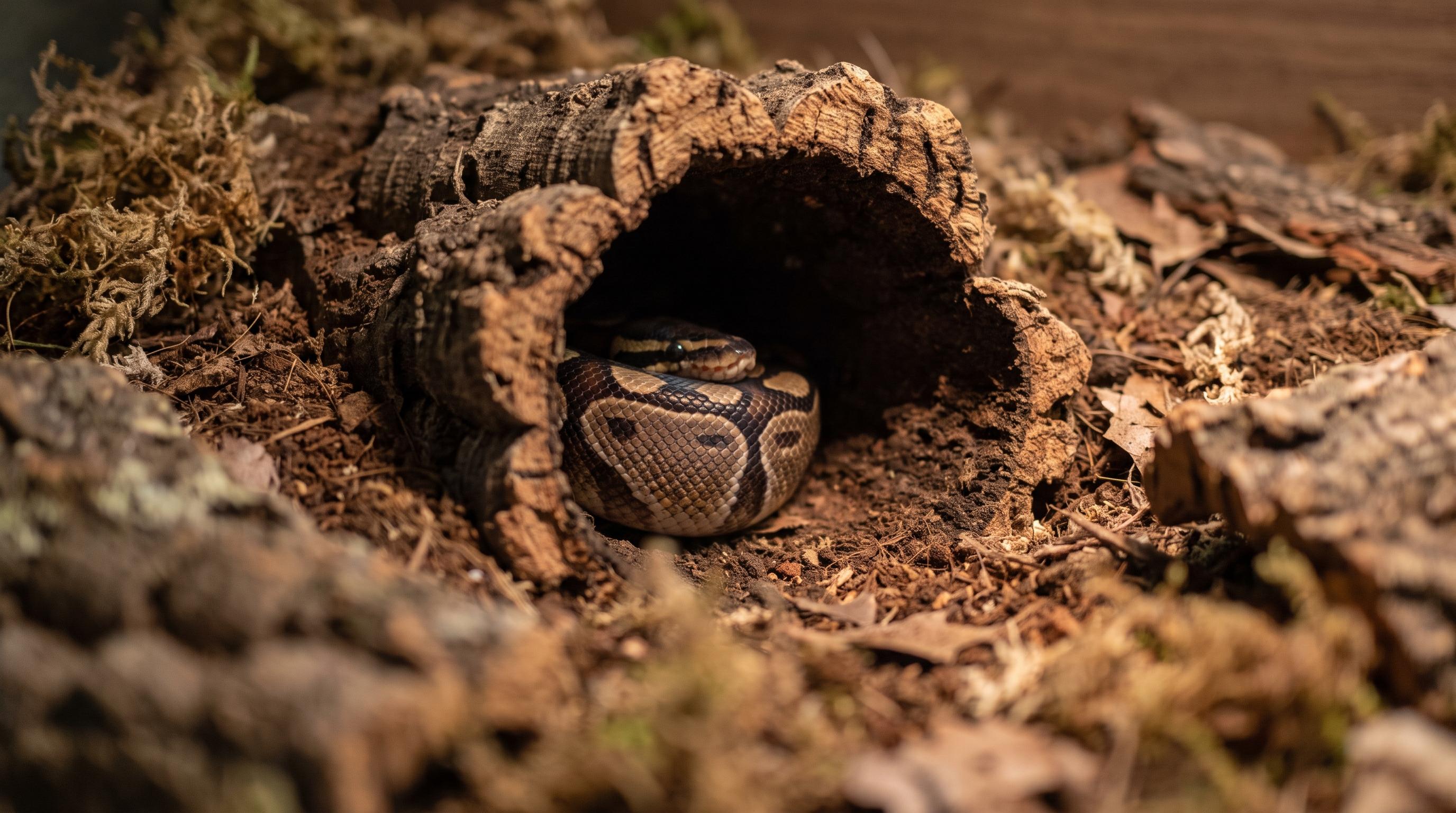
Ball pythons are larger (3-5 feet) but space-efficient because they're sedentary; a 36x18x18 inch enclosure suits an adult and many individuals barely use the full floor space. Enclosure size for this species is one of the areas where keepers genuinely disagree. Some find that shy individuals settle and feed more reliably in a snug enclosure, while others keep adults in 4x2 foot enclosures with no feeding problems at all. What both camps agree on is that cover matters more than floor area: multiple tight hides, branches, and enough clutter that the snake is never crossing open ground. A bare large enclosure is the setup that causes trouble, not a large one in itself. Corn snakes and garter snakes are also viable but need a 36-48 inch enclosure as adults, which is the practical upper limit for a small apartment footprint.
Which geckos and tiny lizards fit a studio or one-bedroom?
Leopard geckos, crested geckos, and African fat-tailed geckos are the strongest small-lizard choices, each comfortable in a 20-gallon long (30x12x12 inches) as an adult, with cresteds doing well in a taller 18x18x24 inch vertical enclosure instead. Leopard geckos are silent, largely odorless with regular spot-cleaning, and crepuscular to nocturnal — their activity is quiet ground-level movement rather than glass-climbing, which makes them one of the lowest-disturbance options for a shared bedroom. If you want to compare the day-to-day requirements side by side before committing, our species care guides break down heating, humidity and feeding for each of these.
Smaller-footprint options worth considering
Mourning geckos and lygodactylus dwarf geckos can be kept in enclosures as small as 12x12x18 inches, sometimes as small colonies, which suits keepers with genuinely minimal square footage such as a single room. The practical constraints are different from a leopard gecko's rather than simply harder: hatchlings and adults can slip through standard ventilation mesh, so gaps need checking before the animals go in; both species eat fruit flies and micro-feeders, which means keeping live cultures on a kitchen shelf; and mourning gecko colonies are parthenogenetic, so a group will keep producing eggs and steadily outgrow a small enclosure unless you have a plan for the offspring.
| Species | Adult size | Minimum adult enclosure | Noise/odor profile |
|---|---|---|---|
| Kenyan sand boa | 24-30 in | 30x12x12 in | Very low |
| Leopard gecko | 7-10 in | 30x12x12 in | Very low |
| Crested gecko | 6-9 in | 18x18x24 in | Low, some nighttime activity |
| Ball python | 3-5 ft | 36x18x18 in | Low |
| Mourning gecko | 3-4 in | 12x12x18 in | Low, active at dusk |
How much floor space do you really need, and what about landlord rules?
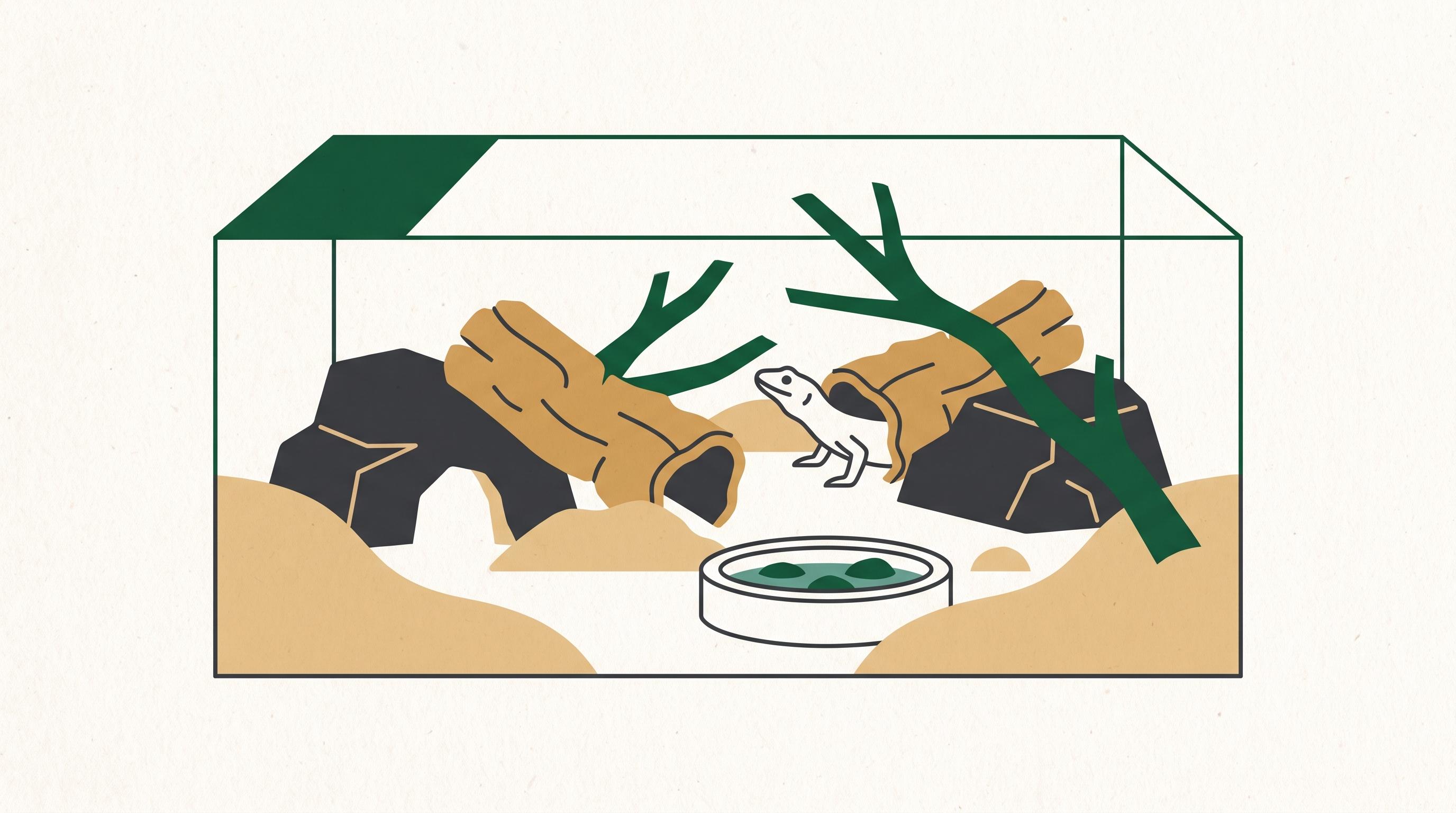
In practical terms, a 30x12x12 inch enclosure occupies less desk space than a large monitor and can sit on a dresser, a wall-mounted shelf rated for the loaded weight, or a small dedicated stand — most small-reptile setups fit in under 3 square feet of floor footprint including the stand. Measure the stand rather than the tank, and remember the vertical clearance a hinged lid or overhead light fixture needs, which is where most first setups run into trouble in a tight corner.
Leases and building policies vary enormously, so read your own pet clause and ask your landlord or management company directly, in writing, before you buy. Keepers generally get a better response by describing the setup concretely: a sealed glass or PVC enclosure of specific dimensions, no free roaming, no noise, no shared airspace, and a plan for who cares for the animal if you travel. Photographs of a comparable finished enclosure help more than a species name does. When you are ready to shop, you can browse reptiles currently listed for sale and filter for the smaller species above, and if you are weighing up a specific pairing or morph project in limited space, the morph pairing calculator is worth running first.
What goes wrong in small-space setups, and how do you spot it early?
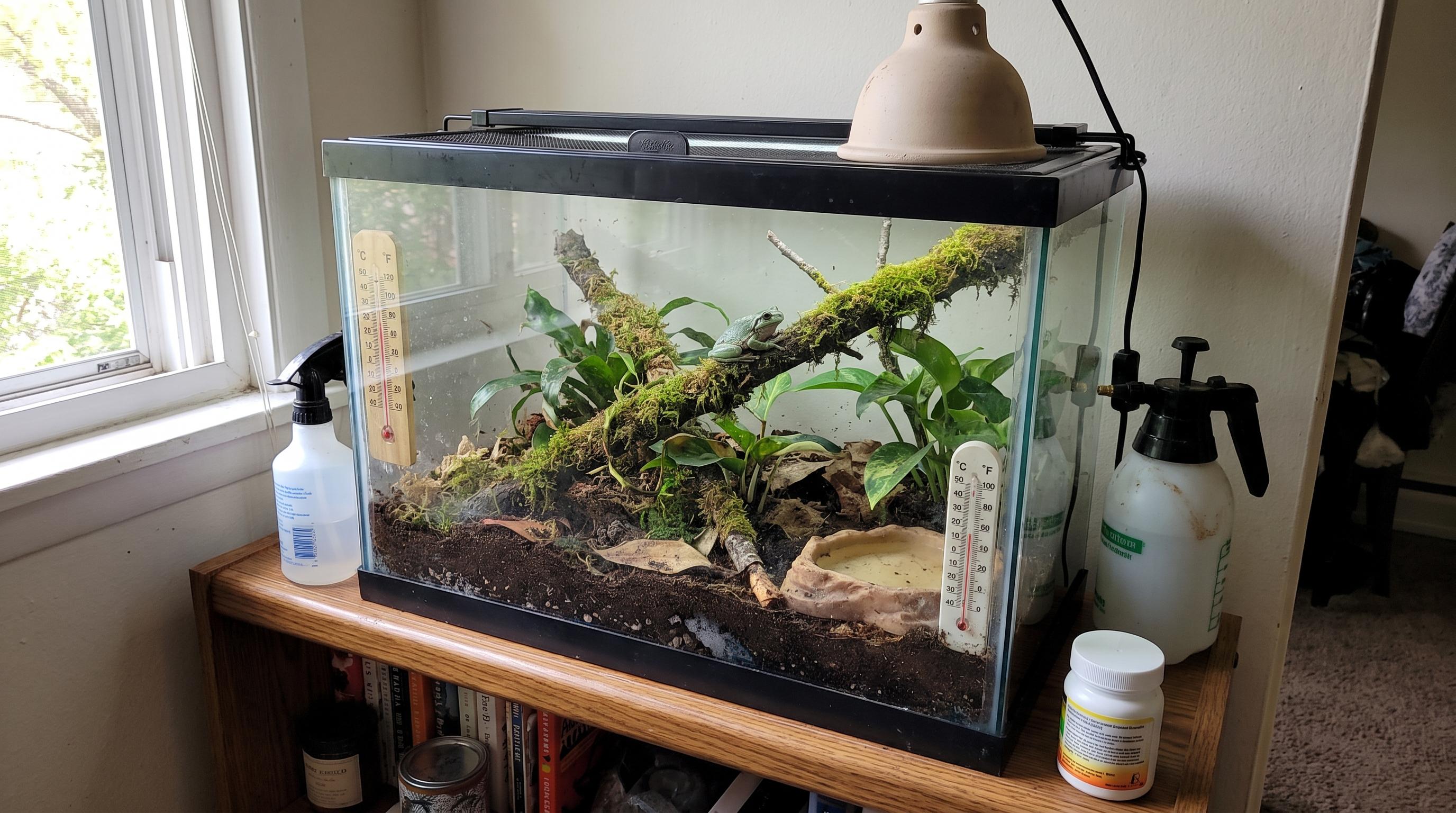
The most common failure is thermal, not spatial. Enclosures pushed against an exterior wall, under a window, or near an apartment radiator swing well outside their target range, and a thermostat probe plus a digital thermometer at both ends of the enclosure is the only reliable way to know. Second is humidity: bathrooms and kitchens in small flats run humid, which can push a leopard gecko or sand boa setup wetter than intended and lead to skin and shedding problems.
Third is storage creep. Feeder insects, substrate bales, spare bulbs and cleaning supplies take up more cupboard space than new keepers expect — budget for that as part of the footprint rather than discovering it after the enclosure arrives. Weekly weight and feeding notes make all three of these visible early, which is the real argument for keeping records from the first day rather than starting once something looks off.
Frequently asked
What is the best reptile for a small apartment?
Leopard geckos, crested geckos, Kenyan sand boas and rosy boas are the strongest choices. All of them are comfortable for life in an enclosure around 30x12x12 inches (or 18x18x24 inches for a crested gecko), produce almost no odour with regular spot-cleaning, and make no sound a neighbour would hear.
How much space does a reptile enclosure actually take up?
A typical small-reptile enclosure of 30x12x12 inches takes up about 2.5 square feet once you include the stand, roughly the desk space of a large computer monitor. Allow extra vertical clearance for a hinged lid or overhead light, and cupboard space for substrate, feeders and spare bulbs.
Do I need to tell my landlord about a pet reptile?
Read your tenancy agreement's pet clause and ask your landlord or letting agent directly, in writing, before buying. Describing the setup specifically — a sealed enclosure of stated dimensions, no free roaming, no noise, no odour — tends to get a better response than naming a species, and photos of a comparable finished enclosure help.
Are any apartment reptiles noisy at night?
Some are, mildly. Crested geckos jump and can tap against glass overnight, and sand boas rustle as they burrow through substrate. Leopard geckos and ball pythons are the quietest common options. If the enclosure has to sit in a bedroom, place it on the far wall rather than beside the bed.