If you are about to ship a reptile for the first time, whether you are selling on the marketplace or sending an animal to another keeper, the idea of putting a living creature in a box and handing it to a courier is genuinely nerve-wracking. Let us walk through it step by step so you know exactly how to ship a reptile safely, from the box you choose to the last piece of tape you use.
What kind of box should you actually use for a reptile shipment?
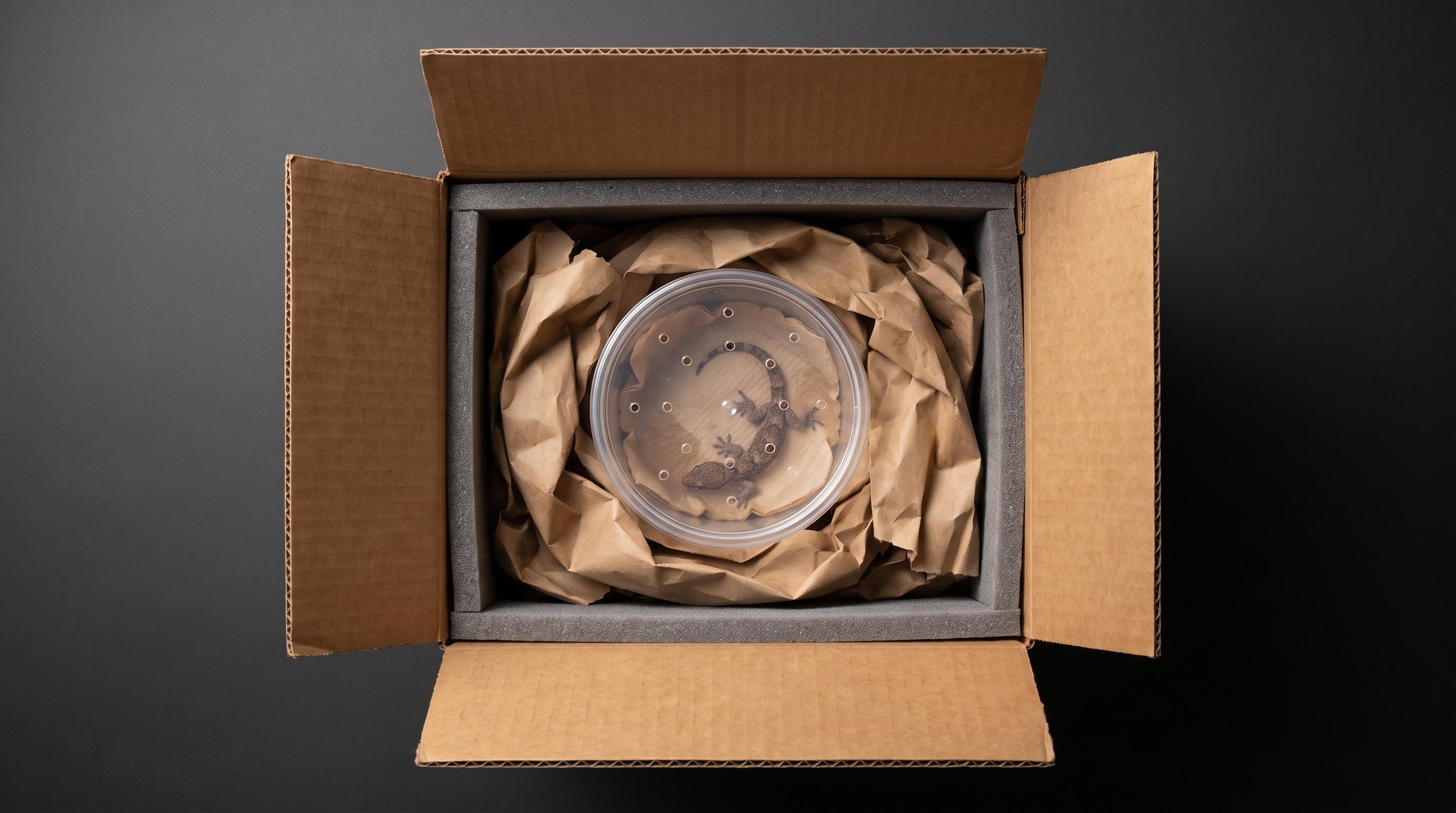
Use a corrugated cardboard box that is double-walled, not the single-layer boxes you get from a grocery store. A reptile shipping box needs to survive being stacked, dropped, and left on a truck for hours, and thin cardboard simply folds under that stress. Most experienced shippers buy purpose-made reptile shipping boxes, which are pre-punched with small ventilation holes and sized to hold a deli cup or cloth bag snugly without much room for the animal to slide around.
Size matters more than people expect. A box that is too large lets the animal's container roll around during transit, and that movement causes far more stress and injury risk than a snug fit does. As a rough guide, you want no more than an inch or two of empty space around the inner container once padding is added.
When is it too hot or too cold to ship a reptile at all?
The most useful decision you make happens before you tape anything shut: whether to ship this week or wait. Check the forecast for the origin, the destination, and the hub the box will pass through, and look at overnight lows as well as daytime highs, because most of the journey happens at night.
As a working rule among experienced shippers, temperatures below roughly 40°F (4°C) or above roughly 90°F (32°C) anywhere along the route mean you either pack for it deliberately with the right pack and insulation, or you postpone. Ship on an overnight service only, early in the week so a delay does not park the box over a weekend, and hold the shipment for pickup at the destination facility where the recipient can collect it rather than leaving it on a doorstep in the sun.
How do you keep a reptile warm or cool enough during shipping?
You control temperature with heat or cold packs matched to the season and the outside temperature the box will actually experience, not the temperature in your living room. A heat pack for reptile shipping is an air-activated paper pouch, commonly sold in 40-hour and 72-hour ratings, that produces gentle, steady warmth once exposed to air. Tape it to the inside wall or lid of the outer box, never in direct contact with the animal or its container, and never seal it inside a plastic bag — it needs air to keep reacting, and a smothered pack goes cold hours early.
Cold packs versus Phase 22 phase-change packs
This is where a lot of first-time shippers get confused, so let us be precise about it. A standard cold pack, the kind sold for coolers and lunch boxes, is a gel pack that has been frozen solid. It starts well below freezing and then warms up steadily over several hours. That steep temperature swing can chill a cold-sensitive reptile badly in the first part of transit, which is exactly when the box is least likely to be indoors.
A Phase 22 pack works differently. It is a phase-change material with a transition point of about 22°C (72°F), so instead of starting frozen and climbing, it holds close to room temperature for a long, flat period. That is what makes it useful in cold weather: it buffers the box interior toward a comfortable range rather than fighting it in either direction. A basic frozen gel pack is better suited to keeping food or supplies cool than to travelling beside a live animal.
Whichever you use, wrap the pack in newspaper or thin foam, then tape it against the inside of an outer wall of the box so the insulation panel and a layer of cushioning sit between the pack and the animal's container.
| Route conditions | Pack choice | Placement notes |
|---|---|---|
| Lows near or below 40°F (4°C) | 40 or 72 hour air-activated heat pack | Taped to inside of lid or upper side wall, air exposed, wrapped in paper |
| Mild, 50–80°F (10–27°C) | Usually no pack; insulation alone | Keep ventilation holes clear |
| Highs approaching 90°F (32°C) | Phase 22 phase-change pack | Wrapped, against an outer wall, insulation between pack and animal |
| Frozen gel cold pack | Not recommended for live animals | Steep early cold spike; keep for supplies |
How much insulation does a reptile shipping box actually need?
Line the inside of your outer cardboard box with a foam insulation panel on all six sides, including the top and bottom. Half an inch is the practical minimum; three quarters of an inch to a full inch is what most shippers use in winter. This is what people mean by insulated reptile shipping, and it is the single biggest factor in keeping the internal temperature stable regardless of what is happening outside the box. Styrofoam coolers work too, but a foam-lined cardboard box is lighter, cheaper, and holds up better if the box gets rained on.
Do not skip the top and bottom panels. New shippers often insulate the sides carefully and forget that heat and cold escape just as easily through the top and bottom of the box, especially when it is sitting on a cold concrete floor in a sorting facility overnight.
What should go inside the box with the animal?
Pack the animal in a breathable deli cup, cloth bag, or ventilated container with enough crumpled paper towel or paper packing material to stop it sliding, then surround that container with more crumpled paper as cushioning inside the insulated box. This layered approach, animal container inside cushioning inside insulation inside cardboard, is the core of any live animal shipping guide worth following.
A few specifics that matter:
- Skip substrate like sand or loose bark for shipping; damp paper towel is safer and will not get inhaled or ingested if the container shifts.
- For snakes, a cloth bag tied at the top and placed inside a deli cup or small box gives them something to feel secure against, which genuinely reduces stress on a long trip.
- Leave enough humidity in the paper towel to prevent dehydration, but never so wet that condensation builds up inside the container.
- Never ship a reptile in the same compartment as an uncovered heat or cold pack. Direct contact can burn or freeze skin even through fabric.
- Ship animals unfed for a few days beforehand so nothing regurgitates in transit, and only ship animals that are feeding, alert and in good weight. Species vary in what they tolerate, so check the species care guides for the animal you are sending.
How do you label a live reptile shipment correctly?
Mark the outside of the box clearly on at least two sides so the markings survive being turned over: the words identifying the contents as live, non-venomous animals, arrows or "this way up" orientation markers, and both your contact details and the recipient's so a facility can reach either party quickly if the box is delayed. Write the markings large enough to read at a glance on a moving conveyor.
Carriers differ in how they handle live animal shipments, what wording they want on the box, and what account arrangements they expect, so confirm the specifics with your chosen carrier before you book rather than copying what someone did on a forum. Give the recipient the tracking number the moment the box is scanned, and agree in advance who is collecting it and when.
What usually goes wrong, and how do you catch it?
Most failed shipments do not fail because of the animal. They fail on small packing details, and they are all avoidable:
- Ventilation holes taped over. It is startlingly easy to run packing tape across the punched holes while sealing the box. Seal, then walk around the box and check every hole.
- Heat pack sealed airtight. A pack inside a zip bag or crushed flat under foam stops producing heat. Leave it exposed to the air space inside the box.
- Condensation. If you can see beads of water inside the deli cup during a test pack, the paper towel is too wet. Damp to the touch, not dripping.
- Inner container able to move. Close the box, lift it, tilt it gently. If you hear or feel the container shift, add cushioning until you do not.
- Shipping into a forecast you did not check. A mild day at both ends still means nothing if the hub is freezing overnight.
Do a dry run before your first real shipment: pack the box exactly as you would with an animal, put a thermometer inside instead, and leave it outdoors overnight in conditions close to the ones you expect. Reading the temperature in the morning tells you more about your setup than any packing list can, and it is the cheapest lesson you will ever buy. Once you have a packing method you trust, keeping notes on what worked in each season makes every shipment after that faster, and there is more on selling and shipping practice across the rest of the ReptileAds resources library. If an animal arrives lethargic, cold to the touch, or with any sign of injury, an exotics vet is the right first call rather than home observation.
Frequently asked
What box do you need to ship a reptile?
Use a double-walled corrugated cardboard box with small punched ventilation holes, lined on all six sides with foam insulation panels of at least half an inch, and sized so there is only an inch or two of space around the animal's inner container once cushioning is added. Single-wall grocery boxes collapse under stacking and do not hold temperature.
Do you put a heat pack in with the reptile?
Not in direct contact. An air-activated heat pack is taped to the inside wall or lid of the outer box, wrapped in paper, with the foam insulation and a layer of cushioning between it and the animal's container. Leave the pack exposed to the air inside the box, because sealing it in plastic stops it producing heat.
What temperature is too cold to ship a reptile?
Many shippers treat forecast lows below roughly 40°F (4°C) at the origin, destination or transit hub as the point at which you either pack deliberately with a heat pack and thicker insulation or postpone the shipment. Highs above roughly 90°F (32°C) call for the same judgement in the other direction. Overnight lows matter most, since most of the journey happens at night.
What is the difference between a Phase 22 pack and a frozen cold pack?
A frozen gel pack starts well below freezing and warms steadily, giving a sharp cold spike early in transit. A Phase 22 pack is a phase-change material with a transition point around 22°C (72°F), so it holds close to room temperature for a long, flat period and buffers the box rather than chilling it. That flatter curve is why phase-change packs are preferred alongside live animals.