
Is This Species Right for You?
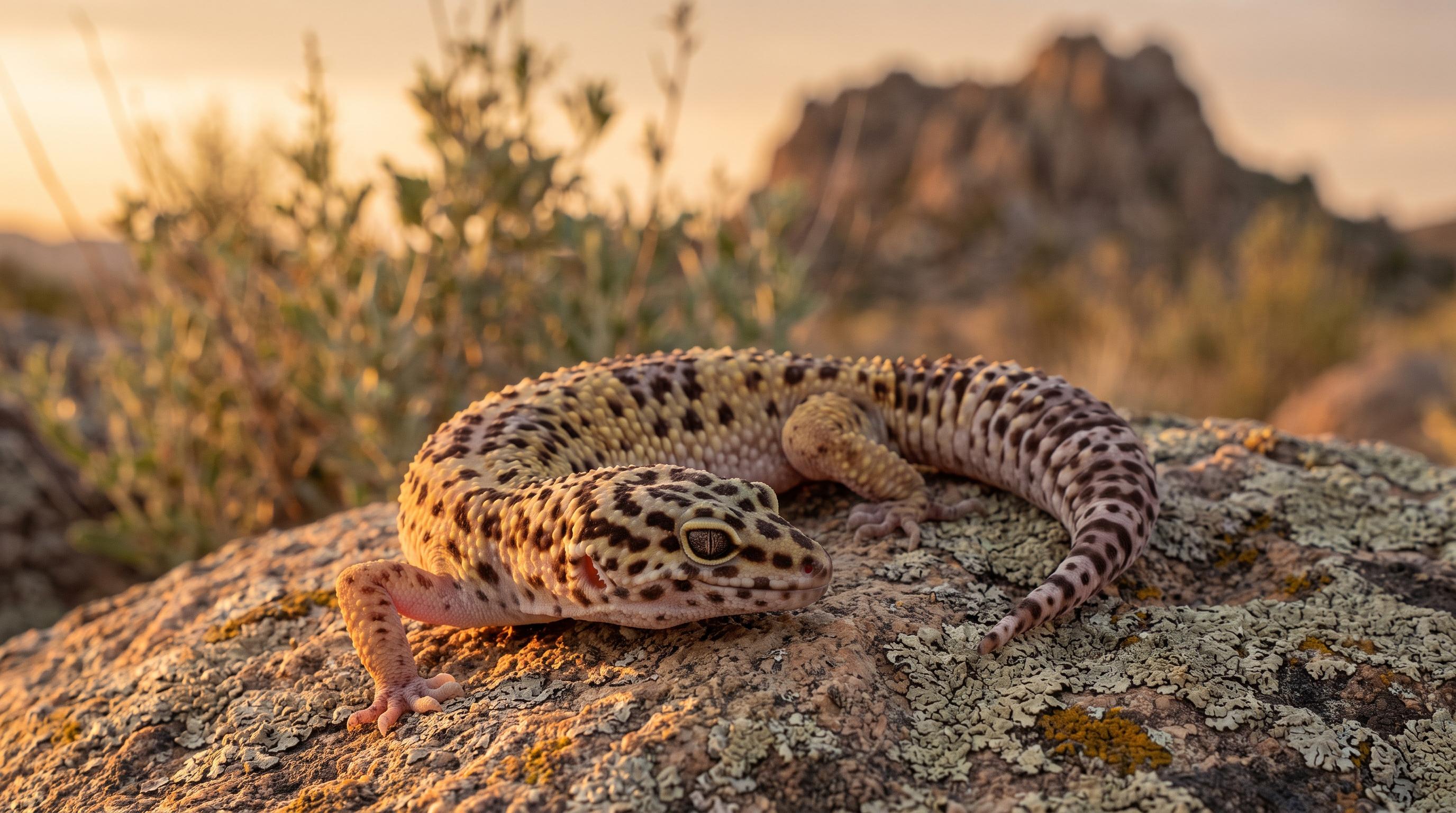
A leopard gecko is a good fit for someone who wants a lizard they can actually watch and occasionally handle, without the space demands of an arboreal or large-bodied species. An adult needs a minimum 36 × 18 × 12 in (90 × 45 × 30 cm) floor footprint, which fits comfortably on a bookshelf or low table in most homes — but this is a minimum, not a target, and a larger enclosure is always the better choice. Setup costs run $250–$500 upfront and $20–$40 a month after that for feeders, supplements and electricity, which is modest compared to most reptiles but still a real, recurring cost over a potential 10–20 year lifespan.
Handling expectations are moderate: most individuals settle into 10–15 minute sessions a few times a week, but this is not a species that wants to be carried around constantly, and rough or anxious handling carries a genuine risk of tail autotomy. That makes leopard geckos workable in a household with children, but only with direct supervision and a clear house rule — the tail is never gripped. The honest challenge isn't exotic husbandry, it's discipline: a correctly graded thermal gradient and a genuinely humid shed hide have to be checked, not assumed, and that habit has to continue for the gecko's entire adult life, not just the first excited month.
Natural History and Wild Behaviour
Leopard geckos originate from the semi-arid rocky grasslands and scrubland of the Pakistan–Afghanistan–India border region, a climate of hot days, cool nights, and a sparse, seasonal rainfall pattern. In the wild they are crepuscular to nocturnal, most active at dusk, dawn and through the night, spending daylight hours sheltering in rock crevices and burrow entrances rather than basking in the open — behaviour described as lightly saxicolous and fossorial, using existing shelter rather than excavating extensive burrow systems. This matters directly for captive setup: they need a place to disappear into during the day, and they will dig a shallow scrape to improve a hide, but they are not a species that needs deep substrate to express normal behaviour.
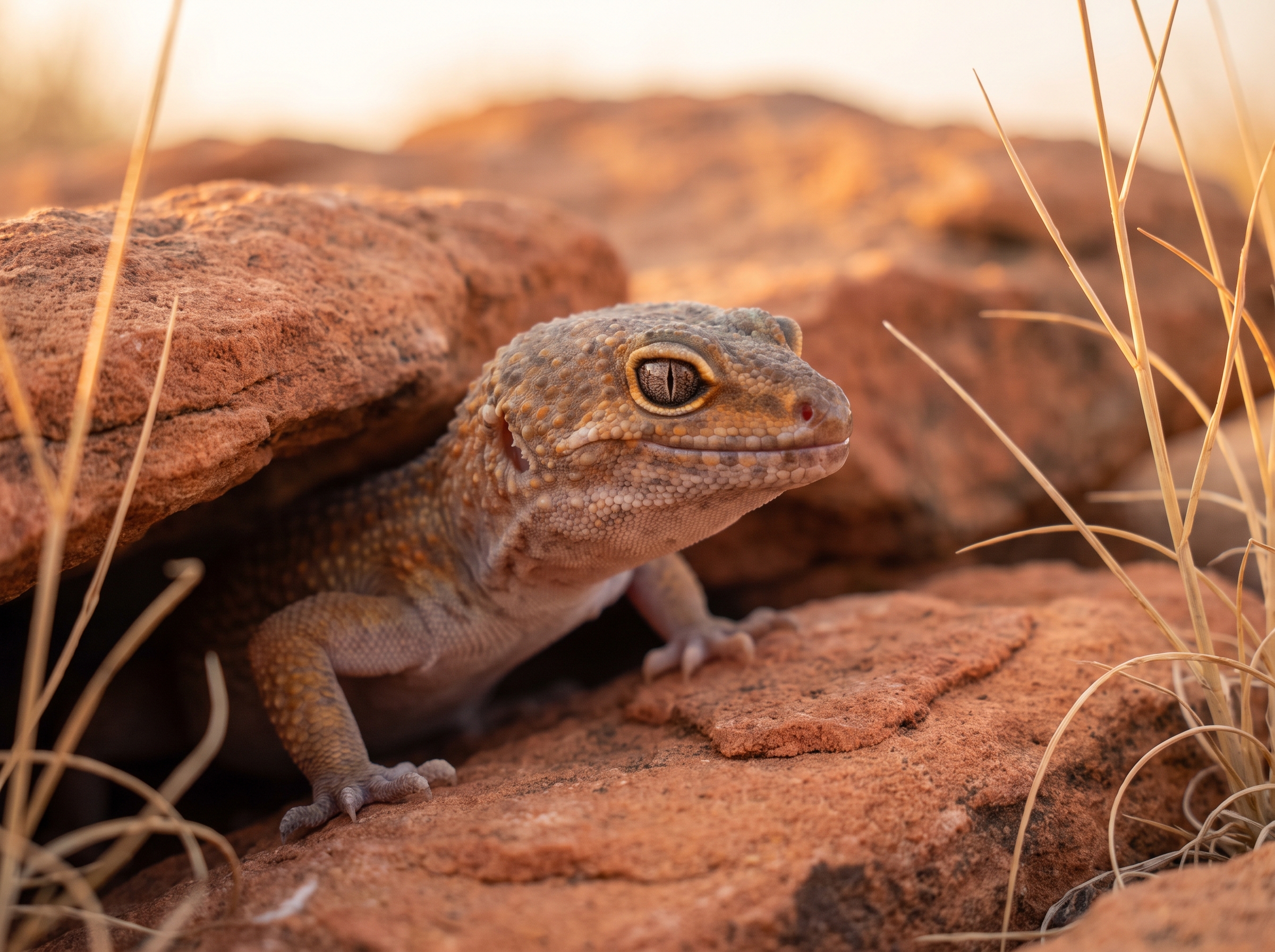
Wild diet is opportunistic insectivory — crickets, beetles, and other invertebrates taken as encountered, which is why captive diets built around gut-loaded crickets and dubia roaches closely mirror natural nutrition. Leopard geckos are not evaluated by the IUCN Red List and are not listed on any CITES Appendix. Wild-caught individuals are now rare in the trade; the modern pet population is almost entirely captive-bred, and that's the only responsible source to buy from.
Enclosure Size and Setup
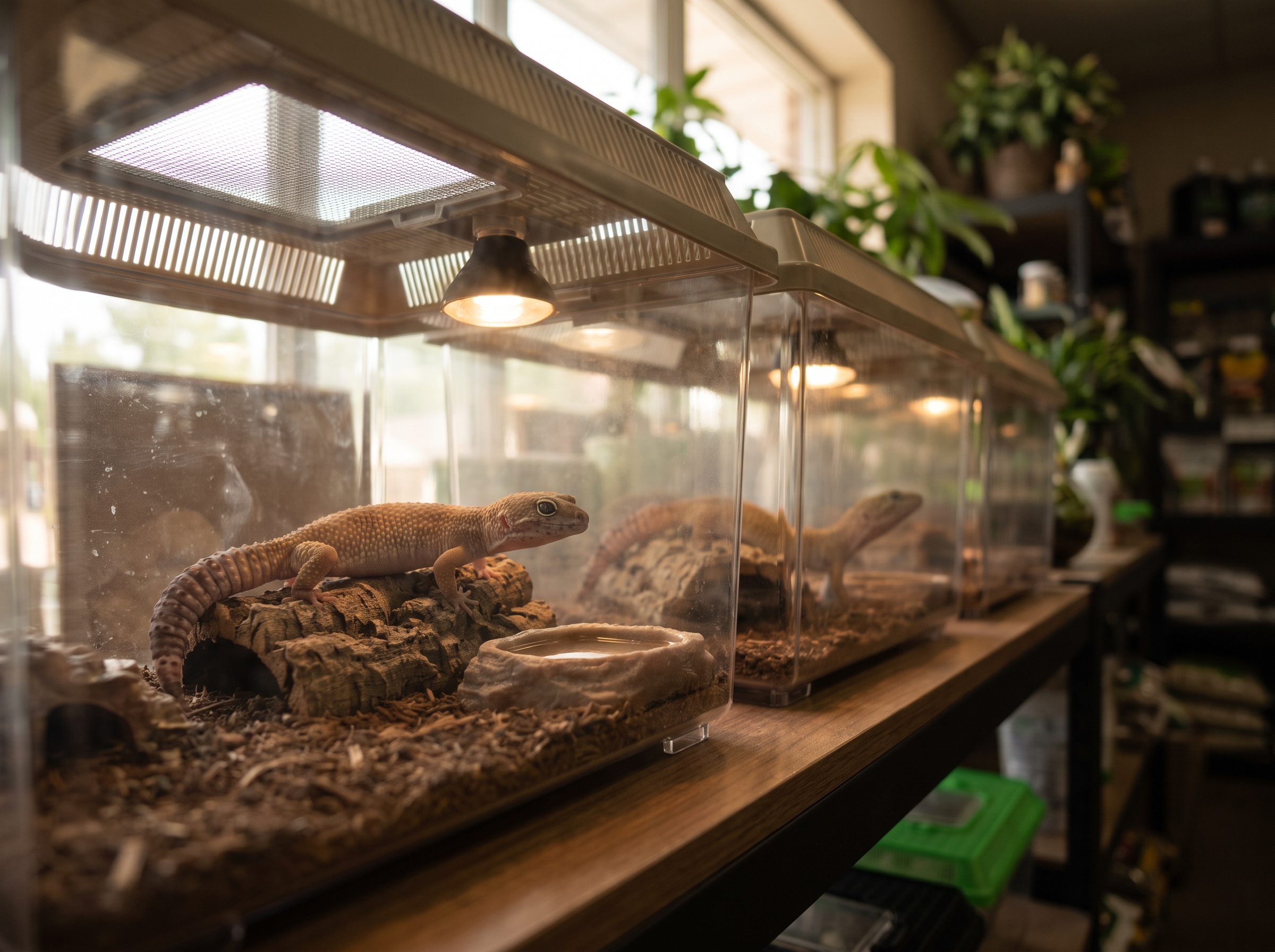
Floor space matters far more than height for this terrestrial species — a long, low enclosure is more usable than a tall one. The 36 × 18 × 12 in (90 × 45 × 30 cm) adult minimum corresponds roughly to a 40-gallon (150 L) breeder-style tank footprint; glass or PVC both work, and PVC holds heat more efficiently if the room runs cool. Ventilation should be moderate rather than heavy — this is a dry-climate species, so a solid or mostly-solid top with front or side vents controls humidity loss better than a full mesh lid, provided air isn't allowed to stagnate.
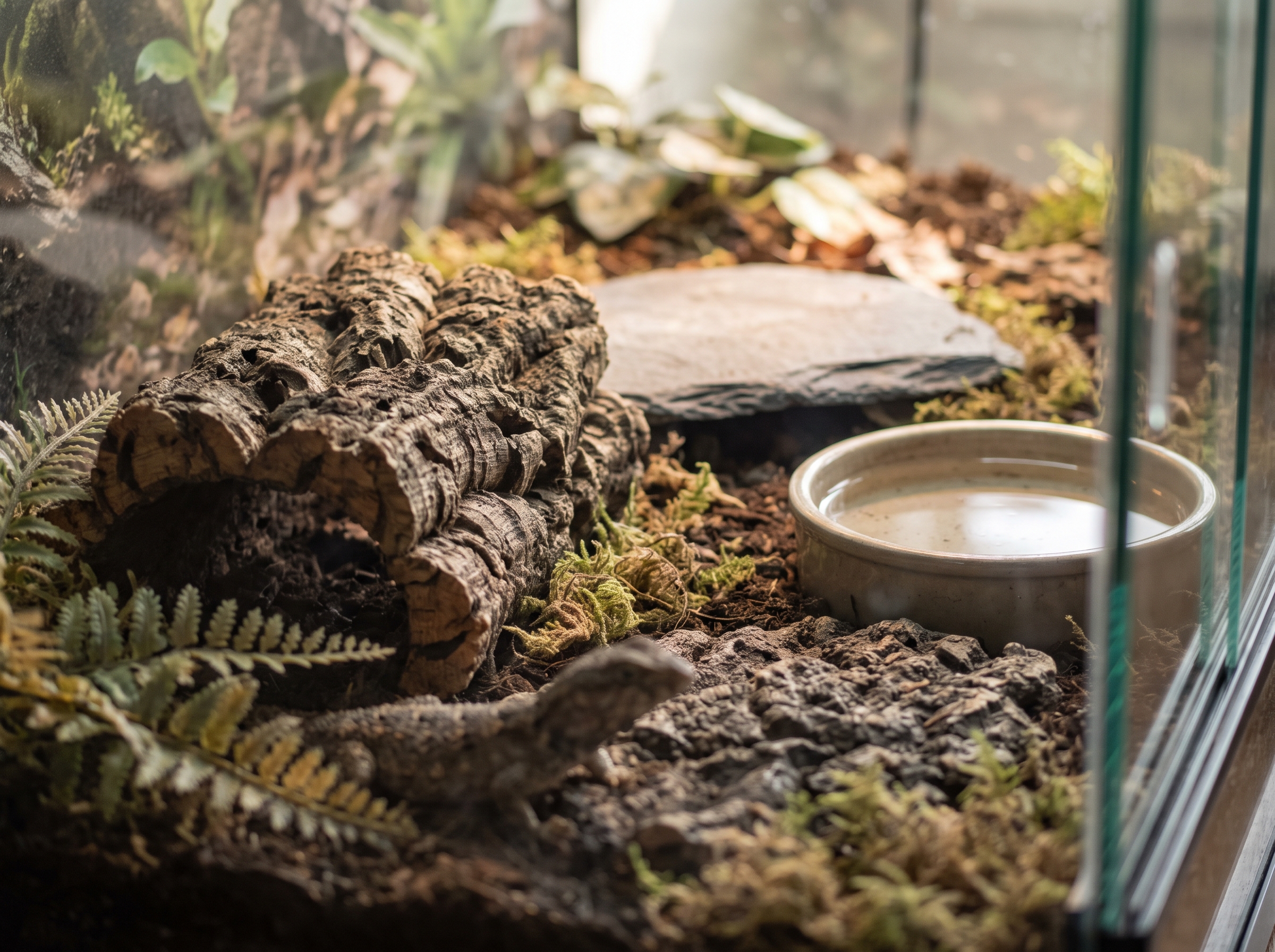
Escape-proofing is simple but non-negotiable: sliding glass doors need a functional lock, since a determined gecko will exploit any gap at a door track. House leopard geckos alone — adult males fight, and a male housed with a female will breed continuously, which stresses and can injure her; co-housing any combination of sexes also risks resource guarding at the food and basking spot, with tail loss a common outcome. Provide a minimum of three hides: a warm dry hide over the basking area, a cool dry hide on the opposite side, and a dedicated humid hide for shedding support. A shallow water dish should always be available. Keep a simple quarantine enclosure — even a basic bare-bottom tub with a hide and heat source — ready for any new arrival or for isolating a sick animal, entirely separate from established collections.
Heating, Lighting and Humidity
Four numbers define the thermal gradient, and each is a different kind of reading. Basking surface temperature, measured directly on the floor of the warm hide with a temp gun or a surface probe, should sit at 88–92°F (31–33°C). Warm-side air temperature, measured roughly 2–3 in (5–8 cm) above the substrate, should run 80–85°F (27–29°C), while the cool side should hold at 70–75°F (21–24°C) air temperature. Overnight, air temperature should not drop below 65°F (18°C); a modest night drop into the 65–68°F (18–20°C) air-temperature range is tolerated and considered beneficial, but anything colder is a problem, not a feature.
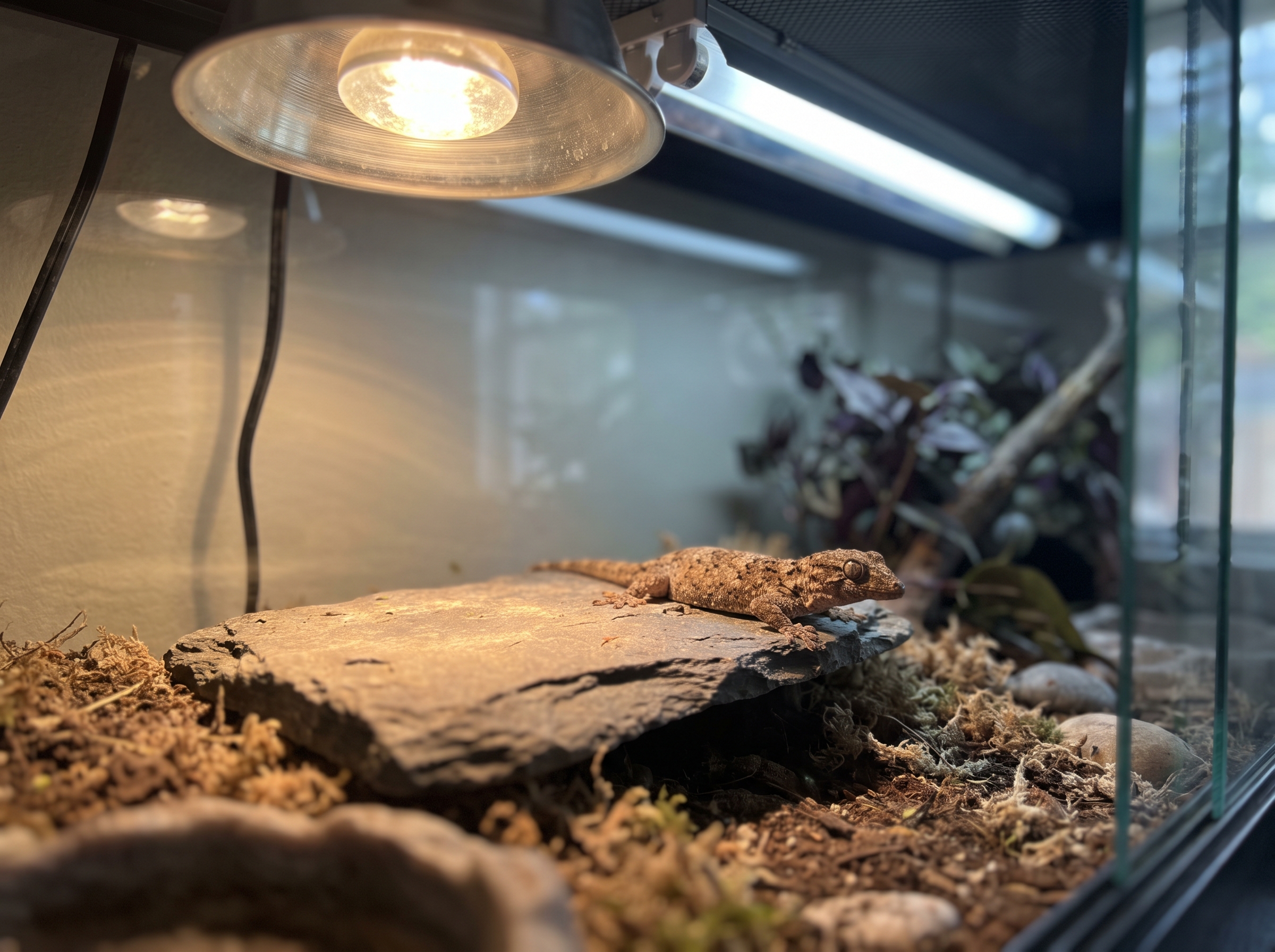
An under-tank heater or a radiant heat panel on a digital thermostat is the standard heating method, with the thermostat's sensor probe taped directly to the basking surface — not floating in the air — since that's the point being controlled. UVB is now recommended even though leopard geckos can survive without it: target 0.5–1.0 UVI at the basking site, which corresponds to Ferguson Zone 1. Achieve this with a linear T5 UVB tube run along the warm side, with lamp distance adjusted and verified using a UV index meter rather than assumed from the bulb's printed percentage — remember that any mesh lid between the lamp and the basking spot reduces UV output, so output should always be checked with the mesh in place, not without it.
Run a photoperiod of roughly 12 hours light in summer, dropping to around 10 hours in winter if seasonal variation is desired — this is not essential but is a low-effort way to mimic a natural cycle. Daytime ambient humidity should sit at 30–40%, read with a digital hygrometer placed away from the humid hide; the humid hide itself should be kept at 70–80%, raised with damp sphagnum moss or coco fibre and topped up as it dries, with no separate night-time humidity target required beyond maintaining that hide.
Substrate, Decor and Enrichment
Paper towel or reptile carpet is a safe, simple substrate for hatchlings and juveniles while feeding response and weight are established. For subadults and adults, a fine, slightly compactable substrate — a clay-based blend or a sand-free soil mix — supports the shallow scraping and hide-digging this species does in the wild without requiring a deep burrowing layer, since leopard geckos are lightly fossorial rather than true burrowers. A depth of roughly 2 in (5 cm) is enough to allow that natural digging behaviour; it doesn't need to be deeper than that.
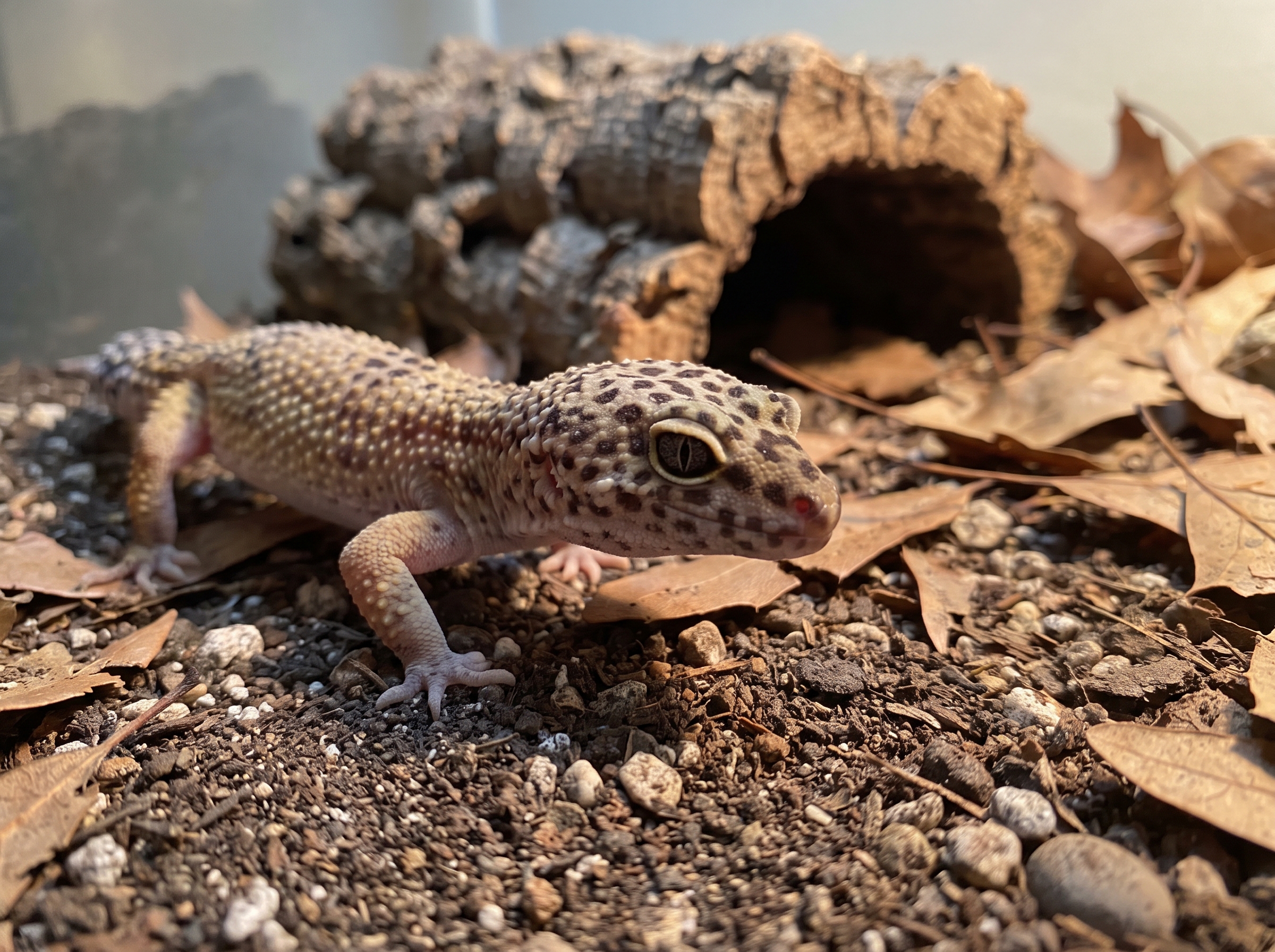
Loose calcium sand and walnut shell substrates should be avoided — both carry a real impaction risk if ingested incidentally during feeding, and calcium sand in particular is often marketed as digestible when it is not reliably so. The humid hide should be lined with damp sphagnum moss or coco fibre, replaced or re-moistened as it dries out rather than left to compact and sour. Cork bark, slate, and half-log hides give visual barriers that reduce stress in a glass enclosure, and a mix of textures — rough stone, smooth wood — gives some grip variety for digging and basking. Bioactive setups are possible but require careful balancing, since a live clean-up crew and plant substrate both want more moisture than this species' dry-ambient requirement; it's achievable with good drainage and ventilation but is not the default approach. Simple enrichment — rotating hide positions, adding a new climbing branch occasionally, offering live prey to hunt rather than only pre-killed — keeps the enclosure functioning as a habitat rather than static storage.
Feeding, Supplements and Hydration
The staple diet is gut-loaded crickets and/or dubia roaches, with mealworms or waxworms offered only as occasional treats rather than a routine food, since both are fattier and less nutritionally complete than the staples. As a general sizing rule across all life stages, prey should never be wider than the width of the gecko's own head — roughly the space between its eyes — oversized prey is a common cause of regurgitation and, over time, of impaction risk. Gut-load feeder insects on a nutritious diet for 24–48 hours before offering them, since the gecko is essentially eating what the insect last ate.
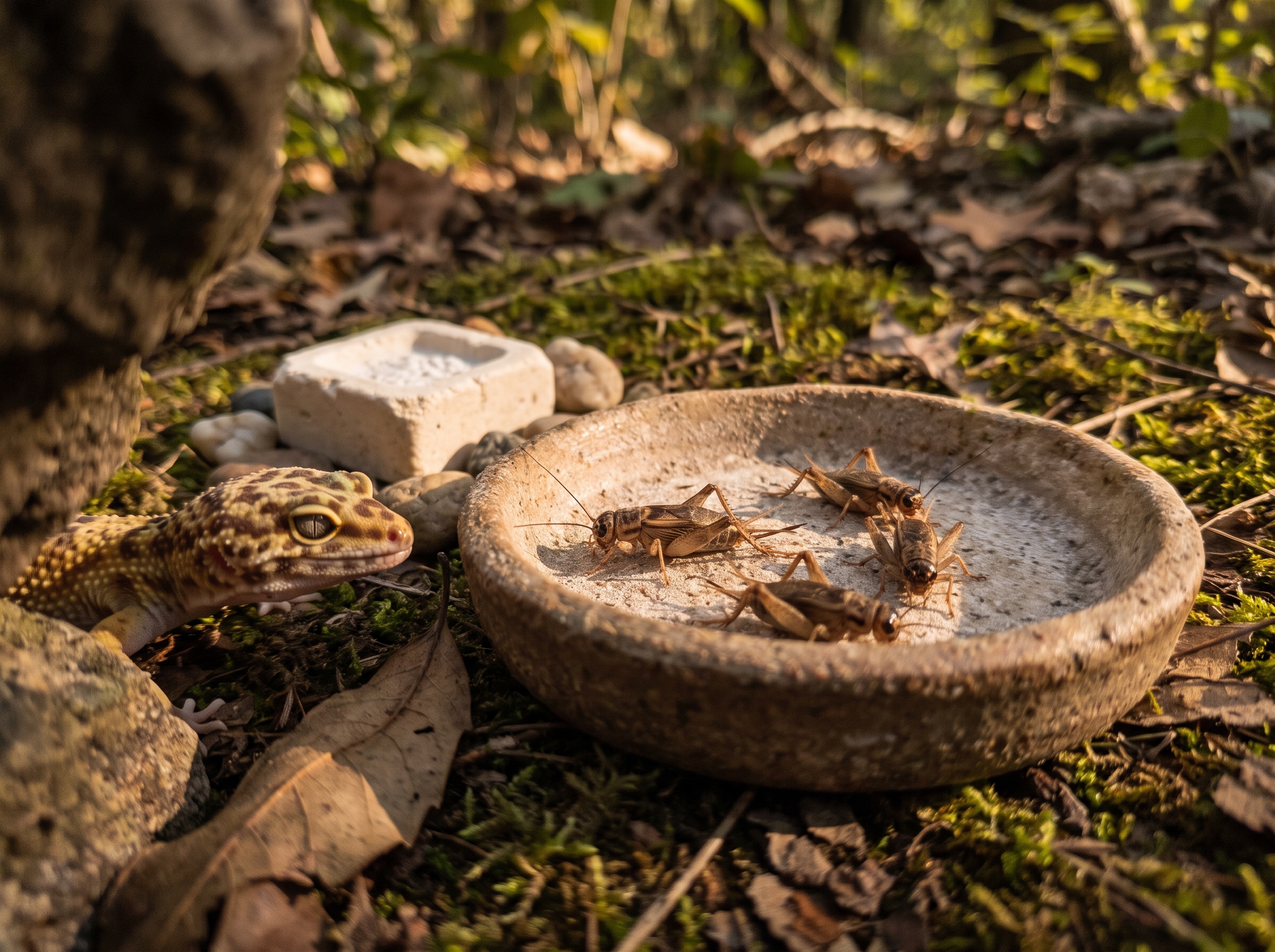
Dust feeders with calcium without D3 on most feedings and calcium with D3 once weekly for adults, adding a multivitamin every other week — this schedule is the single biggest factor separating a well-supplemented gecko from one heading toward metabolic bone disease. Offer water in a shallow, stable dish, refreshed daily rather than topped up. Judge body condition by the tail: a healthy adult carries a full, evenly tapered tail roughly the width of the body at its base. An underweight gecko shows a thin, pinched tail base; an overweight one shows a tail noticeably wider than the head, visible fat pads above the hips, and a body that looks swollen rather than simply solid.
Daily, Weekly and Monthly Care
Realistically, daily care takes five to ten minutes — a temperature check, a water refill, and clearing any uneaten feeders — but it has to happen every day, not most days, because a thermostat fault or a dried-up humid hide can go unnoticed for a week otherwise. Weekly care, spot-cleaning and a quick body-condition check, takes fifteen to twenty minutes. Monthly care is the heavier job: a full substrate or deep-clean session and a check of UVB bulb age against the manufacturer's replacement schedule, since output drops well before a bulb visibly dims. The UVB bulb check and the weight log are the two things keepers most often let slip, usually because the gecko still looks fine — which is exactly why they need a fixed schedule rather than being left to judgement.
Handling and Behaviour
Give a newly acquired gecko one to two settled weeks of hands-off time to find its hides and establish a feeding routine before any handling begins. Pick a gecko up by scooping it gently from below with both hands or letting it walk onto an open palm — never grab or restrain the tail, which will drop readily under stress. Realistic session length is 10–15 minutes, a few times a week; this is not a species that benefits from all-day handling.
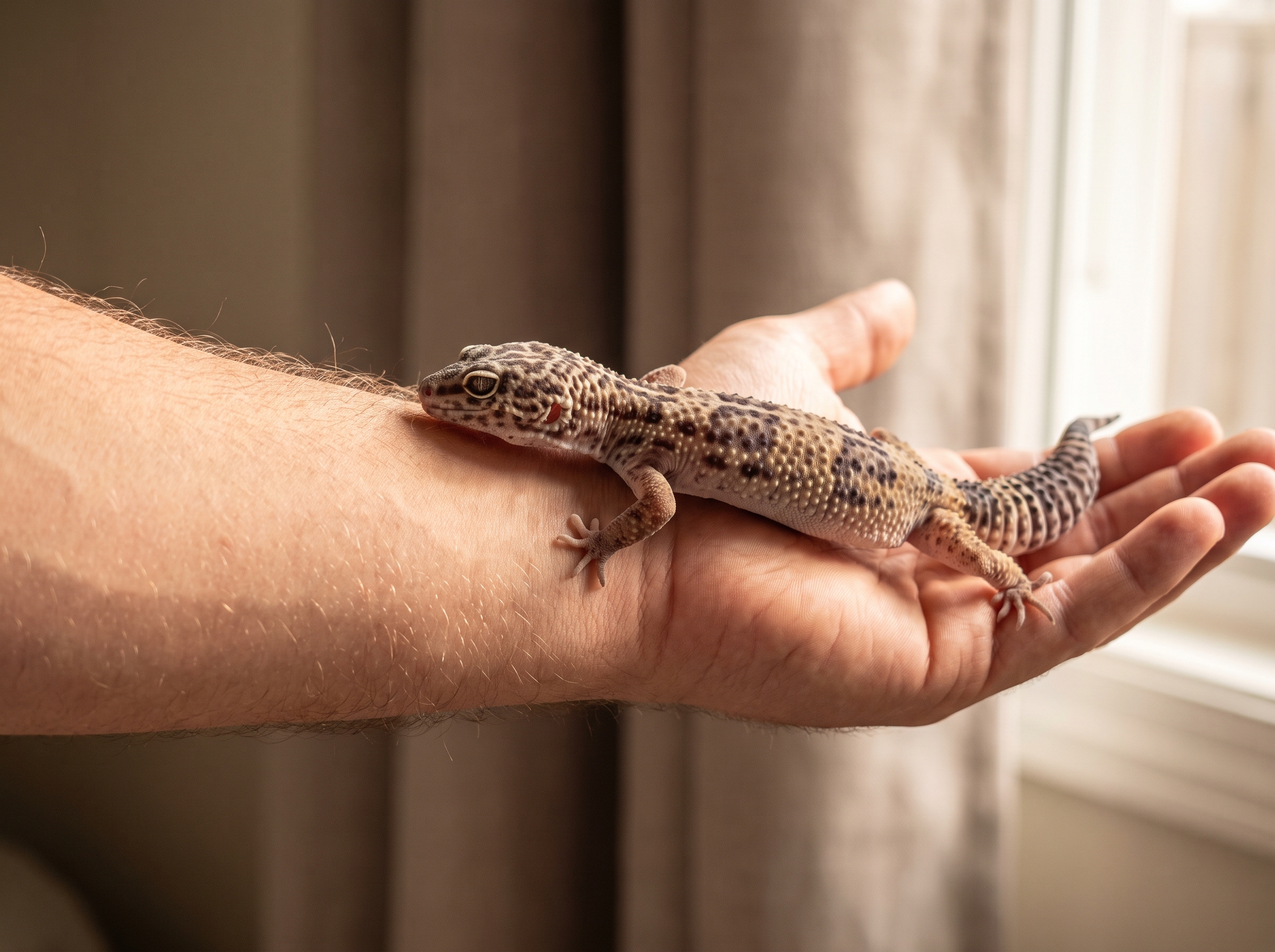
Normal body language includes slow tail waving during alert exploration and tongue-flicking while investigating a surface. Stress signals include a raised, vibrating tail, an audible bark or squeak, and backing into a hide repeatedly — these are a cue to put the gecko down, not push through the session. A defensive bite is typically a brief pinch that rarely breaks skin and is almost always a startle response rather than aggression. With children, supervise every handling session directly and set the same rule for the adult: hands support the body, never the tail. Keep enclosure lids locked at all times, since an escaped gecko in a warm house can be genuinely difficult to find.
Health and Veterinary Care
On arrival, check that eyes are clear and alert, the vent is clean, the tail is full, and the gecko bears weight evenly on all four limbs. Keep any new animal in a separate quarantine setup, away from established reptiles, and watch it closely before any introduction to a shared space. A normal stool is well-formed with a white or cream urate cap; a normal shed comes away in large, complete pieces, often eaten by the gecko itself. Periodic weighing — weekly for juveniles, monthly for settled adults — is the most reliable early warning system for a problem before it becomes visible.
Most of the conditions this species actually develops trace back to a specific husbandry error rather than bad luck: metabolic bone disease from inconsistent calcium or D3 dusting, or from skipping UVB provision; retained shed around the toes or tail tip from a humid hide that's dry in practice rather than in name; and dehydration from inadequate water access combined with low ambient humidity. Reviewing signs against the health triage table is useful for deciding urgency, but any sign that doesn't resolve with an obvious husbandry fix within a day or two warrants an exotics vet rather than continued home troubleshooting — browsing the full set of species care guides can help confirm whether a given symptom is husbandry-related before you decide.
Buying This Species
Buy captive-bred — leopard geckos are extremely widely captive-bred, availability is excellent, and wild-caught animals are genuinely rare in the modern trade, so there's little reason to consider one. In photos, a healthy gecko shows clear, fully open eyes, a straight spine, an evenly tapered full tail, and clean, dry toes with no retained shed rings. In hand, it should feel alert and show some grip strength and resistance rather than hanging limp; lethargy or a persistently closed eye in an otherwise active-hours photo is worth asking about directly.
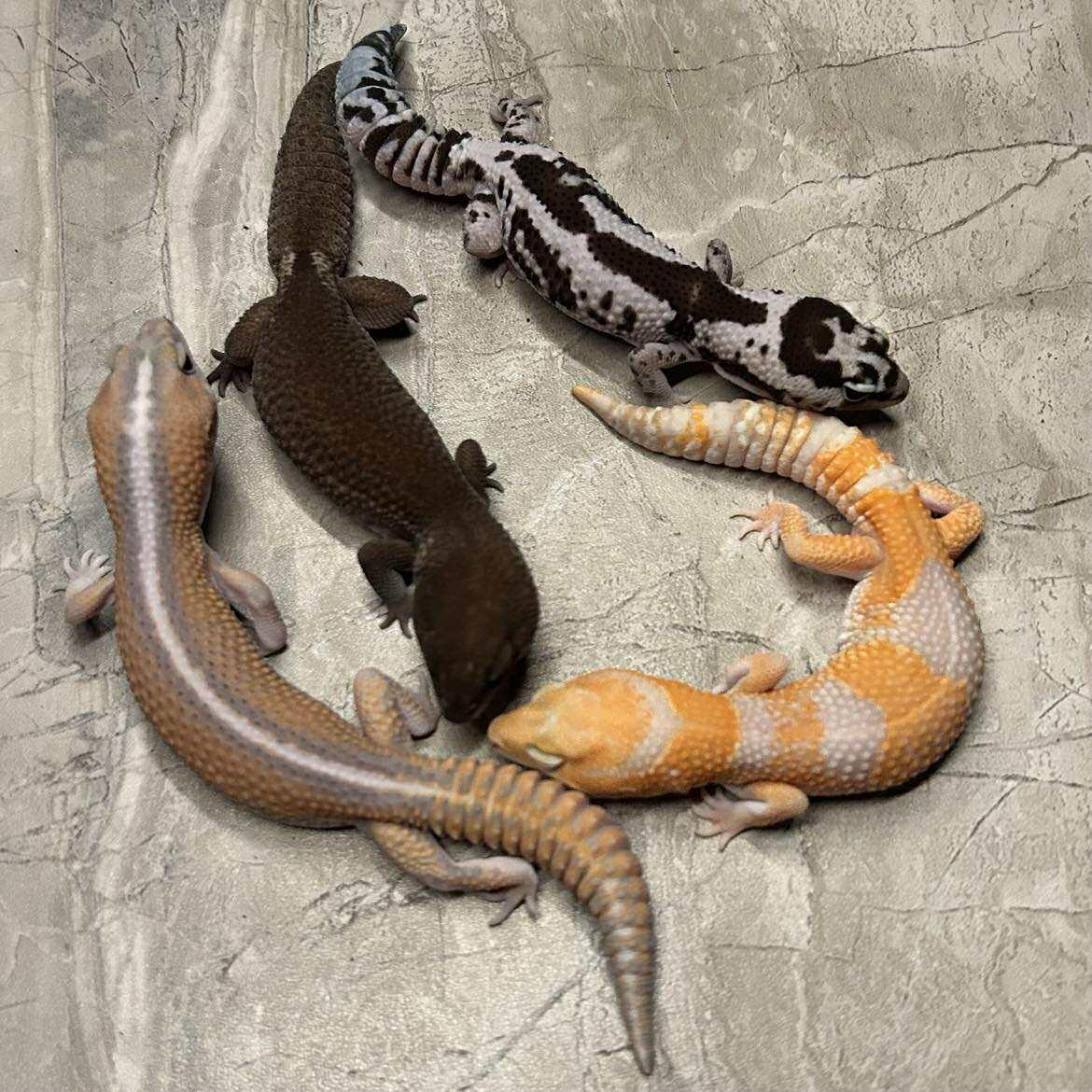
Plan transport for a short, warm, low-stress trip in a secure, insulated container, and have the enclosure fully set up and at temperature before the gecko arrives, so it goes straight into a stable environment rather than a cold tank while you finish assembling it. One line worth knowing about specifically: the Enigma morph is associated with a documented neurological condition sometimes called Enigma syndrome, causing disorientation, stargazing, or seizure-like episodes in affected individuals — this is a genuine welfare issue tied to the morph's genetics, not a cosmetic detail, and it's worth asking a seller directly whether an animal carries this lineage. When you're ready to look, browse leopard geckos currently listed for sale or compare established seller stores, and use the seller questions and healthy-animal checklist alongside this guide as a working list to go through before you commit, not just read once.
- IUCN Red List
- Not evaluated by the IUCN Red List (no current formal assessment for Eublepharis macularius).
- CITES
- Not listed on any CITES Appendix.
- Ownership restrictions
- No widespread restrictions are known for this species, but buyers should check their own state/country/council rules on reptile ownership, exotic pet permits, and any local HOA or landlord restrictions before acquiring one.
- Wild-caught in trade
- Wild-caught leopard geckos are rare in the pet trade today; most imports historically came from Pakistan/Afghanistan/India region, but the modern trade is almost entirely captive-bred.
- Captive-bred availability
- Extremely widely captive-bred, with huge availability of morphs through breeders, expos, and online marketplaces.
Ownership rules vary by country, state and even city, and they change. Check what applies where you live before you buy.
Feeding by Life Stage
What changes as the animal grows. Portions are measurable rules, not estimates.
- Food
- Small gut-loaded crickets and small dubia nymphs; avoid waxworms at this stage.
- Portion
- Prey no wider than the gap between the gecko's eyes; typically 2–3 small (1/4 in / 6 mm) crickets or appropriately small dubia nymphs per feeding.
- Frequency
- Daily feeding.
- Supplements
- Calcium without D3 dusted on every feeding; calcium with D3 once weekly.
- Enclosure
- Minimum 20 × 10 × 12 in (50 × 25 × 30 cm) — smaller space helps confidence and feeding success.
- Food
- Gut-loaded crickets and dubia roaches as staples; mealworms only occasionally.
- Portion
- Prey no wider than the widest part of the gecko's head; 4–6 appropriately sized insects per feeding.
- Frequency
- Daily to every other day.
- Supplements
- Calcium without D3 on most feedings; calcium with D3 once weekly; multivitamin every other week.
- Enclosure
- Minimum 30 × 12 × 12 in (75 × 30 × 30 cm).
- Food
- Gut-loaded crickets and dubia roaches as staples; mealworms or waxworms as occasional treats only.
- Portion
- Prey no wider than the width of the gecko's head (roughly the space between the eyes); 6–8 insects per feeding.
- Frequency
- Every other day.
- Supplements
- Calcium without D3 most feedings; calcium with D3 once weekly.
- Enclosure
- Minimum 36 × 18 × 12 in (90 × 45 × 30 cm) — same as adult minimum, since growth is rapid.
- Food
- Gut-loaded crickets and/or dubia roaches as the staple; mealworms or waxworms as occasional treats.
- Portion
- Prey no wider than the width of the gecko's head (roughly the space between the eyes); as much as eaten in 10 minutes, typically 6–10 insects.
- Frequency
- Every other day to twice weekly, adjusted by tail condition.
- Supplements
- Calcium without D3 on most feedings; calcium with D3 once weekly; multivitamin every other week.
- Enclosure
- Minimum 36 × 18 × 12 in (90 × 45 × 30 cm).
- Food
- Gut-loaded crickets and dubia roaches, with an occasional waxworm for extra fat during egg production.
- Portion
- As much as eaten in 10–15 minutes; increased volume to support egg production.
- Frequency
- Daily to every other day while gravid.
- Supplements
- Calcium without D3 on every feeding (critical to prevent egg-binding related deficiency); calcium with D3 weekly.
- Enclosure
- Minimum 36 × 18 × 12 in (90 × 45 × 30 cm) with an added dedicated nesting/lay box of damp substrate.
- Food
- Softer-bodied gut-loaded feeders — dubia roaches, crickets and black soldier fly larvae — in preference to hard-shelled mealworms.
- Portion
- Prey no wider than the width of the gecko's head (roughly the space between the eyes); smaller, softer-bodied feeders (e.g., dubia over hard mealworms) as appetite or jaw condition dictates.
- Frequency
- Every 2–3 days, monitored for appetite decline.
- Supplements
- Calcium without D3 on most feedings; calcium with D3 weekly; discuss ongoing vitamin needs with an exotics vet.
- Enclosure
- Minimum 36 × 18 × 12 in (90 × 45 × 30 cm), with easier-access hides and shallower water dish if mobility declines.
Daily, Weekly and Monthly Care
What keeping this animal actually costs you in time, week to week.
- Check both warm-side and cool-side air temperatures against the thermostat/thermometer readout.
- Confirm basking surface temperature with a temp gun or probe.
- Offer food on feeding days and remove any uneaten live insects after a few hours.
- Refill the water dish with clean, fresh water.
- Check that the humid hide substrate is still moist.
- Spot-clean substrate to remove feces and shed skin.
- Wipe down glass/walls and water dish.
- Weigh or visually check body condition and tail fullness.
- Check UVB bulb output isn't due for replacement (note install date).
- Do a full substrate clean-out or deep spot-check depending on substrate type.
- Inspect and disinfect hides, water dish, and décor.
- Check UVB bulb age against manufacturer's replacement schedule (most need replacing every 6–12 months even if still lit).
- Review feeding and weight log to confirm steady growth or stable adult weight.
When to Call a Vet
What you can see, and how quickly it needs acting on.
| What you see | Urgency | What to do |
|---|---|---|
| Fasting for several days to a couple of weeks, especially in cooler months | Normal | Continue offering food on schedule and monitor weight/tail condition; if fasting exceeds 2–3 weeks or weight drops, see an exotics vet. |
| Shedding in patches with some skin sticking around toes or tail tip | Check the setup | Increase humid hide access and check it's genuinely humid; gently assist with a damp cloth once soaked if skin still won't release. |
| Dull, grey, or retained shed over the eyes for more than a few days | Check the setup | Raise humidity in the hide, offer a shallow lukewarm soak, and recheck after 24–48 hours; if it persists, see an exotics vet. |
| Dropped tail (autotomy) | Check the setup | Move the gecko to a clean, bare-bottom enclosure temporarily to prevent substrate in the wound, and monitor closely; if swelling, discharge, or lack of healing develops, see an exotics vet. |
| Soft, bent, or swollen lower jaw or limbs | See a vet | See an exotics vet — this is a classic sign of metabolic bone disease; stop any guessing on supplementation and keep handling minimal until seen. |
| Sudden weight loss with a visibly thinning tail | See a vet | See an exotics vet; in the meantime, verify temperatures are correct and continue offering appropriately sized food. |
| Lethargy with sunken eyes and loose skin (dehydration signs) | See a vet | Offer a shallow lukewarm soak, verify humidity and water access, and schedule an exotics vet visit if it doesn't improve within a day. |
| Dark, loose, or unusually smelly stool | See a vet | See an exotics vet — this can indicate parasites or infection, especially in new arrivals. |
| Open mouth breathing, wheezing, or mucus around the nose/mouth | Urgent | Seek urgent veterinary care; keep the gecko warm and transport in a secure, insulated container. |
| Prolapse of tissue from the vent | Urgent | Seek urgent veterinary care immediately; keep the area clean and moist with a damp paper towel if advised by the vet on the phone, and transport promptly. |
| Not eating combined with significant lethargy and weight loss lasting over 2–3 weeks | Urgent | Seek urgent veterinary care; stop offering live insects that could bite an unresponsive gecko and transport warm. |
| Visible bone fractures, severe tremors, or inability to right itself | Urgent | Seek urgent veterinary care; transport in a padded, secure container with minimal handling. |
This guide does not diagnose and does not replace a veterinarian. Nothing here is a treatment or a dose. If you are unsure, an exotics vet is always the right call.
Buying Checklist
What to check, what to ask, and what to have ready.
Quarantine every new leopard gecko for a minimum of 30–60 days in a separate, simple enclosure — paper towel substrate, one hide, a humid hide and thermostat-controlled heat — ideally in a different room from any established reptiles. Service the quarantine animal last, use separate tools and wash hands between enclosures, and watch daily for appetite, weight, stool quality and shedding. Have a faecal sample checked by an exotics vet before the gecko is kept or handled alongside other animals.
Roughly $500–$1,000 (£400–£800) for year one: $250–$500 for the initial setup plus $240–$480 in feeders, supplements, substrate and electricity across twelve months, before the $30–$150 purchase price of the gecko and an initial faecal screen at an exotics vet.
Frequently Asked Questions
How long do leopard geckos live?
With good care, leopard geckos typically live 10–20 years in captivity, and many well-kept individuals reach their high teens. Lifespan depends heavily on consistent temperatures, correct supplementation, and avoiding obesity, so this is a genuine decade-plus commitment, not a short-term pet.
Do leopard geckos need UVB lighting?
Leopard geckos can survive without UVB, but low-level UVB is now recommended rather than optional. Aim for 0.5–1.0 UVI at the basking site, which corresponds to Ferguson Zone 1, using a linear T5 tube and verifying output with a UV index meter rather than assuming it from bulb wattage or distance alone.
Can two leopard geckos live together?
No — leopard geckos should be housed alone. Adult males will fight, and a male housed with a female will breed continuously, stressing or injuring her. Co-housing any sex combination also risks resource guarding at the basking spot and food, which commonly leads to tail loss.
How big of an enclosure does an adult leopard gecko need?
An adult needs a minimum of 36 × 18 × 12 in (90 × 45 × 30 cm) of floor space, roughly the footprint of a 40-gallon (150 L) breeder-style tank. This is a minimum, not a target — a larger enclosure is always better for an animal that spends its whole life in it.
What temperature should a leopard gecko's basking spot be?
The basking surface should read 88–92°F (31–33°C), measured directly on the floor of the warm hide with a temp gun or surface probe. Warm-side air should sit at 80–85°F (27–29°C), the cool side at 70–75°F (21–24°C), and night temperatures should not drop below 65°F (18°C).
Why does my leopard gecko have trouble shedding?
Stuck shed, especially around the toes or tail tip, almost always traces back to a humid hide that isn't genuinely humid. The hide should hold 70–80% humidity via damp sphagnum moss or coco fibre, independent of the drier 30–40% ambient humidity in the rest of the enclosure.
What do leopard geckos eat?
Leopard geckos are insectivores, with gut-loaded crickets and/or dubia roaches as the dietary staple and mealworms or waxworms offered only occasionally as treats. Prey size should never exceed the width of the gecko's head, roughly the space between its eyes, and feeders should be dusted with calcium regularly to prevent deficiency.
Are leopard geckos good for beginners?
Yes — leopard geckos are considered one of the most beginner-friendly lizards, tolerant of minor husbandry mistakes and content in a relatively simple dry-habitat setup. The main requirement is getting the temperature gradient and humid hide right and keeping that consistent for the gecko's full 10–20 year lifespan.
References and Revision History
Dr. Riley Moss
November 4, 2026
- 1.
Leopard Gecko (Eublepharis macularius) Care Sheet
Supports: The 88–92°F (31–33°C) warm-hide surface temperature and 70–75°F (21–24°C) cool-side air temperature, the every-other-day adult feeding frequency, the 36 × 18 × 12 in (90 × 45 × 30 cm) adult enclosure minimum, and the 10–20 year captive lifespan
- 2.
UV Guide UK — Ferguson Zones and UV Index Requirements for Reptiles
Supports: The 0.5–1.0 UVI Ferguson Zone 1 target at the basking site
- 3.
IUCN Red List — Eublepharis macularius
Supports: Conservation status: Eublepharis macularius has no current formal assessment on the IUCN Red List
- 4.
Supports: CITES listing status (not listed)
- 5.
Association of Reptilian and Amphibian Veterinarians (ARAV) — Metabolic Bone Disease in Reptiles
Supports: Soft jaw/limb signs as indicators warranting veterinary care
- 6.
Merck Veterinary Manual — Reptile Husbandry and Disease
Supports: General health triage framework and dehydration/respiratory signs requiring veterinary attention
- November 4, 2026First draft reviewed and approved.
Was this guide helpful?
Rate this guide
Questions & Answers
0 questions from the community
Comments
0 comments