If you have spent any time scrolling crested gecko listings, you have probably hit a wall of terms like dalmatian, lily white, pinstripe, and flame, with no idea which ones describe a color, a pattern, or just how a particular breeder likes to name their animals. Let us walk through it so that crested gecko morphs are explained in plain language, using the terms you will actually run into when you start shopping.
Before we get into specific names, it helps to know that crested gecko morphs are not sorted the same way ball python or corn snake morphs are. Most crested gecko traits are not simple recessive or dominant genes you can predict with a punnett square. They are largely the result of selective breeding for color and pattern over many generations, meaning two geckos with the same name will not always produce identical-looking babies. Keep that in mind as we go through each category.
What is the difference between a crested gecko's base color and its morph name?
Base color is the background shade of the gecko's skin, while the morph name usually refers to a pattern or trait layered on top of that color. A crested gecko might have a base color of olive, brown, gray, red, orange, or yellow, and then carry a pattern name like harlequin or pinstripe on top of it. So a listing that says "red harlequin" is describing two separate things: the base color (red) and the pattern (harlequin).
This distinction matters because buyers often assume morph names describe color alone. In reality, most established crested gecko trait names describe pattern, structure, or the amount and placement of a secondary color, not the base shade itself. Once you separate those two ideas, listings start making a lot more sense.
What does dalmatian mean on a crested gecko?
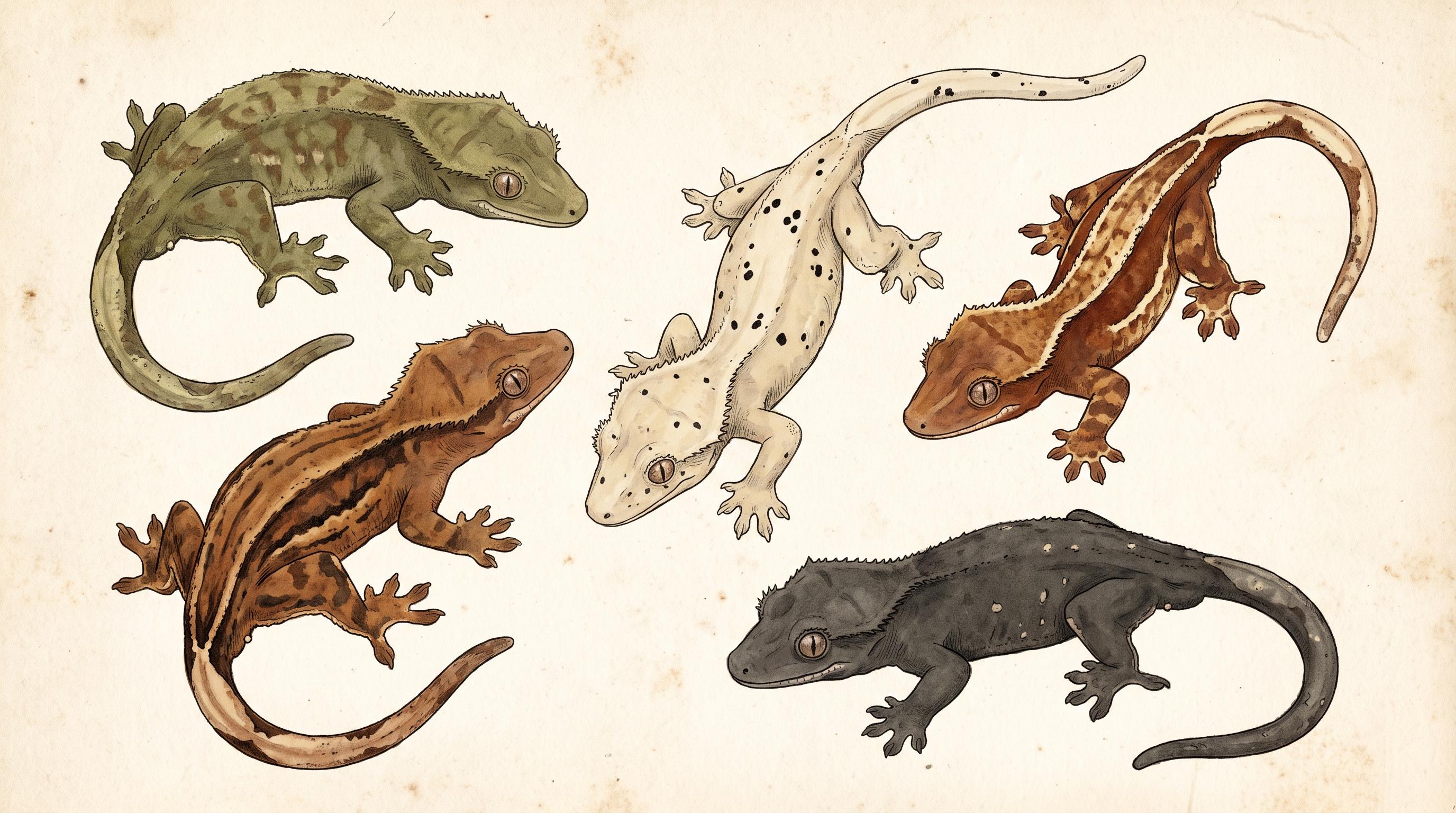
Dalmatian refers to a crested gecko covered in small dark spots scattered across its body, similar to the dog breed it is named after. The spots can appear anywhere, including the head, back, sides, and even the tail, and they range from a light sprinkling to a dense, heavily spotted look that some breeders call "extreme dalmatian."
Dalmatian spotting can appear on almost any base color, so you will see phrases like "orange dalmatian" or "buckskin dalmatian" in listings. A common beginner mistake is assuming dalmatian is a single fixed look; in practice the density and size of spots vary a lot between individual animals, and spotting can also increase or fade slightly as a gecko matures.
What is a harlequin crested gecko and how is it different from a flame morph?
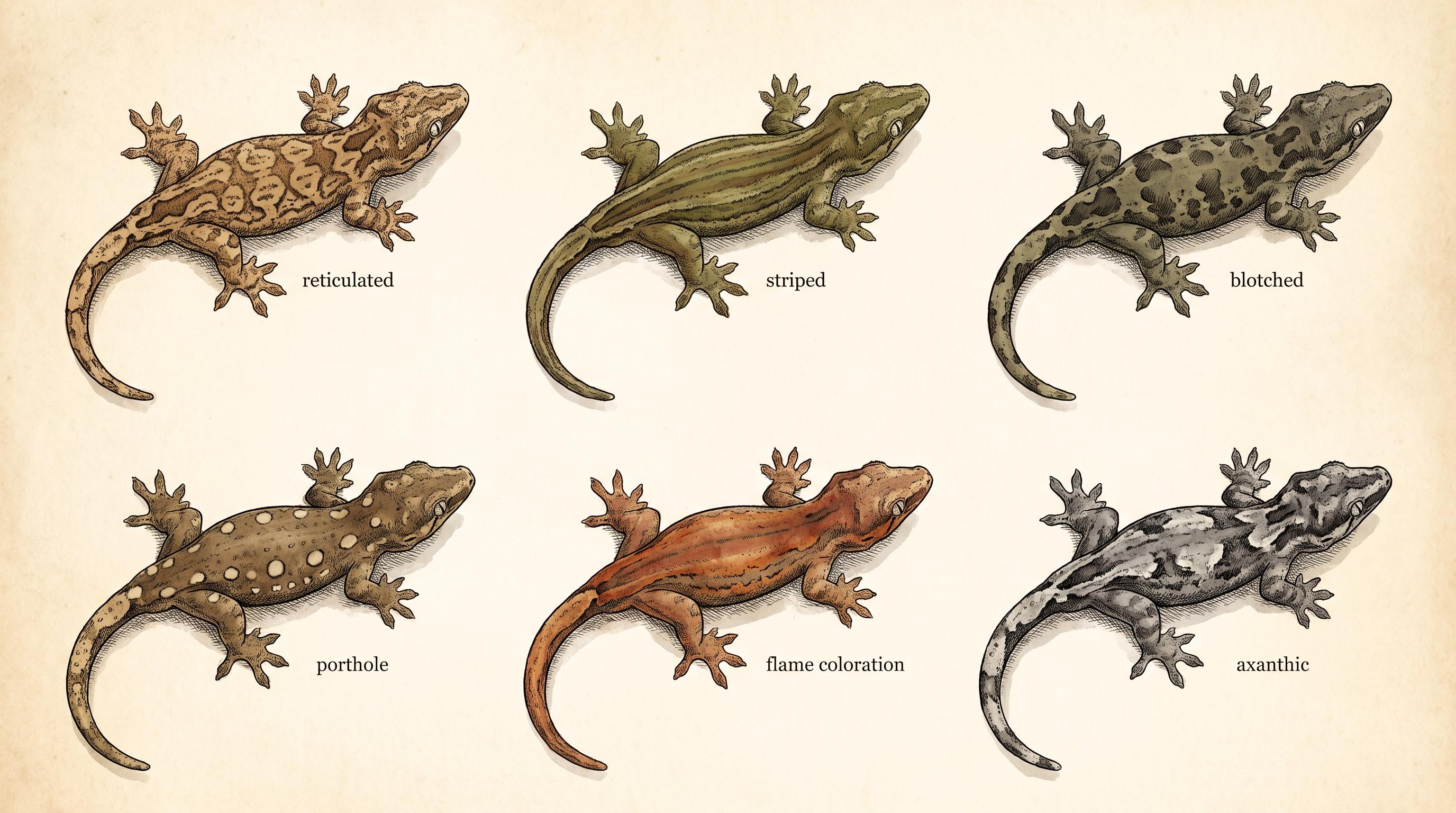
A harlequin crested gecko has contrasting patterning that extends across the dorsal area and significantly onto the sides and often the limbs. The secondary color is commonly cream, yellow, orange, or another contrasting shade against the animal's base color. The amount and placement of that pattern can vary considerably between individuals, which is why breeders may use terms such as "extreme harlequin" for animals with especially heavy lateral and limb coverage.
Flame crested geckos also have contrasting patterning along the dorsal area, but typically show much less pattern on the sides and limbs than a harlequin. In simple terms, a flame tends to keep most of its contrasting pattern concentrated across the back, while a harlequin carries substantially more of that pattern down the sides and onto the legs. Because these are selectively bred pattern descriptions rather than clean single-gene categories, individual animals can fall somewhere between the classic examples breeders use for each term.
What is a pinstripe crested gecko?
A pinstripe crested gecko has lines of lighter-colored scales running along the raised dorsal crests on either side of its back. Those lines may be complete and continuous from the neck toward the tail, or they may be interrupted, which is often described as partial pinstriping.
Pinstripe describes the appearance of those lighter scales along the dorsal crests rather than the physical crest itself. It is commonly seen alongside other colors and pattern traits, so listings may describe animals as pinstripe dalmatians or pinstripe harlequins. In those cases, the terms are describing multiple visible characteristics present on the same gecko.
What is lily white and why do these geckos need different care during breeding?
Lily white is one of the crested gecko traits with a known, predictable inheritance pattern. It is an incomplete-dominant trait that produces broad white or cream patterning spreading up the sides and often across the back. A lily white bred to a non-lily-white crested gecko will produce approximately 50% lily white offspring on average.
The important breeding consideration is that the homozygous form, an animal inheriting two copies of the lily white trait, is considered non-viable. Because a lily white × lily white pairing can produce homozygous offspring, responsible breeding practice is to pair lily white animals with non-lily-white partners. This does not affect the normal day-to-day care of a lily white kept as a pet, but it is important information for anyone buying one with future breeding plans.
What does tiger pattern mean and how does it compare to other stripe patterns?
Tiger pattern describes narrow, irregular dark stripes running across a lighter base color, usually across the back and sides, giving a banded or brindled look rather than the bold blotches of a harlequin or the fine lines of a pinstripe. Tiger patterning tends to be more subtle in photos and can be easy to miss on younger geckos before their pattern fully develops.
It is worth knowing that many crested geckos show more than one pattern trait at once, and sellers will usually stack the terms, for example "tiger pinstripe" or "tiger dalmatian." When you see a long string of morph words in a listing, read it left to right as a stack of descriptions rather than a single named category, and do not assume the seller is exaggerating just because the name sounds elaborate.
How should first-time buyers use morph terminology when shopping?
Use morph names as a description of what you are looking at, not a guarantee of what future offspring will look like, since most crested gecko patterns are shaped by selective breeding rather than predictable single-gene inheritance. If you plan to breed down the line, the genetic calculator is more useful for traits with known inheritance patterns than for pattern-heavy combinations like harlequin or dalmatian, so treat pairing outcomes for those traits as a probability, not a promise.
When you are ready to compare actual animals, spend time looking through current listings on the marketplace and cross-reference how different sellers use the same term, since naming can vary slightly between breeders. It also helps to look at a seller's full store rather than a single listing, since seeing several siblings or parent animals gives you a much better sense of how a pattern actually develops. And once you bring a gecko home, keeping simple records with something like Husbandry.Pro makes it much easier to track feeding, shedding, and weight over its first year, which matters more for long-term health than any morph name does.
Getting comfortable with crested gecko terminology takes a few weeks of looking at real listings, not months, and you do not need to memorize every combination before you buy your first gecko. The good news is that once you understand the difference between base color and pattern, every new listing you see will make a lot more sense, and you will be well equipped to pick an animal you genuinely love rather than one whose name just sounded impressive.
Frequently asked
What is the rarest crested gecko morph?
Rarity in crested geckos shifts over time and depends on which traits breeders are currently focusing on, so there is no single fixed "rarest" morph. Heavily line-bred looks like extreme harlequins or certain lily white lines tend to carry higher prices because they take longer to produce consistently, but availability changes as more breeders work on a given trait.
Can two crested gecko morphs be combined?
Yes, most crested gecko pattern traits like dalmatian, pinstripe, and harlequin can appear together on the same animal, since they describe different features rather than competing single genes. That is why you will see listings like "tiger pinstripe dalmatian," which simply means the gecko shows all three pattern traits at once.
Do crested gecko morphs affect care requirements?
No, morph and color do not change a crested gecko's temperature, humidity, or feeding needs. Every crested gecko, regardless of pattern, generally does well in the mid-70s Fahrenheit with moderate to high humidity and a varied diet, so you can choose based on looks without worrying about different care.
How do I know if a crested gecko listing is accurately described?
Compare the photos closely against the terms used, look at the seller's other animals for consistency, and ask whether the parents show the same traits. Browsing a seller's full store rather than one photo gives a clearer picture, and reputable sellers are usually happy to explain how they are using a particular morph term.