If you have spent any time scrolling gargoyle gecko listings, you have probably hit a wall of pattern names that do not mean much on their own. Having this article means you will not have to guess — I am going to walk through gargoyle gecko morph and pattern names explained in plain language, with what each one actually looks like on a live animal, so you can read a listing and know exactly what you are buying.
What makes gargoyle gecko pattern types confusing in the first place?
The confusion comes from the fact that gargoyle gecko pattern names are descriptive terms, not always fixed genetic morphs the way a ball python's can be. A gecko's color and pattern can develop as it matures, so a young animal's appearance may not predict exactly how it will look as an adult. That is normal. Breeders are naming what they see at the time, not guaranteeing a permanent look, and that is the single biggest thing new buyers get tripped up on.
What does a reticulated gargoyle gecko look like?
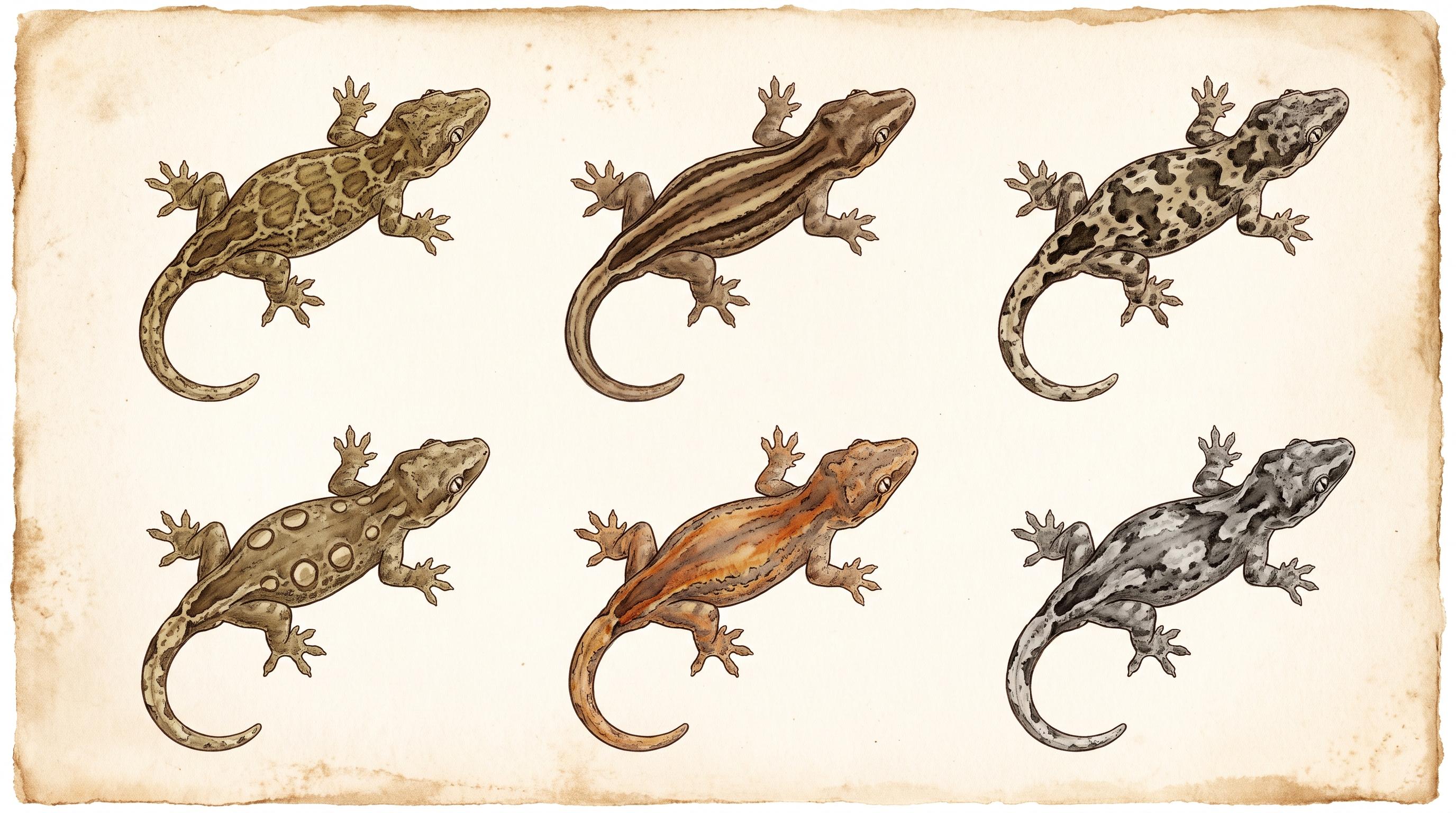
A reticulated gargoyle gecko has a fine, net-like webbing of darker pigment running across the body, usually dense enough that the base color barely shows through in places. In my own collection, the reticulated animals are the ones people assume are the most heavily patterned, but heavy reticulation can tighten or wash out as the animal matures, so judge an adult photo rather than a hatchling shot when you are paying for pattern.
What does a striped gargoyle gecko look like?
A striped gargoyle gecko carries two pale dorsolateral stripes running from behind the head to the base of the tail, with a darker field between and below them. The honest answer is that completely unbroken stripes are the exception rather than the rule, and breeders differ on how much breakage still counts as striped. Ask for a current adult photo taken in natural light, not a fired-up hatchling shot, before you commit to a price.
What is a blotched gargoyle gecko?
Blotched animals show large, irregular patches of lighter colour sitting on a darker base, scattered down the back rather than lined up into stripes. When those blotches start linking together into a web, you will see listings use "reticulated blotch" — that is a description of an in-between look, not a separate genetic line.
What does porthole mean on a gargoyle gecko?
Some breeders use "porthole" for a row of round, evenly spaced light spots running along each side of the dorsum, like windows down the flank of a ship. The term describes a more orderly row of rounded spots, though pattern terms can vary between breeders. In my experience, these spots can blur or merge as the gecko grows, which is the single most common disappointment I hear about from buyers.
What is a flame gargoyle gecko?
Flame describes colour rather than pattern: a warm orange or red wash over the dorsal area, often sitting on top of a stripe or blotch pattern, which is why you see combined names like "red stripe flame". Colour intensity and contrast can look different when a gecko fires up or down and under other conditions, so photos taken at different times may show noticeably different appearances. That is not a seller being dishonest, it is just how these geckos cycle.
What does axanthic mean in gargoyle geckos?
Axanthic animals are described as lacking yellow and red pigment, leaving a black, grey and white appearance. Here is the part worth knowing before you pay a premium: the label "axanthic" by itself does not establish that the trait is a proven, consistently inherited morph. Plenty of animals sold as axanthic are simply low-colour. Ask the breeder what the trait has actually done across their own pairings and how many generations they have tracked it for.
How should I record a gargoyle gecko's morph in my own records?
Because these patterns can develop, a name written down once at purchase may stop being accurate over time. What works for me is logging a plain written description at acquisition — stripe, blotch, porthole, degree of reticulation, colour — then adding dated photos at roughly three, six and twelve months, always under the same lighting. That record is what lets you honestly describe an animal when you list it later, and it is how you spot which pairings actually hold pattern. I keep mine in Husbandry.Pro, which lets you attach photos to each animal's timeline so the pattern history sits with the feeding and weight notes.
Where can I see these gargoyle gecko patterns side by side?
Reading descriptions only gets you so far — comparing a dozen animals does the rest. Browsing gargoyle geckos currently listed for sale is the fastest way to calibrate your eye for what each term looks like in practice, and the species care guides are worth a read before your first one arrives.
None of this is as complicated as the listing jargon makes it feel, and you will have the vocabulary down after an evening of looking at photos. If you are starting out, pick one pattern you genuinely like, buy a single well-documented animal from a breeder who shares grow-up photos, and let your eye develop from there.