A ball python genetic calculator can turn a pairing into a list of possible offspring, but the results are only as reliable as the genetics you enter. If a parent is listed as a possible het and you enter it as a confirmed het, the calculator will give you odds for a pairing you may not actually have. This guide walks through the terms, the inputs, and how to read the results without treating probability as a promise.
Start with our ReptileAds genetic calculator. If you need a refresher on recessive genes and possible-het percentages, our ball python het guide explains those terms with examples. When a seller’s genetics claims are unclear, use this guide to asking a breeder about lineage and parentage before relying on the listed odds.
What do genotype, phenotype, het, and homozygous mean?
Genotype means the alleles an animal carries. Phenotype means the traits you can see. For a recessive gene such as Pied, a snake with one copy is heterozygous, or het: it carries the gene but does not show the visual Pied phenotype. A snake with two copies is homozygous for Pied and is visual Pied.
Homozygous simply means having two copies of the same allele at a gene location. For a recessive morph, that usually means the animal is visual for the trait. For a co-dom (incomplete-dominant) morph, two copies may create a distinct “super” form. The calculator needs the correct genetic status for each parent, not just a description of what the snake looks like.
How do recessive, co-dom, and dominant genes differ?
Recessive genes need two copies to show visually. A snake with one copy is het and may pass that copy to its offspring.
Co-dom, or incomplete-dominant, genes show a visible effect with one copy, and two copies often produce a different form called a super. In ball python hobby usage, “co-dom” and “incomplete dominant” refer to the same trait category. The exact appearance depends on the gene.
Dominant genes show with one copy. In a simple dominant pattern, two copies do not create a distinct super form, though the specific gene’s inheritance and health effects should always be checked.
Some morphs also belong to allelic groups, where different named traits occupy the same gene location. For example, the calculator’s genetics guide treats Mojave, Lesser, and Butter as an allelic group. A parent passes one allele from that location; those traits should not be entered as though they were independent genes.
What does a het Pied to het Pied pairing predict?
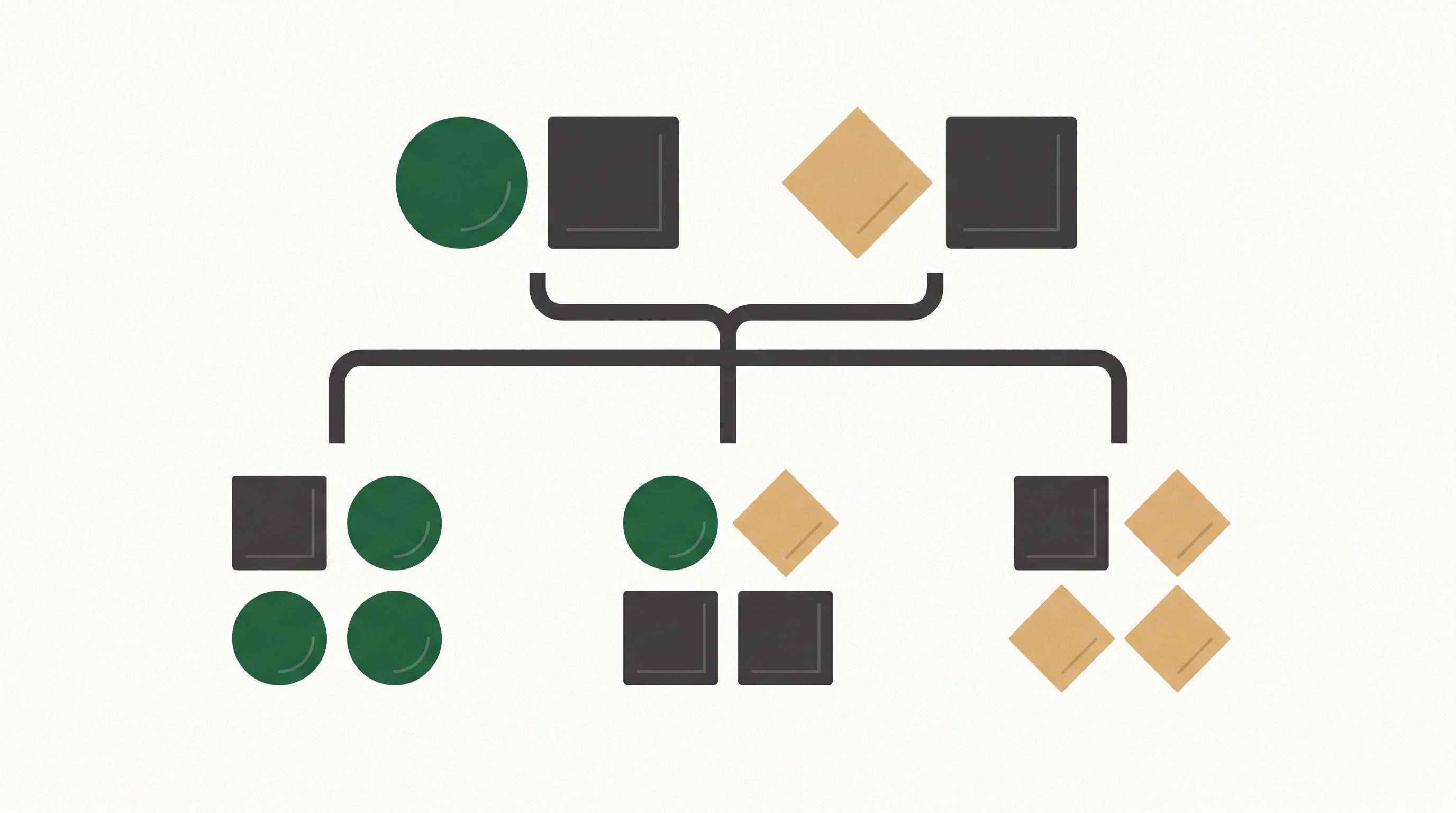
For two confirmed het Pied parents, assuming standard single-gene recessive inheritance, each egg has these possible outcomes:
- 25% visual Pied: the offspring inherits a Pied copy from each parent.
- 50% het Pied: the offspring inherits one Pied copy and does not look Pied.
- 25% non-carrier: the offspring inherits neither Pied copy.
Those percentages apply per egg, not to the clutch as a whole. A six-egg clutch could have no visual Pieds, one, or several. Each egg is a separate probability, so the results in one clutch can vary a lot from the predicted percentages.
The 50% het and 25% non-carrier offspring both look non-Pied. Among the normal-looking offspring from this pairing, two out of three are expected to be het Pied. That is the source of the familiar 66% possible het Pied label.
How do you enter parents into a ball python genetic calculator?
- Select Ball Python. Choose the species first so the tool uses the appropriate gene list and inheritance information.
- Enter the first parent’s visible traits. Add the morph genes the animal visibly expresses. For a visual recessive, enter its visual or homozygous status rather than entering it as a single-copy het.
- Add confirmed recessive hets. Enter a recessive gene as confirmed only when the animal is known to carry it through documented parentage, breeding results, or a validated genetic test where one is available.
- Handle possible hets as probabilities. If the calculator provides a possible-het input, enter the stated percentage. If it does not, do not enter the animal as a confirmed het. Calculate the possible parent-genotype scenarios separately and weight each result by the parent’s probability of carrying the gene.
- Enter the second parent the same way. Keep confirmed genes, visual traits, and possible hets distinct.
- Run the pairing and read each result. Check the offspring traits and the percentage or fraction beside each one. The result describes odds per egg, not a guaranteed count for the clutch.
For example, a 66% possible het Pied has a two-thirds chance of being het Pied. If both parents are independently 66% possible het Pied, the chance of a visual Pied per egg is about 11.1%: two-thirds chance that each parent is actually het, multiplied by the 25% visual Pied chance when both are het. The familiar 25% visual result applies only when both parents are confirmed hets.
What is the difference between a confirmed het and a possible het?
A confirmed, or 100%, het is known to carry one copy of the recessive gene. That can be guaranteed by parentage. For example, offspring from a visual recessive parent crossed with a known non-carrier will inherit one copy from the visual parent and one non-recessive copy from the other parent.
A possible het is a probability based on the pairing that produced the animal. A 50% possible het has a one-in-two chance of carrying the gene; a 66% possible het has an approximately two-in-three chance. Neither percentage means the snake carries a fraction of a gene. It describes uncertainty about whether the animal inherited the gene at all.
What can a genetic calculator not tell you?
A calculator works from the information entered. It cannot verify a parent’s genetics, confirm lineage, test a snake’s DNA, or guarantee that a seller’s listing is correct. Ask the breeder for the pairing records and how each het status was established. Our breeder question guide covers what to ask before you buy.
Simple inheritance calculators also cannot predict every trait. Polygenic traits such as color intensity or pattern quality are shaped by many genes and selection over generations. Some genes interact or share a locus, so do not assume every named morph combines independently. Check the specific gene’s inheritance and any known health considerations before planning a pairing.
Which mistakes most often distort pairing odds?
- Entering a possible het as confirmed. This inflates the predicted odds because the calculator assumes the gene is definitely present.
- Confusing visual traits with hidden recessive genes. A normal-looking snake may be het, possible het, or a non-carrier; appearance alone does not separate those outcomes.
- Treating percentages as clutch counts. A 25% result is the chance per egg, not a promise that one in every four eggs will be visual.
- Ignoring gene relationships. Allelic traits and known interactions do not always follow the same math as independent genes.
- Assuming the calculator verifies the inputs. The output is only a prediction based on the parent genetics entered.
Get the parent information right, keep possible hets labeled as probabilities, and read each percentage as an outcome chance per egg. Then use the ReptileAds genetic calculator to explore the pairing. If you are comparing animals for a project, browse ball pythons currently listed for sale and confirm the genetics and parentage with the seller.
Frequently asked
What does het mean on a ball python genetic calculator?
Het is short for heterozygous, meaning the snake carries one copy of a recessive gene but does not show it visually because recessive traits need two copies to appear. A calculator uses het status to predict how likely offspring are to inherit zero, one, or two copies of that gene from each parent.
Does a 25% chance mean one in four babies will be visual?
No. The percentage applies separately to each egg, not to the clutch as a whole. A small clutch could hatch with no visual babies, several, or exactly one in four, since each egg's outcome is an independent probability, similar to a coin flip landing heads multiple times in a row.
What is the difference between a possible het and a confirmed het?
A confirmed, or 100%, het is known to carry one copy of the recessive gene. Documented parentage can guarantee that status, and breeding results can prove it. A possible het is only a probability based on its pairing history, such as 50% or 66%, and should not be entered as confirmed.
Can a genetic calculator verify my ball python's genetics?
No, a calculator only predicts outcomes from the information you enter. It cannot test, confirm, or discover hidden genes in your snake. If you are unsure about a parent's genetics, treat the results as an estimate based on assumptions rather than a guarantee, and verify lineage through breeder records where possible.
How should I enter a possible het in a calculator?
If the calculator has a possible-het input, enter the stated percentage. If it does not, do not enter the animal as a confirmed het. Calculate the possible parent-genotype scenarios separately and weight the results by the stated probability.